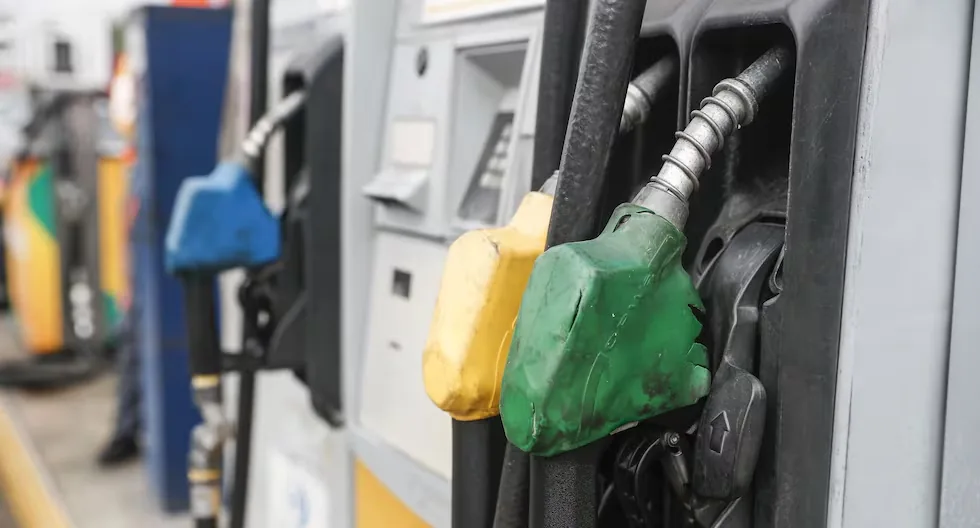








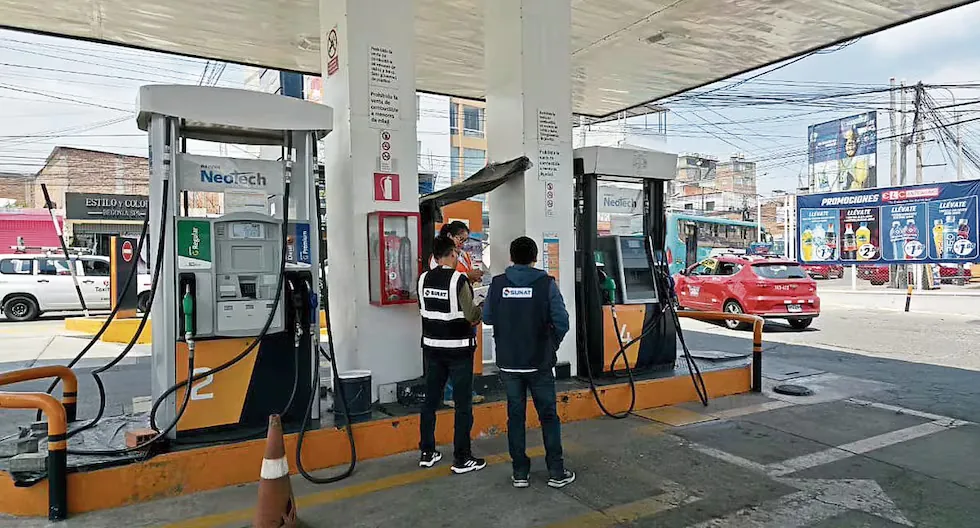
The cost of fuel depends on various factors, such as the international price of oil, transportation and distribution expenses, taxes, and competition among gas stations. Therefore, experts recommend checking the official platforms before refueling the vehicle, especially during the days of highest demand due to the National Holidays.
Gasoline and diesel prices: Lima and main provinces
The “Facilito” platform from Osinergmin, which compiles prices reported by the gas stations themselves, shows that in Lima regular gasohol (90 octane) is currently between S/ 17.24 and S/ 21.49 per gallon, while premium gasohol ranges from S/ 18.34 to S/ 22.49. Diesel B5 S-50 UV, widely used by freight and passenger transport, sells between S/ 20.40 and S/ 25.99 per gallon in the capital, reflecting the direct impact of crude oil price increases. This price dispersion is due to competition among stations, logistical access, and the specific demand of each urban area.
In the provinces, prices can be even higher. In Cusco, for example, gasohol starts at S/ 18.67 and reaches S/ 21.99; in Ica, regular gasohol begins at S/ 17.29; and in Lambayeque, premium gasohol is around S/ 18.89. Tacna records diesel from S/ 22.10, while regions far from supply terminals or with less competition among gas stations tend to show higher margins. The result is an uneven map, where filling the tank can cost up to six soles more per gallon depending on the district or city.
Examples of prices by district in Lima
Within Lima itself, differences are visible when comparing some districts. Facilito records that in San Juan de Lurigancho regular gasohol is offered from S/ 16.89, while in Villa El Salvador the base price is S/ 17.27 and in Los Olivos it rises to S/ 17.38. In Jesús María, premium gasohol is at S/ 17.19, but in San Miguel it reaches S/ 19.19 and in Villa El Salvador it remains above S/ 18.08. These variations reflect different commercial strategies, demand levels, and operating costs specific to each area.
Diesel also shows a contrasting price geography: in Rímac it is at S/ 21.99, in Comas at S/ 20.79, and in Carabayllo at S/ 19.89. For those who use the vehicle daily, these differences translate into savings or accumulated extra costs at the end of the month, encouraging the search for stations with more competitive rates. The main recommendation is to avoid automatic decisions and always check before refueling, especially on days of high volatility like the current one.
LPG and CNG: alternatives that also feel the impact
Although the article focuses on gasoline and diesel, the international rise in oil prices and internal adjustments also affect liquefied petroleum gas (LPG) and compressed natural gas (CNG). LPG prices at the producer level, reported by Osinergmin, show values in soles per kilo that have experienced progressive increases since early 2026, with references ranging around S/ 2.04 and S/ 3.24 depending on the plant and region. CNG, measured in soles per cubic meter, also shows significant variations between cities, although it maintains relative competitiveness compared to traditional gasoline.
This scenario has led many drivers to evaluate or maintain conversions to LPG or CNG, seeking to cushion the impact of price increases. However, the decision does not only depend on the pump price but also on the availability of stations, conversion costs, vehicle performance, and current regulations. Therefore, experts recommend conducting a comprehensive analysis of monthly consumption and local supply before committing to a definitive fuel change.
Read more Tilín, the viral boy who now represents Peru as a scissor dancer in the Great Military Parade
Why are fuel prices rising?: economic and logistical keys
The increase in fuel prices in Peru is due to a combination of external and internal factors. Internationally, the recent escalation of the conflict in the Middle East, including episodes of tension in the Strait of Hormuz, has driven up the price of crude oil in global markets. When the barrel price rises, derivatives like gasoline and diesel tend to become more expensive at refineries and terminals, passing the impact on to gas stations.
Locally, the final price includes taxes such as the Selective Consumption Tax (ISC) and the General Sales Tax (IGV), in addition to transportation and distribution costs in a complex geography like Peru’s. Transporting fuel from ports and refineries to stations in the highlands or jungle involves higher logistical expenses that are reflected at the pump. Finally, each service station sets its own profit margin, which explains why even two nearby gas stations can show different prices for the same product.
Osinergmin’s Facilito: how to use the tool to pay less
In a volatile market, the Facilito platform has become an essential tool for Peruvian drivers. Developed by Osinergmin, it allows real-time consultation of gasoline, diesel, LPG, and CNG prices throughout the country, with data updated by the gas stations themselves. Users can access it from the official website or download the mobile app on Android and iOS, select the type of fuel, enter their location, and get a list ordered from the lowest to the highest price.
Besides showing rates, Facilito offers information about schedules, additional services, and payment methods of each station, and allows plotting routes to reach the chosen gas station. The ability to compare prices between districts and periods helps identify patterns, detect unexpected variations, and make informed decisions about where to refuel. In a context where the difference between the most expensive and the cheapest gallon can exceed five soles, checking the app before filling up is no longer an optional habit but a saving strategy.
Tips to save fuel in times of high prices
While the market remains tense and projections point to high prices in the short term, some habits can reduce the impact on the wallet. Experts suggest always consulting Facilito before going to the gas station, preferring stations with good service references and competitive rates, and avoiding filling the tank at the first establishment without comparing alternatives. They also recommend keeping the vehicle in good condition: a tuned engine, clean filters, and tires with the correct pressure reduce fuel consumption.
In daily driving, avoiding sudden accelerations, unnecessary braking, and very high speeds contributes to more efficient use of gasoline or diesel. Considering routes with less traffic, better organizing trips to reduce travel, and evaluating, when possible, shared or public transportation options are additional measures to cope with the situation. In the medium term, the combination of transparent information and responsible habits can make the difference between excessive spending and more controlled consumption, even in adverse international scenarios.
Read more The secret to a lasting love? Why more and more couples choose to live in separate houses