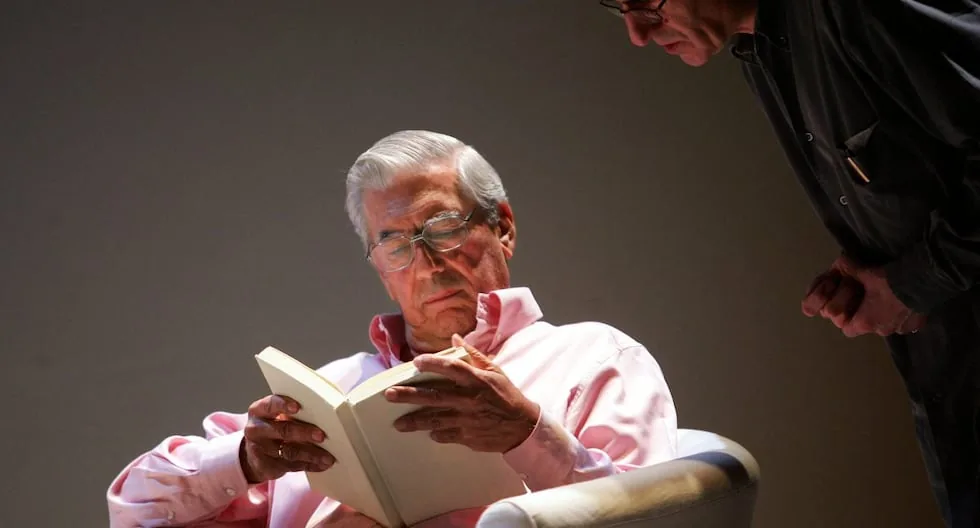
“I learned to read at 5 years old, in Brother Justiniano’s class, at the La Salle school, in Cochabamba.” This is how the Peruvian writer Mario Vargas Llosa began his speech on December 7, 2010, at the Nobel Foundation building. We recall these lines in connection with the exhibition that has been on display since May 28 at the House of Literature, which precisely investigates those first childhood readings. It is a temporal journey that links the young reader with the budding writer.
The first section shares readings in the friendly environment of the maternal family: books, newspapers, magazines, and comics. Vargas Llosa as a furious reader of Sandokán, protagonist of a series of adventure novels written by the Italian author Emilio Salgari; of Genoveva de Brabante, the heroine of the medieval legend, of the Chilean Peneca and the Argentine Billiken, the first children’s magazines that emerged in these countries after the arrival of modern journalism, all publications displayed in the room, in addition to reproductions of his first writings, poems, and letters.
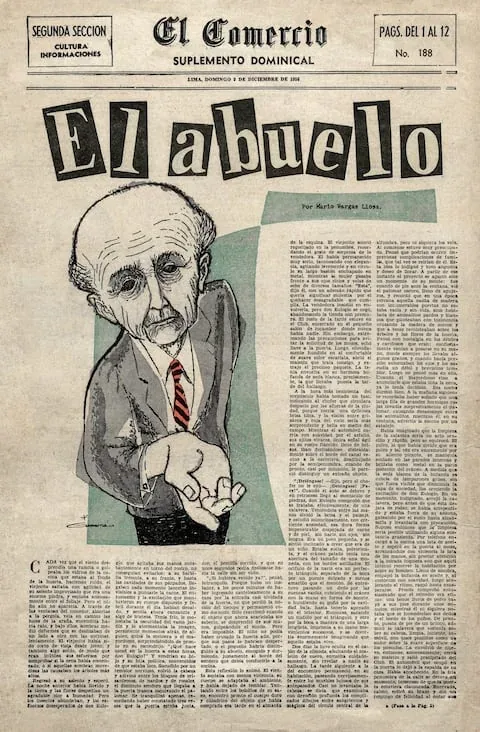
Text by Mario Vargas Llosa for the supplement “El Dominical” of “El Comercio”.
Twelve in literature
A grade of 12 in Spanish and Literature. Eleven in English. Another 12 in World History and the same in Art. The second-year secondary school certificate from La Salle school was not very promising for the future Nobel laureate, who in 1952 experienced the trauma of his father’s sudden appearance and their difficult coexistence. These official documents on display are joined by those from Leoncio Prado, as well as the last school year at San Miguel de Piura, where he regained his creative pulse by collaborating with the newspaper “La Industria” and presenting his first play, “The Inca’s Escape,” at the Variedades theater.
“Those three months at ‘La Crónica’ will mark him deeply. There he will get to know another type of writing, beyond fiction.”
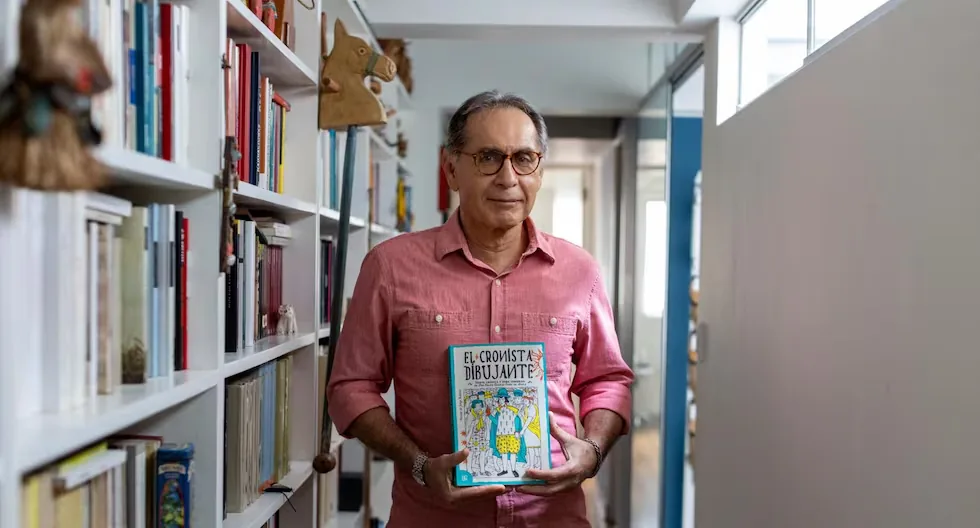
Ibis Meléndez | Curator of the exhibition
The second part of the exhibition, “Press Days,” recovers his first journalistic texts in “La Crónica,” a newspaper he joined at 16 through paternal mediation and where he covered social, police, and cultural topics. “Those three months at ‘La Crónica’ will mark him deeply. There he will get to know another type of writing, beyond fiction. He begins to write chronicles and reports, taking advantage of what society gives him,” explains Ibis Meléndez, curator of the exhibition, with advice from the writer Alonso Rabí.
On the tour, we can read one of his first articles, dedicated to the cachascán, or about the care that must be taken with pharmacies in Lima. Added to these are his columns in “La Industria” of Piura, the city to which he moved to finish secondary school. He began collaborating in April 1952 and stayed there about 10 months before returning to Lima to study at San Marcos. “In that space, Vargas Llosa will develop an intense writing exercise. On one hand, he has his own column: “Good Morning” (which inspires the exhibition’s title), in addition to his reports on current events in Piura. In his column “Campanario,” the young writer begins to try pseudonyms for texts more linked to fiction and fantasy. He signs as Oiram Sagrav, his name backwards, some poems, as well as texts about tourism and theater. “He has his signatures very well analyzed. For example, the pseudonym Vincent Naxe is used for more intellectual texts, while with Oiram he explores his more creative side. By the way, as Oiram he will sign, in the weekly “Democracia” founded with Luis Jaime Cisneros, his first ‘Touchstone’,” she points out.
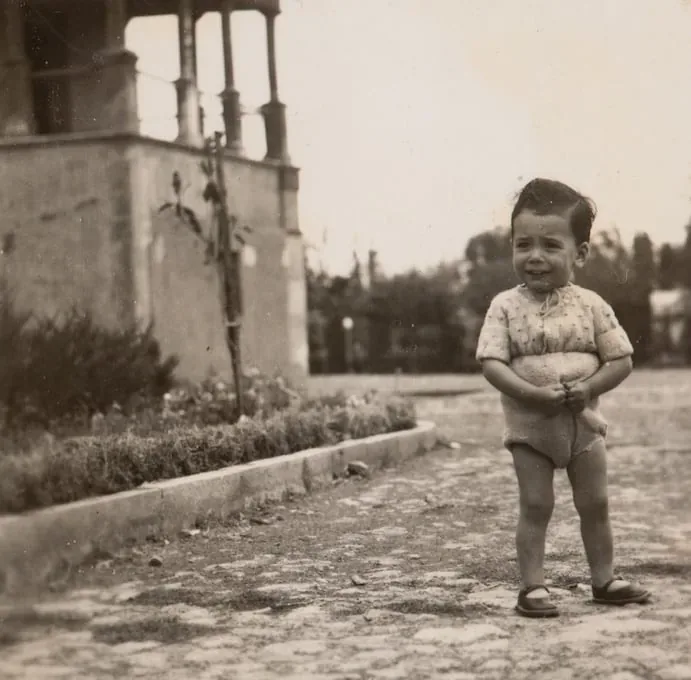
Vargas Llosa as a baby, in his early years in Cochabamba, with his maternal family.
Finally, in the section “Writing to live,” the exhibition lands on his first literary texts. In these years he works alongside Raúl Porras, from whom he learns the research methodology that will influence his writing processes. Together with Abelardo Oquendo and Luis Loayza, he founds the magazine “Literature,” a triumvirate that will become a solid friendship. Among other works, his film columns published in the newspaper “Extra” stand out, in which he records his love for westerns and crime stories. Likewise, it is the time when he will publish his first stories in magazines such as “Turismo” (“The Alley”), “El Mercurio Peruano” (“The Challenge”) and “El Dominical” of El Comercio, where “The Grandfather” is published, a story that would later be part of his volume “The Chiefs.” Initial texts that reveal an author determined to build a defined literary personality.
Also…
To know
The exhibition “Good Morning, Mario. The awakening of a vocation” opens on Thursday, May 28, at 7 p.m. in exhibition room 1 of Caslit (Jr. Áncash 207, Lima). Admission is free. It runs from Tuesday to Sunday from 10 a.m. to 7 p.m.

![Alberto Beingolea: “If they insist on not giving [the powers], they are complicating life for Peru”](https://insightermedia.com/wp-content/uploads/2026/09/bb3fa9e11304ea13fe2cd333955007bc-150x150.webp "Alberto Beingolea: “If they insist on not giving [the powers], they are complicating life for Peru”")