




![Alberto Beingolea: “If they insist on not giving [the powers], they are complicating life for Peru”](https://insightermedia.com/wp-content/uploads/2026/09/bb3fa9e11304ea13fe2cd333955007bc-150x150.webp "Alberto Beingolea: “If they insist on not giving [the powers], they are complicating life for Peru”")




Every time Hollywood announces a major historical film, the discussion repeats almost like a ritual. Even before the public reaches the theaters, historians, archaeologists, and enthusiasts begin to point out anachronistic armor, weapons that did not yet exist, or characters who were never there. It happens that, since its beginnings, the seventh art has found in history an inexhaustible source of heroes, wars, and tragedies, although it has rarely felt obliged to reproduce them accurately. For many directors, documentary fidelity yields to the greater priority of telling a good story. This is where so-called historical licenses appear: creative decisions that alter facts in favor of spectacle.
Read more “No me lanzó ningún hechizo”: Ethel Pozo after meeting with Magaly Medina
LOOK: Roblox: what you need to know about the game that captures children’s attention and has even reached classrooms
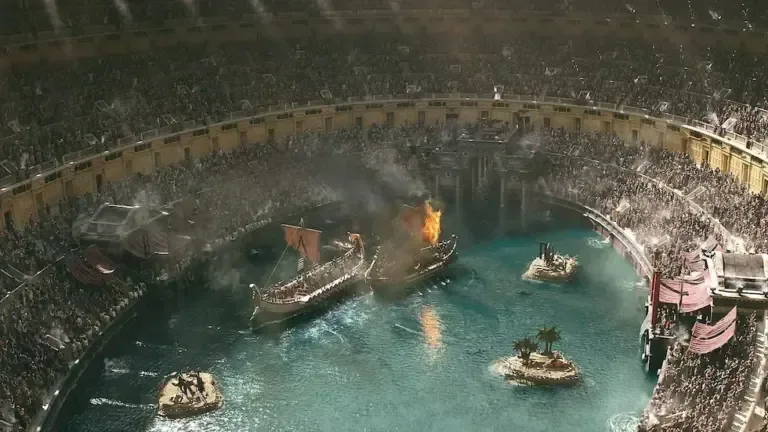
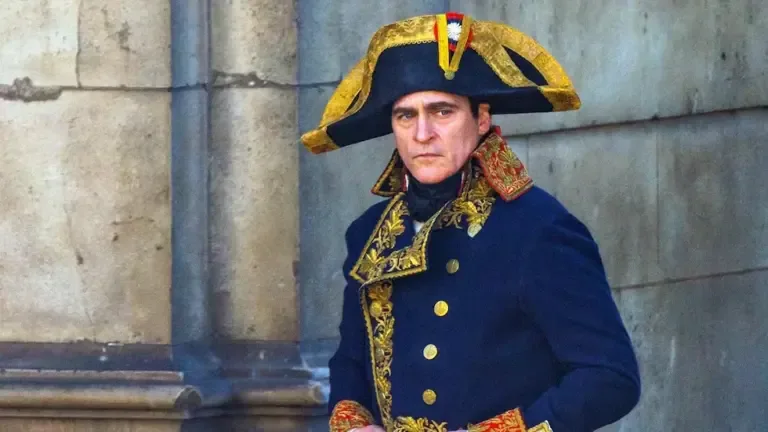
Few filmographies illustrate that tension better than Ridley Scott’s. The British director has built much of his career recreating great episodes of the past, although not always with the historians’ approval. In “Napoleon” he showed the French emperor bombing the pyramids of Egypt, an episode for which there is no historical evidence. In “Gladiator” he helped popularize the idea that Roman emperors decided the life or death of a gladiator by raising their thumb. And in “Gladiator II” he went further by imagining sharks swimming during the naumachiae in the Colosseum. When asked about that license, Scott replied ironically: “What’s strange about that? Were historians there?”
They are not the only cases. For decades, cinema and television have helped consolidate images of the past that many viewers today take as true. Much of the medieval iconography that appears on screen — black leathers, dark tones, buckles, and an almost industrial look — has little to do with an era dominated by fabrics dyed in bright colors. Something similar happened with “Braveheart,” criticized for showing William Wallace and the Scottish warriors wearing kilts and with their faces painted blue, elements that belong to different historical periods.
The next to enter that terrain will be “The Odyssey.” Although it has not yet been released, Christopher Nolan’s film has already sparked intense debate over its recreation of Mycenaean Greece. The first official image of Matt Damon as Odysseus was questioned for the helmet and armor the character wears, considered anachronistic by some specialists. Later, the trailer fueled new discussions about the black armor of several warriors and the portrayal of Helen of Troy. Nolan has defended the costume design by recalling that visually reconstructing the Bronze Age inevitably involves a margin of interpretation due to the scarcity of archaeological evidence.
The controversy reopens an old question: where does reconstruction end and artistic creation begin? For film critic María Alejandra Bernedo, the debate should not focus on the existence of historical licenses, but on the effect they have. “There are exaggerations in licenses and anachronisms sometimes, but you have to see how much they affect the core of the story, what is done just for effect, and what enriches its layers, or what diminishes them,” she points out. In that sense, she considers it impossible to aspire to a completely faithful adaptation of a literary work or a historical period, since each reader imagines those worlds from their own references. What matters, she maintains, is to ask whether those changes strengthen the story or end up impoverishing it.
Bernedo recalls that many other arts have shaped the way we imagine the past. As an example, she mentions “Aida,” Giuseppe Verdi’s opera, whose lavish staging ended up consolidating a monumental and exotic image of Ancient Egypt that was far from rigorous from a historical point of view.
Reconstruction as ethics
At the opposite extreme of historical relativism in favor of entertainment is American Robert Eggers. The director of “The Witch,” “The Lighthouse,” “The Northman,” and “Nosferatu” has gained fame for his obsession with period reconstruction. For “The Witch” he researched the daily life of 17th-century New England and consulted historians to reproduce the language, architecture, clothing, and religious beliefs of the time. In “The Northman” he repeated the method with archaeologists and specialists in Viking culture. Still, Eggers maintains that this rigor responds more to a personal preference than an ideological stance: for him, historical accuracy is a “shortcut” to build believable worlds, not an obligation to avoid any anachronism.

The controversy around “The Odyssey,” when it does not adhere to racist tropes such as Helen of Troy’s skin color or the actors’ accents, should focus on whether the changes made tell a better story. Each author, in the end, is free to present their version according to their sensibility. Bernedo recalls that she has enjoyed films that deliberately break historical accuracy as part of a coherent artistic proposal. She cites the case of “Marie Antoinette,” by Sofia Coppola, where the protagonist appears wearing sneakers. The anachronism is evident, but it is part of the film’s visual language.
The relationship between cinema and history is hardly resolved in absolute terms. As cases as different as Ridley Scott’s and Robert Eggers’ show, historical licenses can respond to very different artistic searches. Perhaps the question is not how far they stray from documents, but what they contribute to the narrative and whether they cross ethical boundaries by distorting facts to justify denialist or supremacist discourses. That debate, it seems, will continue to accompany historical cinema. //
Read more Results La Tinka: meet the winner of Wednesday, July 15
- Boston in 24 hours: a route to enjoy the city in the United States that attracts more Peruvians every day
- Trastevere: between the market, the bar, and the contemporary trattoria
- Luis Espinoza, the chef who left everything for love and today triumphs in Boston with the first craft brewery with a Peruvian soul
- He doesn’t seem famous, but when he sings everything stops. Ed Sheeran, the redhead with the golden voice who loves Peru and will sing at the National
- Encuentro Boletero, the unusual club in Lima of people who collect combi tickets