





![Alberto Beingolea: “If they insist on not giving [the powers], they are complicating life for Peru”](https://insightermedia.com/wp-content/uploads/2026/09/bb3fa9e11304ea13fe2cd333955007bc-150x150.webp "Alberto Beingolea: “If they insist on not giving [the powers], they are complicating life for Peru”")



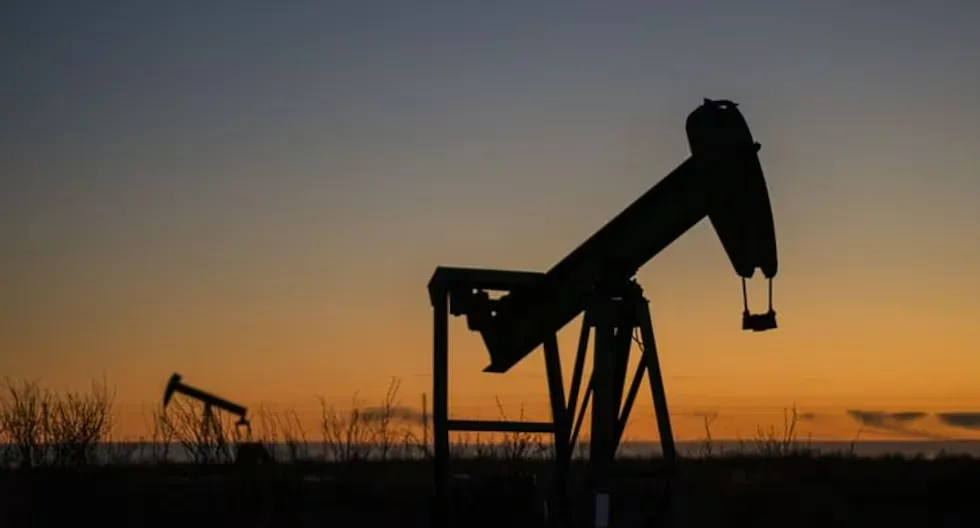
West Texas Intermediate crude oil (WTI) rose 0.9% this Friday, reaching $83.23 per barrel, following new threats from U.S. President Donald Trump to Iran, and the declaration of a maritime embargo against Saudi Arabia by Yemen’s Houthis.
Read more Congress members question possible installation bonus for parliamentarians
More information: The 2026 World Cup would have a smaller impact on the U.S. economy than expected
At the end of the session, WTI futures contracts for August, the U.S. benchmark, increased by $0.74 compared to the previous day’s close.
Last week, Texas crude had already risen nearly 15% amid escalating reciprocal attacks between the U.S. and Iran.
The market started the day down but reversed and rose again after Donald Trump threatened to make Iran “pay” for the deaths of three U.S. soldiers deployed in Jordan and Iraq.
These are the first U.S. casualties recorded since the breakdown of the ceasefire between the U.S. and Iran nearly two weeks ago.
This weekend, Washington and Tehran continued the exchange of attacks, further complicating efforts to advance a stalled peace dialogue amid the escalation.
However, the spokesperson for Iran’s Ministry of Foreign Affairs, Esmail Baghaei, said intermediaries have continued exchanging messages amid the latest round of U.S. attacks.
You can see: Netflix seeks to convince Wall Street it still has room to grow despite forecasts below expectations
Besides that, the Houthis declared a maritime blockade against Saudi Arabia this Monday, a week after the Yemeni Army bombed Sana’a International Airport – the capital of Yemen controlled by the rebels – in an action aimed at preventing the landing of an Iranian plane.
Yemen’s Houthi rebels issued radio warnings to ships transiting the Red Sea and the Gulf of Aden that vessels linked to Saudi Arabia are prohibited from using those routes or will be attacked.
Analysts at Rystad Energy pointed out the impact of these geopolitical tensions, as the Strait of Hormuz remains practically paralyzed, with very limited ship traffic from Gulf exporters.
“With the Gulf’s main maritime outlet largely closed, the market increasingly depends on Saudi Arabia’s East-West pipeline and Red Sea terminals to maintain export flows,” said Jorge León, head of geopolitical analysis at Rystad.
Read more Why did María Pía Copello send a formal letter to well-known YouTuber, IOA?