




![Alberto Beingolea: “If they insist on not giving [the powers], they are complicating life for Peru”](https://insightermedia.com/wp-content/uploads/2026/09/bb3fa9e11304ea13fe2cd333955007bc-150x150.webp "Alberto Beingolea: “If they insist on not giving [the powers], they are complicating life for Peru”")


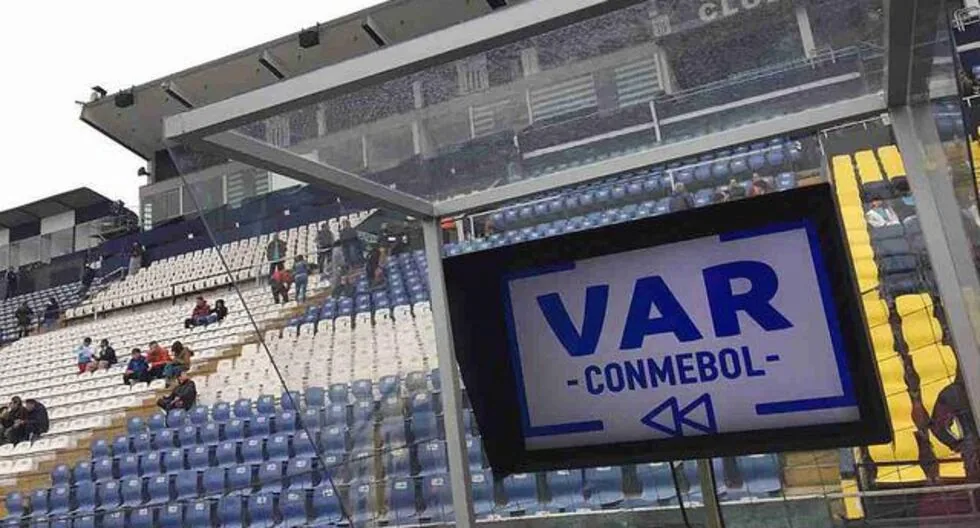
Football changes every year. Sometimes it does so with modifications that are barely noticeable and other times with adjustments capable of altering the dynamics of a match. Liga 1 will be no exception. Since the start of the Clausura Tournament, the tournaments organized by the Professional Football League have been applying the updates to the Laws of the Game approved by the International Football Association Board (IFAB), a series of changes aimed at reducing interruptions, improving VAR intervention, and providing referees with more tools to combat deliberate time-wasting.
Read more Nasca Tragedy: the timeline of the flight that led the MTC to suspend Aerodiana operations
READ: VIDEO: Universitario could not overcome Cienciano in Cusco and moves away from the top of the Clausura Tournament
Although some of these novelties were already seen during the 2026 World Cup, not all are officially part of the regulations. Therefore, their implementation in the Peruvian championship will have its own nuances. This is explained by Juan Sulca, president of the National Referees Commission (CONAR), who clarifies that Peruvian football will only adopt the modifications formally included by IFAB.
“There are some that were only applied in the World Cup because they have not been included in the laws of the game as modifications. For example, covering the mouth is still not included; it was something done in the World Cup. And the rehydration time in all matches: here it will still only be maintained in cities with high temperatures. But after that, all other modifications are applied,” he points out.
A VAR with new powers
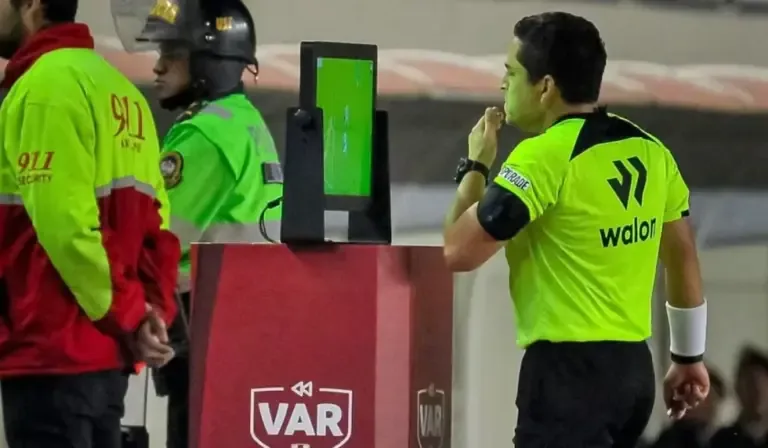
One of the most striking changes is related to video refereeing. From now on, VAR will be able to intervene to correct a corner kick decision when, in reality, it should be a goal kick. However, this possibility will be limited by very strict conditions.
The striking thing is that it will not be enough to detect an error. The action must be clear and, above all, immediate. If play has already resumed, the opportunity is lost.
“To correct a decision from a corner kick to a goal kick, it has to be a clear play and done immediately. That is, the match cannot be stopped to make a review. If it is a clear situation and immediate, the referee can be assisted by indicating that it is a goal kick,” explains Sulca.
The official also specifies that the modification works in only one direction. That is, VAR can change a corner into a goal kick, but not the other way around. “What cannot be done is to convert a goal kick into a corner; the only possibility is from corner to goal kick,” he adds.
🖥️ DID VAR MAKE A MISTAKE AGAIN?#AlianzaLima 1-0 #AlianzaAtlético
— L1MAX (@L1MAX_) August 2, 2026
📺 Learn how to watch L1MAX live 👉 https://t.co/6a8egzADjM#L1MAX #Liga1 #TorneoClausura2026 pic.twitter.com/GdPw9uDRLd
The clarification is not minor. In a tournament like Liga 1, where many matches are played with four or five broadcast cameras—far from the technological deployment of a World Cup—the availability of images could become a determining factor for these interventions to actually occur.
However, Sulca rules out that the smaller number of cameras changes the spirit of the rule. “The idea is not to review all situations, but those obvious ones that the referee could not see. In the others, the field decision is final. This speaks of situations that must be resolved immediately,” he says.
Read more Northern routes under attack: 17 attacks hit interprovincial transport in 45 days
Another novelty is that VAR will also be able to recommend reviewing actions related to a second yellow card when the referee has clearly missed an offense deserving a caution. But again, the criterion will be restrictive.
“It does not imply controversy or debatable situations. It is for when the referee clearly did not see a second yellow card situation. It is very important not to forget this because otherwise, there could be abuse in requesting reviews for any play,” he warns.
Less lost time, more effective play
Another IFAB objective is to combat an increasingly common practice in modern football: time-wasting. For this, the new rules tighten the criteria regarding the time players have to execute restarts such as goal kicks or throw-ins.
The main question revolves around when the count starts. In the World Cup, scenes were observed where a player left the ball for another to take the action, unnecessarily prolonging the restart.
Sulca explains that the instruction for referees will not simply be to count seconds, but to interpret the player’s intention. “The important thing is to understand the spirit of the rules, which is to prevent time-wasting. If a player attempts to take a restart and leaves the ball for another to come, he is trying to waste time. The referee is instructed to interpret that and not necessarily count from when each player touches the ball,” he explains.
The same criterion will apply to goalkeepers who deliberately delay the execution of a goal kick by moving the ball inside the area without real intention of putting it into play.
Beyond the modifications, CONAR considers that their success will also depend on the knowledge that players and coaches have. Therefore, the organization keeps training sessions open for clubs that request them. “We are always available. When a team requests an update talk, we assign an instructor to go to their training or concentration site,” Sulca states.
So far, Sport Boys, Alianza Lima, and FC Cajamarca have already requested these informational sessions. It will be a first step to adapt to regulations that promise to generate debate in their first rounds, but whose purpose is clear: to reduce avoidable controversies, speed up the pace of matches, and bring Peruvian refereeing closer to international standards.
Read more Do you have a police report and don’t know it? Here’s how you can find out using just your ID card
*********