




![Alberto Beingolea: “If they insist on not giving [the powers], they are complicating life for Peru”](https://insightermedia.com/wp-content/uploads/2026/09/bb3fa9e11304ea13fe2cd333955007bc-150x150.webp "Alberto Beingolea: “If they insist on not giving [the powers], they are complicating life for Peru”")


![Alberto Beingolea: “If they insist on not giving [the powers], they are complicating life for Peru”](https://insightermedia.com/wp-content/uploads/2026/09/bb3fa9e11304ea13fe2cd333955007bc.webp "Alberto Beingolea: “If they insist on not giving [the powers], they are complicating life for Peru”")
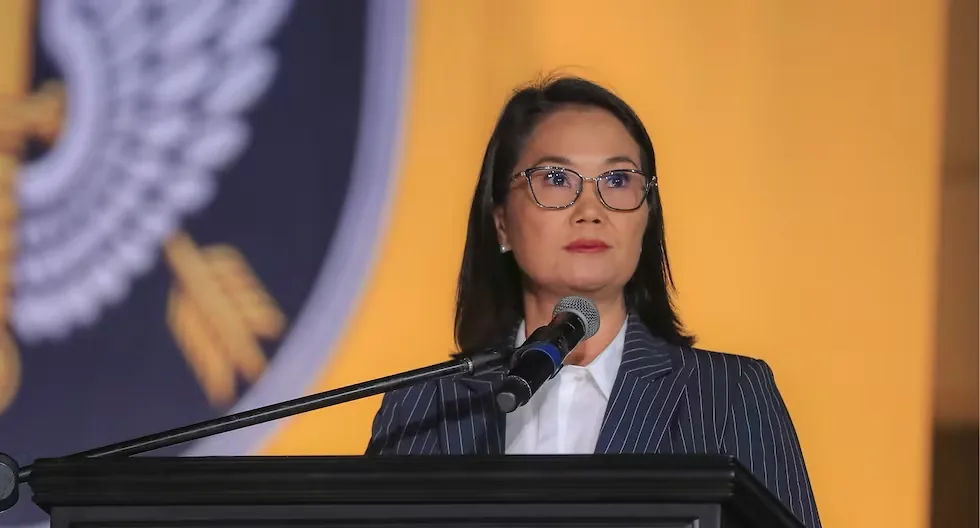
The Minister of Culture, Alberto Beingolea, regretted that eight out of twelve committees of the Chamber of Deputies of Congress have rejected granting the government powers to legislate on security and enact measures in response to the El Niño phenomenon and other issues. He added that it is the Executive “who determines what its urgencies are” and “not the other way around,” referring to the opposition’s letter requesting a reformulation of the administration of Keiko Fujimori‘s request.
In an interview with El Comercio, Beingolea announced that in the coming days his ministry will appoint a new director of the Lugar de la Memoria (LUM).
— Eight out of twelve committees of the Chamber of Deputies are against Congress granting powers to the government. How do you interpret this situation?
I regret it. 70% of the country is in favor of giving us the powers we are requesting. The population understands that there is a new government and that in facing the tasks it requires certain tools and is asking for them, as is usual in Peru’s history. Denying the government this possibility is not even petty; it is failing to realize what is happening in the country. If the popularly elected government requests powers, if 70% of the population agrees, what is the reason for these committees to oppose it? I would regret it. I hope it is reconsidered and that the members of Parliament understand that the problems of citizen security, economic issues, and El Niño affect all Peruvians. This is not a government problem but a problem for everyone, and what we need is for everyone to fulfill their role.
— The opposition sent a letter to Prime Minister Luis Galarreta requesting that he present a new delegated powers project focused on security and the El Niño phenomenon. The Executive has stated they will not do so. Where does the solution to this deadlock lie?
The one who decides what powers are required is the Executive, not the Legislative, let’s not confuse that. Congress has the initiative to legislate and enact the rules it deems appropriate. What the Executive can do is, faced with the urgency of certain circumstances, request powers on those points; it is not the other way around. This is an unusual situation where the one trying to take the initiative is the Legislative. It is the Executive that determines what its urgencies are, not the other way around.
— President Fujimori’s and the Cabinet members’ discourse is aimed at saying that without the powers, the government can do little against crime and other issues. Are they really tied hands?
Let’s see, it is quite clear from what has happened in the last 30 years that crime is winning the battle against us. It is quite clear, then, that the tools we currently have to fight crime are not optimal. The government understands it needs powers to enact rules and generate new tools for this urgent fight. If they insist [from the opposition] on not giving [the powers], they are complicating life for Peru. We will fulfill our task of confronting crime, but they are tying our hands.
— During the campaign, President Keiko Fujimori said she was going to put “order,” but she did not condition this on a delegation of powers. If Congress does not approve the project, would it be a failure?
What government that has taken office in recent years has not requested delegated powers? Obviously, when a person is in an electoral campaign and makes announcements of this nature, they are thinking about having the tools to govern. And part of these tools are precisely those they can enact legislatively once given the possibility to do so. What they are doing is taking away that possibility.
— In recent weeks, there have been various verbal outbursts from different ministers, including Elmer Cuba (Economy and Finance) and Ernesto Álvarez (Justice). Both received a reprimand from President Fujimori. Is there a lack of coordination in the Cabinet?
No, it is not a topic I will comment on. But I will tell you regarding your last question that we have permanent meetings, we hold cabinet councils practically every day, we make decisions, and we are all connected daily.
Read more Josué, who defends you?, a chronicle by Fernando Vivas about the Ombudsman
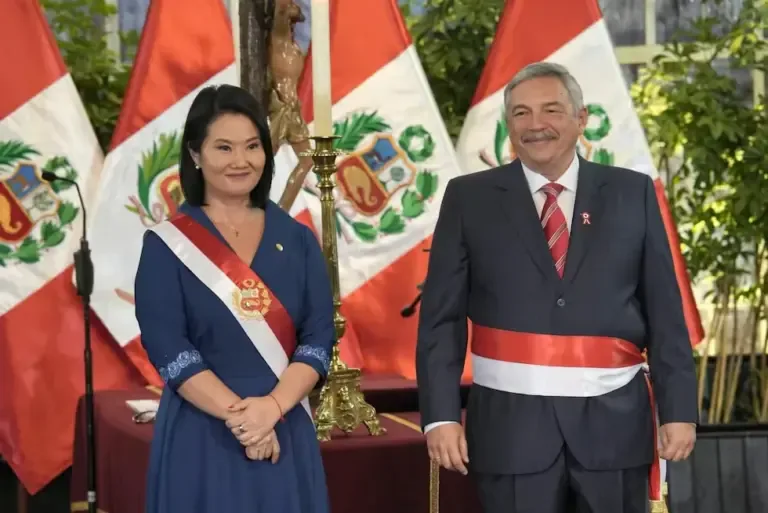
— Minister Álvarez opened the debate for the Lugar de la Memoria (LUM) to move to the Justice and Human Rights sector. Has this issue been settled? Does the LUM stay in Culture?
That was never a debate, it was never an issue. Minister Álvarez expressed an opinion at the time but has already explained. He was simply asked a question and gave an opinion. But it has never been an issue on the government’s agenda and particularly not for the Ministry of Culture.
— So, is the controversy settled?
It never existed. It is an issue [the transfer to Justice] that has not even been proposed.
— Have you already been to the LUM as Minister of Culture? Have you toured each of the rooms?
No, I have not been since taking office. Before, yes. After taking office, I have been to Tumbes, Trujillo, Cusco, and Junín. My priorities are to face El Niño and the Machu Picchu problem; that is what I will be 100% dedicated to. The LUM is not a priority; it is an issue that will undoubtedly be addressed. We have temporarily assigned the direction of the LUM to the Museums director [of Mincul]. And in the coming days, we will appoint a new director of the LUM, but this is a normal government process. The LUM is not a priority for the government at this moment; I understand that a sector is insisting. Right now, the Ministry of Culture’s priority is El Niño and fixing the Machu Picchu problem.
— The ticket sales system for Machu Picchu has changed, and now users will have 15 minutes to complete the purchase. Does this new model solve the underlying problem?
Without a doubt. What was happening, according to the latest report from the Ombudsman’s Office, was that more than 60% of the tickets that had been reserved were returned, so there was no effective sale. What you had was a reservation system that allowed a lot of bots to hoard tickets. That is, tickets were not sold and gave a false illusion that everything was sold out when that was not the case. Therefore, a lot of people crowded Machu Picchu trying to buy tickets they ultimately could not get.
So, that changes from now on; just like when you want to go to any venue, you will identify yourself on the platform, enter your name, your ID, and with that, you pay for your ticket and automatically get your ticket. In advance, you will know the date and time you have to be at Machu Picchu.
— A few years ago, a private company was in charge of selling access tickets to Machu Picchu. Has returning to that practice through a tender been considered?
No.
— According to the latest Datum survey for América TV, Keiko Fujimori’s approval dropped from 60% to 42% in the last month. Has not having the powers and ministerial mistakes taken their toll?
I have different information, which is due to the closeness the president has had that I have not seen in other cases. President Fujimori, in just 50 days, has traveled half of Peru, has been present at every emergency that has occurred anywhere in the Republic, does not stop traveling and being close to the population. And that is what I have seen in the places where I have coincided with her.
Read more Ignacio Buse vs. Hernando Escurra live: broadcast of the match for the 2026 Davis Cup