





![Alberto Beingolea: “If they insist on not giving [the powers], they are complicating life for Peru”](https://insightermedia.com/wp-content/uploads/2026/09/bb3fa9e11304ea13fe2cd333955007bc-150x150.webp "Alberto Beingolea: “If they insist on not giving [the powers], they are complicating life for Peru”")



LOOK: Roblox: what you need to know about the game that captures children’s attention and has even reached classrooms
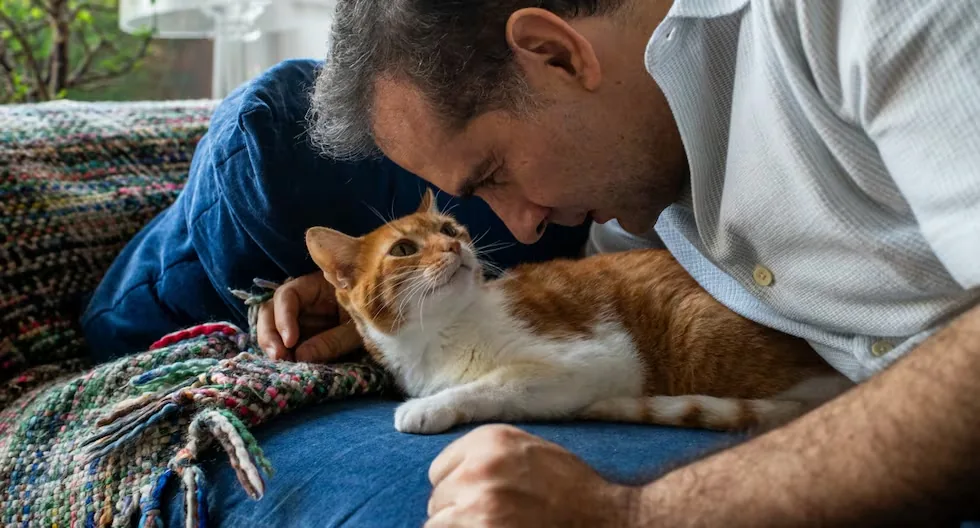
Sitting on the sofa in his living room next to his cat, Flancito, who squints his eyes when petted, Echevarría recalls an experience that hit him harder than any of his bankruptcies. It was the night he had to say goodbye to his cat Cleo, due to a kidney disease that struck her almost suddenly. The veterinarians warned him that Cleo probably wouldn’t make it to the next morning, so Echevarría didn’t want to leave her in a strange and cold place. He took her home, placed her on his chest, and stayed with her until the end. “I saw life leaving her. Her eyes lost their shine and she left a coldness in my chest that lasted for weeks,” he recalls.
Read more Il Trovatore at the Municipal Theater, Verdi’s success in 19th century Lima
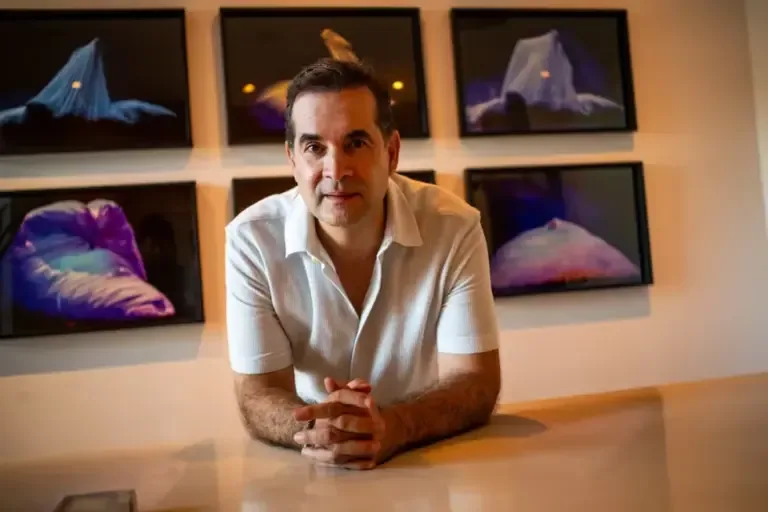
Like many people who were children in the seventies, the actor and psychologist assures that back then there wasn’t the sensitivity there is now towards pets. Those were times when the family dog was let out until it scratched the door to come back in. He had never really lived with cats, and it was only with Julieta, Cleo, and Flancito that he discovered a different relationship. Cleo’s death allowed him to understand to what extent those animals had transformed his life. “Now Flancito is left alone and he doesn’t leave my side. I am a person who doesn’t cry easily. But Cleo helped me a lot. She made me cry many tears that were stored inside.”
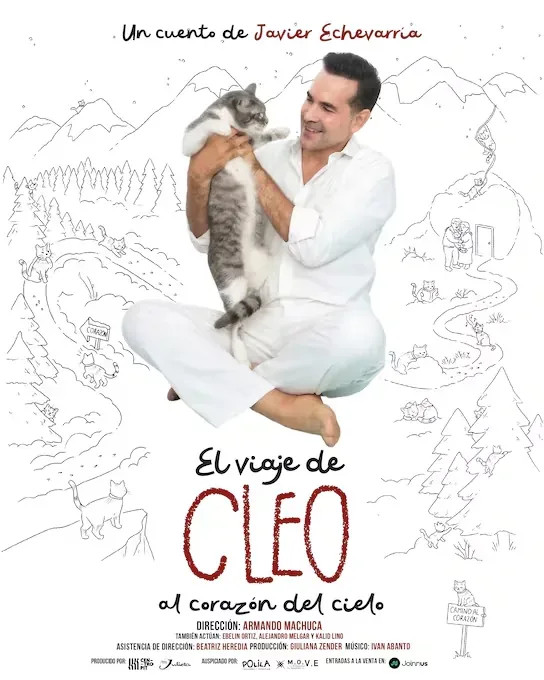
While accompanying Cleo in her last hours, Echevarría began to ask himself questions he had never considered before. One of them was what happens to pets after death. “I hadn’t thought about that. I hadn’t thought about a narrative afterwards,” he recalls. The question lingered in his mind for months, until he tried to answer it first in a book and then in a play: “The Journey of Cleo to the Heart of Heaven,” a story that imagines the journey of a cat after dying and offers a response more emotional than religious. In Echevarría’s universe, departed pets find their place within the hearts of those who love them.
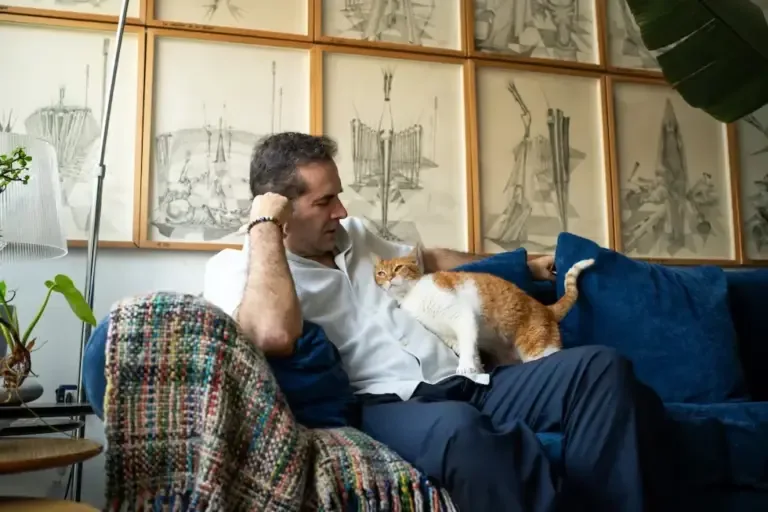
Echevarría believes that “The Journey of Cleo to the Heart of Heaven” is a work about emotional healing rather than death. As a psychologist, he maintains that art must fulfill a therapeutic function and not only an aesthetic one. “Art is at the service of therapy, not the other way around,” he states. That is why he sought to address such a painful topic with tenderness, humor, and imagination. His intention was not to provoke desolation, but to offer a story capable of accompanying those going through grief and helping them manage such a situation. Audience reactions have ended up confirming to him that the story connects. After the performances, many people wait for him to share personal experiences of farewell and absence. There are tears, he acknowledges, but not desolation.
A boy who imagined
The conversation with Javier extends to other territories. As he himself admits, as a child he was not very attached to animals. His childhood, however, had something unique. What he liked most was inventing stories. He would take his plastic soldiers and build complete stories that lasted days. Although he grew up among five siblings, he says he cultivated an impeccable solitude, and sometimes he was struck by a feeling of being invisible that he didn’t like at all. One day, a teacher failed him for lack of participation, and when he went to complain, the teacher replied: “Who are you?” He was, then, completely invisible. To recover the course, he had to act in a school play. “I was terrified of the stage, but I was more afraid of failing,” he says with laughter. That was the decision that changed his life.
Read more Universitario vs Sport Huancayo LIVE for Liga 1: minute by minute of the match
He went from being the boy no one saw to becoming someone known, first in his school, then among regulars in the theater circuit, and finally throughout Peru thanks to so many soap operas. During the nineties, he participated in some of the most successful productions of Peruvian television. However, he never fully identified with the image of the TV heartthrob: while interviews focused on his acting career, he preferred to talk about psychology, a discipline he studied and practiced in parallel. At forty, he went through a crisis that became an epiphany. “I told myself: ‘I have tried to be the protagonist of soap operas and I haven’t dared to be the protagonist of my life.’” He understood that he had been waiting too long for others to write the script of his existence.
After a stint in Colombia, he returned to Peru, created his own company, and found a way to unite art and psychology. Now, while Flancito sleeps beside him and “The Journey of Cleo to the Heart of Heaven” approaches its final performances, a thread can be found that connects his entire trajectory: the boy who imagined worlds, the actor who sought complex characters, and the psychologist who turned a personal loss into a story capable of accompanying others. The stages change, but not the desire to tell new stories. //
“The Journey of Cleo to the Heart of Heaven” is a play written and starred by Javier Echevarría, directed by Armando Machuca. The staging addresses grief, memory, and loss with tenderness, humor, and imagination. The season ends with four performances on May 30 and 31 at the Julieta theater. Tickets are sold on Joinnus.
Read more Earthquake in Peru: exact time, epicenter, and magnitude on Saturday, May 30
- Boston in 24 hours: a route to enjoy the U.S. city that attracts more Peruvians every day
- Trastevere: between the market, the bar, and the contemporary trattoria
- Luis Espinoza, the chef who left everything for love and today triumphs in Boston with the first craft brewery with a Peruvian soul
- He doesn’t seem famous, but when he sings everything stops. Ed Sheeran, the redhead with the golden voice who loves Peru and will sing at the National
- Encuentro Boletero, the unusual club in Lima of people who collect combi tickets