




![Alberto Beingolea: “If they insist on not giving [the powers], they are complicating life for Peru”](https://insightermedia.com/wp-content/uploads/2026/09/bb3fa9e11304ea13fe2cd333955007bc-150x150.webp "Alberto Beingolea: “If they insist on not giving [the powers], they are complicating life for Peru”")

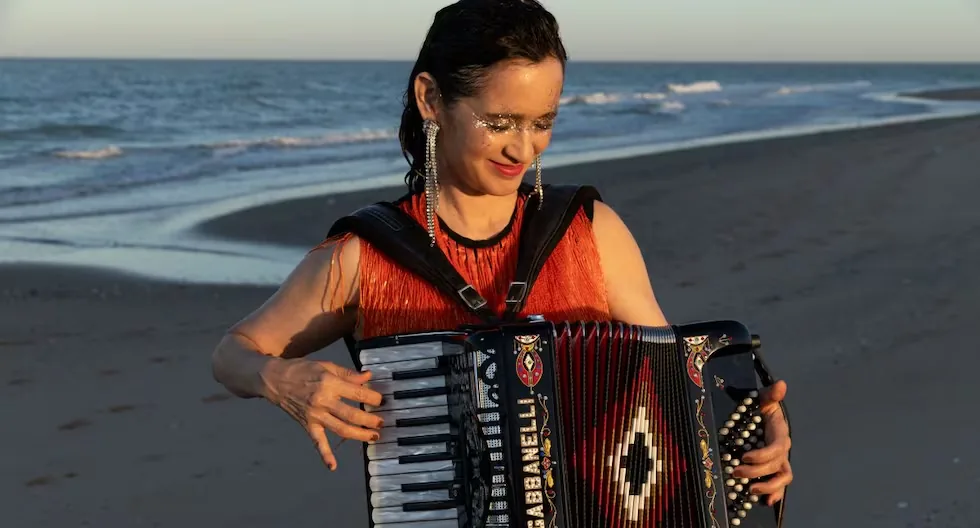
After eight years living in Argentina, Julieta Venegas felt the need to return to Mexico. At first, that return was only going to take the form of an album inspired by Tijuana and the regional northern music she grew up with, sounds that today experience unexpected popularity in the music industry. But the project ended up becoming something much deeper.
Read more TODAY’s Horoscope, Friday, May 29: predictions in work, love, and business
LOOK: Roblox: what you need to know about the game that captures children’s attention and has even reached classrooms
While diving into family photo archives, songs from her childhood, and readings about the history of her city, the singer also began an emotional journey into her own memories. When she welcomed us at the Altafonte headquarters, her independent record label, in the Roma neighborhood of Mexico City, she recalled that one of the books that accompanied her most during that process was “Tijuana, la horrible,” inspired in turn by a title familiar to many Peruvians: “Lima, la horrible,” by Sebastián Salazar Bondy.
That search, which she describes as “a territorial obsession of imagining the Baja California peninsula,” ended up pushing her to write, almost unintentionally, a memoir book that for a long time she didn’t know if she would publish. “I wanted to encourage myself to shed that shyness of never expressing anything about my personal life,” she says about the origin of “Norteña,” an ambitious project that, through songs and words, allows a closer look, perhaps like never before, at the artist and the woman behind them.
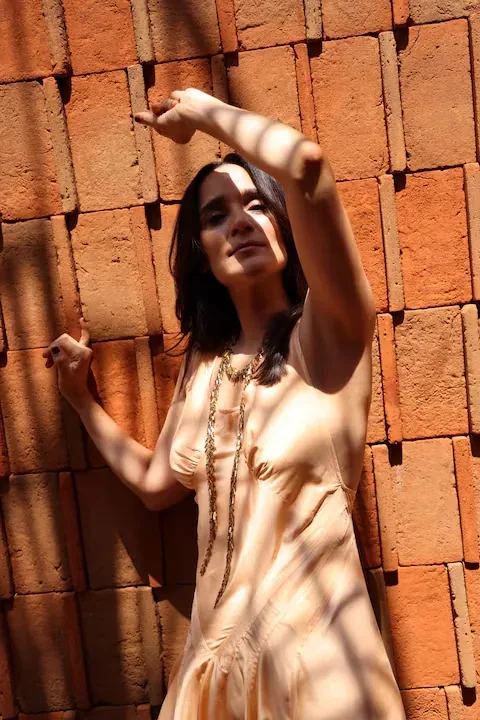
― When did you realize you needed to return to Mexico?
On a trip I took in November 2024. From the moment I landed, I was telling everyone I was going back, something triggered inside me, but I took a big detour to realize it, because I knew I missed it, I knew coming gave me something I didn’t have in Argentina, but at the same time I liked being in Buenos Aires for many reasons, for my daughter, who was closer to her father. I knew I would return at some point, I just didn’t know when. Until I landed that November and said to myself: now yes, it’s time.
― “Norteña” has also been an excuse for you to delve into your origins in Tijuana, a city you left very young to go to the Mexican capital as a way to escape the more traditional life your family wanted for you. Has this project allowed you to reconcile with your city?
I wouldn’t say it was a reconciliation, what it did allow me was to recognize and shed light on what had marked me. What pushed me to write a memoir book, alongside making the album, was the question of why I make music. And by doing this project, I realized that my family instilled in me an absolute love for it, although they were the ones who suffered the most when I decided to dedicate myself to this because they were scared, they had no role models within the family.
― It wasn’t easy for them.
No, because I was going to Mexico City to who knows where. At that time, telling my dad about rock was like talking about the devil, everything was very confusing for them and deep down it was also confusing for me. Everything was very unconscious, I knew I had something pushing me towards music, but I had no plan, we were all equally scared. If I had a reconciliation in some process of this project, which I consider a memory project in its entirety, it is a reconciliation with the decisions I made. Mine was an upbringing that led me to a traditional woman’s role: get married, have children, and have a more normal career.
― A conventional life.
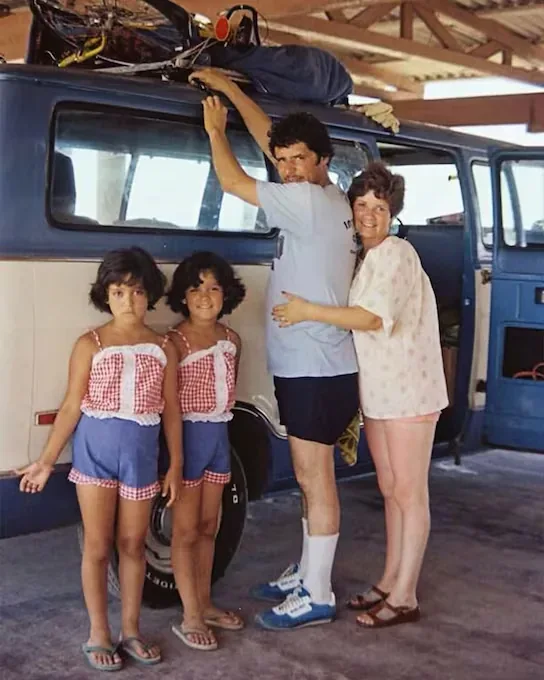
I just remembered a conversation I had with my dad where he asked me what I wanted to study and I told him music. He said no to that. Then I said I would study literature and he said that wasn’t a career either. So, I told him I wouldn’t study anything so he wouldn’t lose money and I wouldn’t waste time. Now that I remember it, I think I was very bold to have those conversations with my dad, who was super strict and would get upset.
― That reaction is curious because in your memoir you say that it was he who motivated you to study piano.
It’s that for my parents it was nice that I played the piano, it was part of a young lady’s good education, it looked nice when friends came over and the girls played the piano, but everything changed when my dad started seeing my rocker friends come to the house. It wasn’t what he had planned, he didn’t imagine the doors he was opening. I think, in general, for parents of my generation, that image of a woman going to a big city to make music was a big scare. Who would think of that! Writing my memoirs was nice because it was reconciling with that decision of not having made a common life, because it did torture me for a long time.
― In what sense?
It’s true that I make music and do what I want, but there’s also that side I never paid attention to and I don’t know if it’s right or not, I don’t know if maybe I should have gotten married and had children. But then I tell myself no, because it was never in my plans, it was never a topic, but I simply wasn’t making a path that I or mine knew and that was difficult. Yes, it tortured me deep down, and not because it was still an issue with my family, because when I started doing well my dad no longer said I was stubborn, but that I was perseverant. His reaction changed when they realized my reasons for making music were serious, and it was like that from a very young age, I never wanted to make music for partying or chaos, I was always a bit of a nun in that sense, I took music very seriously. But even so, deep down the idea of whether I should have had a partner kept going around, because I have my daughter but I didn’t have her in a couple situation, and I always questioned that. But in this process I told myself no, this is the life I was meant to live and I simply didn’t have other role models and how good it is that I can be a role model for someone, for a little girl who sees me and says yes, it can be done in other ways.
― That’s the beautiful and difficult part of being a pioneer.
I suppose.
― In “Terca,” one of the album’s songs, you talk about that initial reaction of your family to your decision to dedicate yourself to music, but you also tell how your mother supported you when you thought about giving up and returning to Tijuana, because she also dreamed of being a singer.
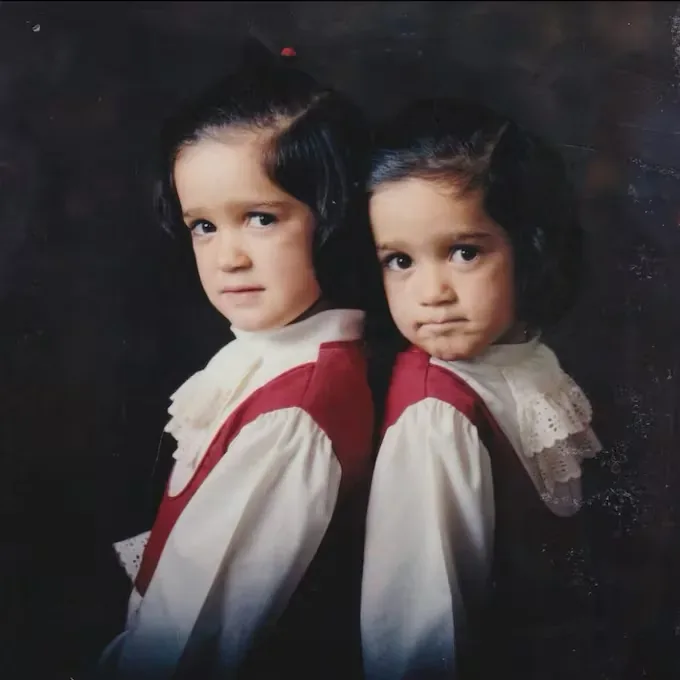
She taught me how to relate to music. My mom loves mariachi, she has this singing deeply inside and it’s still like that. That’s why for me singing is the ultimate expression of joy and unity, there’s no better way to express shared happiness than singing all together. I had to take this whole detour and do this project to realize how important that way of listening and being was in my formation. I was always, I don’t know if I should say rebellious, because I wasn’t someone who did things out of rebellion, but I was someone who separated and was in her own planet. In this whole detour I took for this project, now I see and recognize how that relationship with music marked me.
― “Te celebramos,” another song from the album, you wrote for your dad at his request. It must be the hardest commission for a composer: writing a song for a father.
One day he told me: I’ve never asked you for anything, but I want you to write me a song for my 80th birthday. And he asked me in front of everyone. I told him: dad, it’s not like they’re quesadillas. And for a good while, I told him I hadn’t written the song, but I had already asked my mom to give me details and tell me the story of how they met, what she liked about him, etc. The process of making this song was very beautiful because I wanted to write like José Alfredo Jiménez did. I didn’t want to sit at the piano to compose, I wanted to think about lines while I was in the car or walking through the city. Then, I contacted the mariachi and at his birthday party I presented the song, this was two years ago. When I made this album, I knew I wanted to include this song, even though it’s a birthday song and very specific about him. I like that it’s the song I close the album with because it conveys the spirit of the album, it has the warmth of a party, of a family barbecue.
Read more What are the most remembered coffee brands by Peruvians and what do they prefer?
― This album doesn’t have romantic love songs, but it does have songs about family love, culture, and especially friends. At this stage of your life, do you value love for friends more than other types of love?
Friendship has marked me a lot in recent years, I’ve put an emphasis on it, I realize who supports me. Before, I would lean a lot on romantic love, abandon my friendships and go with my boyfriend. Now, although obviously I really like romance and romantic love seems beautiful to me, I am in a stage of my life where I appreciate friendship much more, not because I didn’t appreciate it before, but because it has a more important place, I put it above the romantic part. I lived in Buenos Aires for eight years and the most important farewell was with my friends, I needed that hug with them, to say goodbye to such an important stage with them.
― How is it that you are a mythomaniac of love?
Yes, I am a mythomaniac of love, I talk about it in my memoirs because I felt I had to include a chapter on love because I talk a lot about it in my music, I have always liked to revolve around it and I consider that love gives that possibility to invent it in songs. What happens to me is that when I meet someone, I see a projection of someone spectacular, I have idealized many people. I don’t want to say I was disappointed, but I made a projection on a normal person, I said to myself: ‘wow, it’s incredible, the best, my life.’ I feel that chip was put in me very young, I no longer know how to get rid of that idealization of love, it’s very difficult to see people and fall in love with someone knowing how they are, because you take away their flaws, but in reality no one is perfect, we are human and you have to know how to live with that.
― In the album and the book, you also portray the duality of having lived and grown up in a border area, how has that situation shaped you as a person?
I am 100% crossed by the border, I have always felt a bit on the margins, I don’t feel like someone from the center, established, I am always kind of floating. I think it has to do with something very deep, I wouldn’t know how to get that idea out of my head, even though after this project and the process it involved, I understand things about myself that I didn’t know where they came from. I think that feeling of not being established was given to me by Tijuana. You are far from Mexico, but at the same time it is the most important country. At home it was all Mexico, Mexico, and Mexico. Even though I had the other side, I crossed the line and went to the movies, read and spoke in English. The natural thing is to live that duality, to have the brain split in two.
― In the song “La línea” you talk about life on the border through separation, a scene that repeats every day on the border and that you also address in your memoirs. Do you feel it is a more hostile environment now?
When I wrote “La línea” things weren’t like they are now, although this drama has always existed. Part of what gives that very strange energy to Tijuana, which is very difficult to describe, is that constant movement, that day-to-day of very traumatic stories that are part of our landscape. When we went to Playas de Tijuana with my family, we saw the border (with the United States), people standing there all the time, it’s something super natural, I’m not saying you get used to it at all. That story is layered with cruelty, but it has always been there. When I wanted to imagine that north where I grew up, and wanted to make a portrait in songs of that landscape, the element of migration had to be there, I couldn’t ignore it, it’s part of the landscape that exists in my head.
― Why did you choose Yahritza y Su Esencia for this song?
I always imagined them for the album, although not always for “La línea.” I feel they are renewing Mexican popular music. They are a 100% migrant family, with a reality that sometimes gets lost from view. They went to live in the United States, but their family, their home, their daily life, is Mexican. Initially, I fell in love with their music and Yahritza’s voice, which seems very expressive to me, full of great emotion and drama, but at the same time pure. After recording the song, they told me they had experienced a story like that. The older siblings were born in Mexico and the younger ones in the United States. The oldest at some point had to return to Mexico to fix his papers and it was very traumatic for him. They are from a town in Michoacán, but they left very young. They already had the group and at that moment they separated from their brother. So, for her, singing the song was very strong, but art sometimes gives you that possibility. I want to express that trauma from emotion, not from the political place, because politics changes and moves, but the emotion, that trauma of separation, will always be the same. If you separate me from someone dear it will always be very traumatic, and that’s what the song wants to express: pain and hope.

― The album comes out at a time when several artists have decided to reconnect with their origins through music. How is this read in a context where, on one hand, social networks seem to want us all the same, but on the other hand, more and more extreme nationalisms are emerging?
I like what’s happening in music because I like discovering everyone’s roots. I think we need to see that too, see what makes us who we are, going back to what built us somehow places us in the world. We are at a moment where we have to choose which path we will take, whether we will take the path of technology, which separates us from touching and feeling, because the way we relate has been affected by technology and we see ourselves as entities without bodies. Unlike listening to an album that has to do with roots, that has to do with instruments being played. I really like what Milo J is doing. Everyone thinks Argentina is a country that had no indigenous presence, that it’s a white, European country and no, it’s Latin America. I find it very beautiful to start connecting through these stories we have and that build us. I’m passionate about this happening, I think it’s an art reaction to this issue that we have a veneer where we are all more or less the same, where algorithms direct us in the same directions. It’s a good time to extract ourselves from that and know who we are and where we come from and how we relate to others. That’s another lesson.
― Finally, you have done many music styles throughout your career, but that label of rocker has always persisted. How do you feel now with that definition?
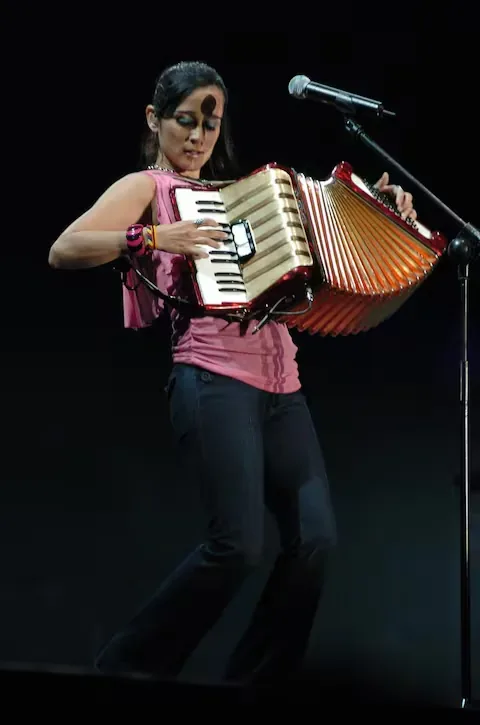
I never identified with rock, I identified with the rock environment because it was more likely to be understood there. At the time I came out, in the nineties, there was no place in pop for someone like me: I wasn’t going to dress a certain way, I wasn’t going to do things a certain way and the songs I was making were much stranger. I felt freedom in the environment that went off the more traditional or mainstream tracks, I found it in concerts. When I came out with the accordion, for people it was first a surprise, then it generated curiosity and I think I wouldn’t have found that in other environments. But I have always considered myself a songwriter with my own vision. Currently, I feel that female creativity is unfolding in all genres, from trap to reggaeton, pop, and rock. It’s in all genres and I feel that is very groundbreaking. Female production, starting with Rosalía, comes from a place where you don’t even know what we’re going to come up with and I find that very beautiful. In that sense, maybe being a woman is rock, being a creative woman is rock.
“Norteña,” the album, has 12 tracks. Among them duets with artists like Natalia Lafourcade and Meme del Real from Café Tacvba. It is already available on all music platforms.
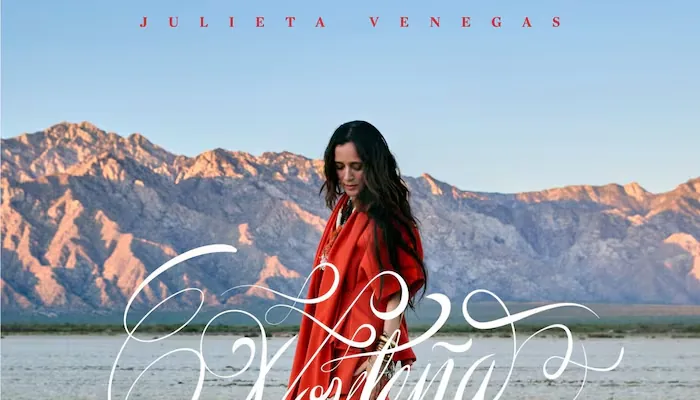
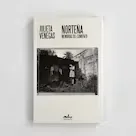
“Norteña: Memories of the Beginning”
Author: Julieta Venegas
Publisher: Almadía
Year: 2026
Pages: 132
- Luis Espinoza, the chef who left everything for love and today triumphs in Boston with the first craft brewery with a Peruvian soul
- Sang Jung, the chef who left his life in Seoul to join Central, the Peruvian restaurant considered the best in the world
- This is the only Peruvian brand that is part of the wardrobe of “The Devil Wears Prada 2”
- The re-release of “Top Gun” in theaters: how Tom Cruise turned a movie about planes into a cultural icon
- Encuentro Boletero, the unusual club in Lima of people who collect combi tickets