




![Alberto Beingolea: “If they insist on not giving [the powers], they are complicating life for Peru”](https://insightermedia.com/wp-content/uploads/2026/09/bb3fa9e11304ea13fe2cd333955007bc-150x150.webp "Alberto Beingolea: “If they insist on not giving [the powers], they are complicating life for Peru”")



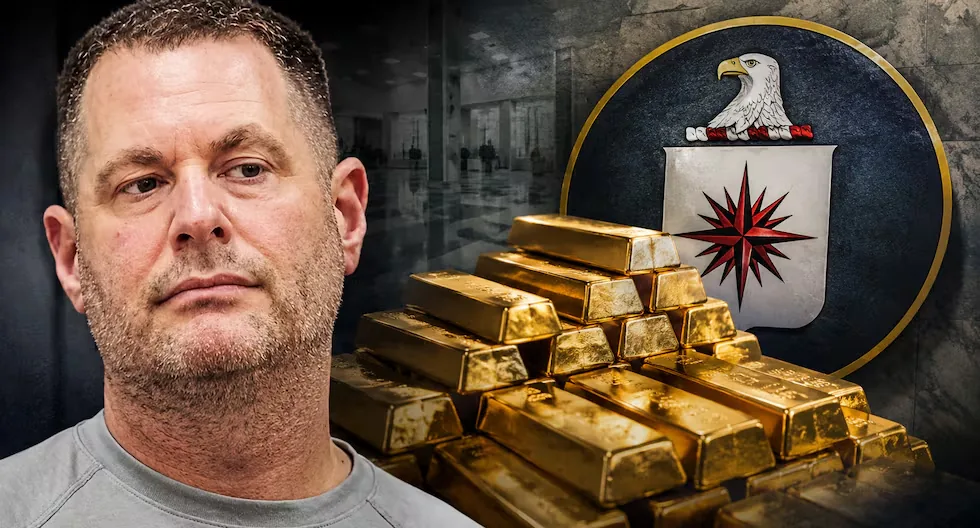
A former CIA official is at the center of one of the most surprising scandals to have shaken the intelligence community of the United States in recent years. According to a federal investigation, David Rush accumulated a fortune valued at more than 40 million dollars in gold bars, a finding that raises questions about the agency’s internal controls, the origin of those assets, and the trajectory of a man who for years held trusted positions in the security apparatus of the world’s leading power despite having built part of his career on false credentials and misleading claims.
According to U.S. media such as The New York Times, the FBI found in David Rush’s possession 303 gold bars of approximately one kilo each, valued at more than 40 million dollars; in addition to 2 million dollars in cash and three dozen luxury watches, including several Rolex.
WATCH: “Rodrigo Paz’s departure would be a catastrophe for Bolivia”: what the president can do after the repeal of Law 1341
The gold was stored in his home, located in Virginia.
The man, who was a senior CIA official, remains under arrest on a charge of embezzlement of public funds. The indictment documents were filed in Alexandria, Virginia.
How did he steal the gold?

The NYT specified that the court documents describe David Rush as a “former senior executive service employee at a U.S. government agency”. People familiar with the investigation say that until very recently he held a high position in the CIA.
An FBI affidavit indicates that late last year, Rush requested “a significant amount of foreign currency and tens of millions of dollars in gold bars for work-related expenses.”
These requests were made between November 2025 and March 2026, according to the NYT.
The prosecutors’ hypothesis is that Rush used his position to withdraw those assets from the government and keep them.
When the CIA tried to verify the destination of those assets, it could not locate the gold bars nor a significant portion of the delivered currency. Until May 18, a day before his arrest, the FBI searched Rush’s home and found the missing gold there.
The NYT report emphasizes that the court documents do not explain what CIA operation or project required accumulating such an amount of gold, nor why Rush would have decided to keep hundreds of bars at his residence. That is the question that remains at the center of the investigation.
Read more Emma Thompson is working on a feminist version of Homer’s «The Iliad»
How was he discovered?
Rush, who held top security clearances and access to classified information, managed to infiltrate the upper echelons of government by lying about his academic background and military experience.
The investigation against him did not start because of the gold bars. According to court documents, initial doubts arose about Rush’s academic and military background. During internal checks, inconsistencies appeared that caught the attention of the CIA and led to a broader investigation.
CNN reported that Rush submitted three applications to join the U.S. Government before being hired in 2009, where he later rose to positions of greater responsibility. However, the affidavit in the case states that he built part of his professional career on false information, claiming to have been a U.S. Navy pilot and to hold bachelor’s and master’s degrees that he did not actually have.
The Navy informed investigators that Rush worked part of his service as an information systems technician and not as a pilot. Additionally, the universities he claimed to have graduated from stated they had no records of his attendance.
The FBI also accuses him of lying when he enlisted in the Navy in 1997, submitting transcripts and other documents that supposedly certified a bachelor’s degree from Clemson University. Thanks to that degree, according to investigators, he was appointed an ensign in the U.S. Naval Reserve in 2004 and remained in that status until receiving an honorable discharge in 2015.
Prosecutors also allege that Rush falsely claimed “to be the current test director of a joint Army and Navy weapons testing organization composed of 145 people and 18 aircraft.”
In 2018, as part of his application for the senior executive service level, Rush also falsely claimed “to have worked for 11 years as a thesis and dissertation advisor at the Air Force Institute of Technology,” according to the affidavit reported by CNN.