




![Alberto Beingolea: “If they insist on not giving [the powers], they are complicating life for Peru”](https://insightermedia.com/wp-content/uploads/2026/09/bb3fa9e11304ea13fe2cd333955007bc-150x150.webp "Alberto Beingolea: “If they insist on not giving [the powers], they are complicating life for Peru”")



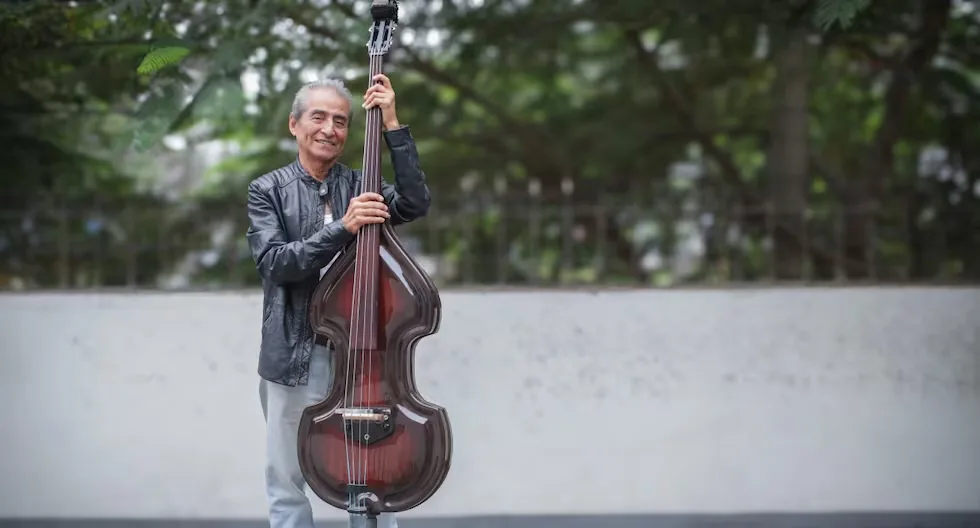
Rebaza, with decades of experience under his belt, is a machine for telling anecdotes. The natural result of having played alongside the greats, local and foreign artists: his resume includes performances with The Platters and even Tongolele. A teacher of several generations of bassists, he is now preparing some performances with his jazz ensemble. We found him at the Chic & Chano recording studio in Santa Anita, and at our request, he opens the box of memories.
Read more “Juego en Corto”, YouTube LIVE: watch today’s program broadcast here, Monday, June 1, 2026
It all started with a radio. As a child, in La Victoria, he could spend hours glued to the device. Then came the school orchestra, and later, as a teenager, the revelation of British rock: The Kinks, The Beatles, Herman’s Hermits. With some friends from the neighborhood, they gathered enthusiasm and improvised instruments ordered from carpenters. The band was called The Brits. The name was eloquent of their passion.
Childhood was not easy. He lost his mother at four years old and his father at twelve. “But I never lacked love,” he says without hesitation. “I had about twelve mothers.” The one who took the place of the father was his grandfather, a man who devoted himself to him and who one day faced an unexpected request: Juan asked him to buy him a drum set. “Oh, my grandfather, how he reacted, what he told me.” The old man was not stingy, he was fearful. At that time, music and perdition went hand in hand in the imagination of many families. They said the musician drank, that he wouldn’t get anywhere. But Juan was already 16 and was already appearing on television. The path, at that point, was irreversible.

During his time alongside Oscar Avilés and Arturo “Zambo” Cavero, he contributed a special song: “El que no tiene de inga, tiene de mandinga.” He had conceived it as a six-verse landó, but circumstances turned it into a festejo. The phrase resonated with him in a particular way, and it was no coincidence. He himself felt like a Peruvian from many places, with relatives scattered throughout the country. Growing up in La Victoria, a migrant district par excellence, with its mix of Andean and Afro-Peruvian population, shaped his sensitivity without him realizing it. In the seventies, cumbia was the language of the masses arriving in the capital, and Rebaza composed a handful of songs in that style that were never used. Until the day Lorenzo Palacios, Chacalón, knocked on his door.
A provincial boy
Rebaza remembers him as a young man, before fame, carrying audio equipment for a friend who rented sound systems, making a living as he could. “Chacalón worked as a laborer, hustled, and sometimes played the conga in bands,” he says. But that day Chacalón, already a singer, arrived at his house at dawn. He was looking for repertoire and was told: “Rebaza has songs.” “I gave him a song that I thought he might like, and the truth is he didn’t like it much,” he recalls. The song said: “I am a provincial boy, I get up very early, to go to work with my brothers. […] I have no father or mother, nor a dog that barks at me, I only have the hope to progress.” Chacalón looked reluctant. “It’s not my style,” he said. It was his musicians who convinced him to record it. “Soy provinciano” perhaps became his biggest hit and an anthem of emerging Peru.
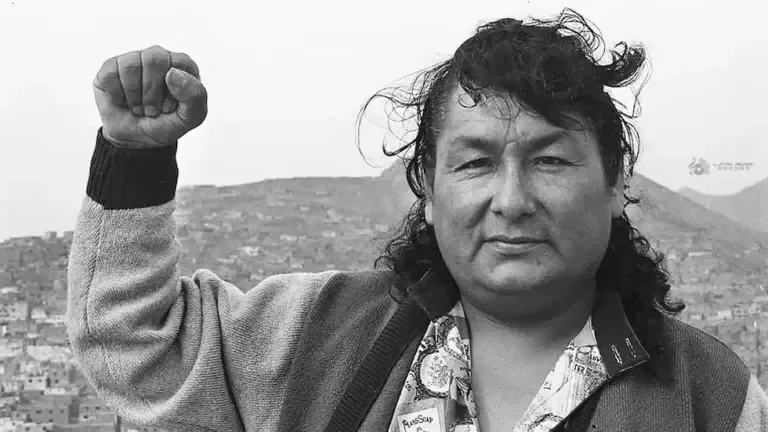
Few know Rebaza by name, except his fellow musicians, who know him perfectly and have even dedicated tribute books like “El bajo contemporáneo en la música” (2018), where they transcribed thirty of his most famous bass lines, from «Cada domingo a las doce» and «Chabuca Limeña» to «Y se llama Perú». Perhaps Maestro Juan does not resonate with the general public, as we said, but his music and the songs he recorded are heard everywhere. He has never been one to seek the spotlight, and he hasn’t needed to, he says. Today he works as a producer alongside Chano Silva, and continues recording in service of the artist. This afternoon he is working on a new Creole song with Melcochita. One more that will bear his mark without necessarily carrying his name. //.
In addition to giving bass lessons at universities and privately, Rebaza has a jazz ensemble that depending on the date can be a trio, quartet, or quintet. On May 28, he will perform as Rebaza Jazz Quintet, at Wachuma (Tambo de Belén 178, near Plaza Francia, downtown Lima). They will play the best of jazz in all its forms, some funk and rock.
- Boston in 24 hours: a route to enjoy the U.S. city that attracts more and more Peruvians every day
- Trastevere: between the market, the bar, and the contemporary trattoria
- Luis Espinoza, the chef who left everything for love and today triumphs in Boston with the first craft brewery with a Peruvian soul
- He doesn’t seem famous, but when he sings everything stops. Ed Sheeran, the redhead with the golden voice who loves Peru and will sing at the National Stadium
- Encuentro Boletero, the unusual club in Lima of people who collect combi tickets