




![Alberto Beingolea: “If they insist on not giving [the powers], they are complicating life for Peru”](https://insightermedia.com/wp-content/uploads/2026/09/bb3fa9e11304ea13fe2cd333955007bc-150x150.webp "Alberto Beingolea: “If they insist on not giving [the powers], they are complicating life for Peru”")




Cepeda also acknowledged on Monday that after the verifications carried out by his campaign, they have not found evidence of irregularities to question the result of the first round. The candidate had joined President Gustavo Petro on Sunday night, who rejected the data released by the National Registry, the entity organizing the elections.
Read more How did a senior CIA official end up with 40 million dollars in gold bars?
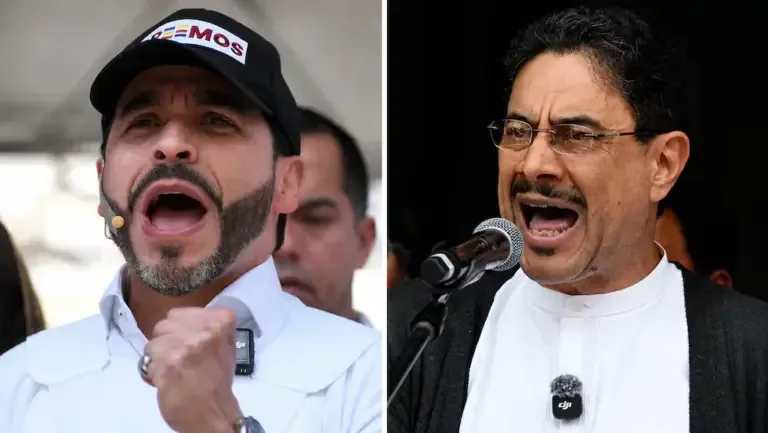
Lawyer De la Espriella, an outsider in politics who promises a shift to the right based on security, a tough stance against crime, and a change of course regarding Petro’s political project, surprised in the first round by leading the preliminary count with 43.74% of the votes.
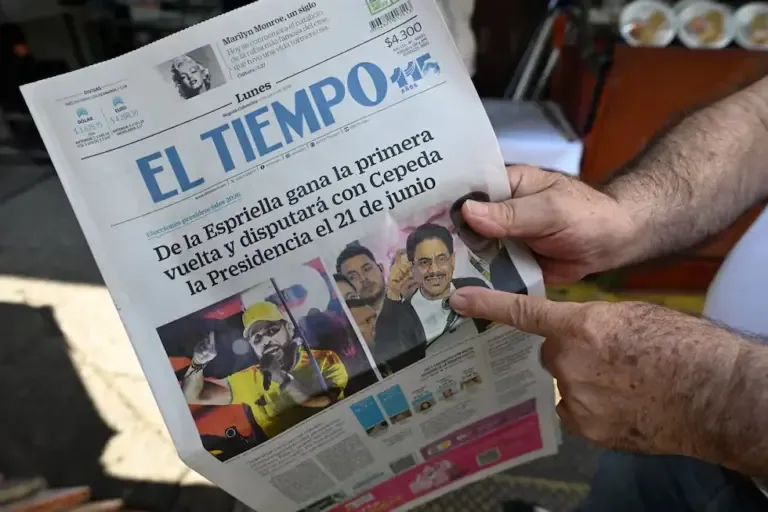
Meanwhile, Cepeda, who led the polls throughout the campaign, took second place with 40.90% of the votes.
The disappointment was Paloma Valencia, from the right-wing Uribista party Centro Democrático, who only reached 6.92% of the votes and placed third.
On Monday, Cepeda publicly challenged De la Espriella to hold a debate ahead of the second round. The radical right candidate accepted the proposal but set one condition: that Cepeda and President Petro first recognize the results of the first round.

De la Espriella stated that he has no problem debating “in front of the people,” but insisted that his rivals must stop questioning the preliminary electoral count before sitting face to face.
In the same response, De la Espriella called Cepeda a “coward.”
On Sunday night, during a speech to his supporters, Cepeda questioned the personal and professional background of De la Espriella, whom he labeled as a representative of “mafioso fascism” and defined as a “scammer of scammers.”
The harshness of these messages anticipates a three-week campaign for the second round marked by polarization.
Why did De la Espriella win?

Patricia Muñoz Yi, a political science professor at the Javeriana University of Bogotá, specialized in public opinion and political marketing, told El Comercio that the first place obtained by Abelardo de la Espriella is a surprise, as previous polls showed Iván Cepeda as the favorite to lead the vote. Although the latest surveys already showed a sustained growth of the radical right candidate, few anticipated that he would end up surpassing the Historic Pact candidate by more than 670,000 votes.
However, she assured that a comeback by Cepeda in the second round cannot be ruled out.
According to Yi, the main explanation for his victory lies in De la Espriella’s ability to appropriate the conservative vote and the anti-Petro sentiment that exists in a significant part of the Colombian electorate.
“Abelardo de la Espriella manages to appropriate that more conservative, more radical right-wing sentiment and also captures the anti-Petro sentiment of those who do not want the continuation of the Historic Pact’s policies. He captured the right-wing vote that initially supported Paloma Valencia,” she pointed out.
“That transfer of support was key to his victory in the first round,” she added.
The collapse of Paloma Valencia
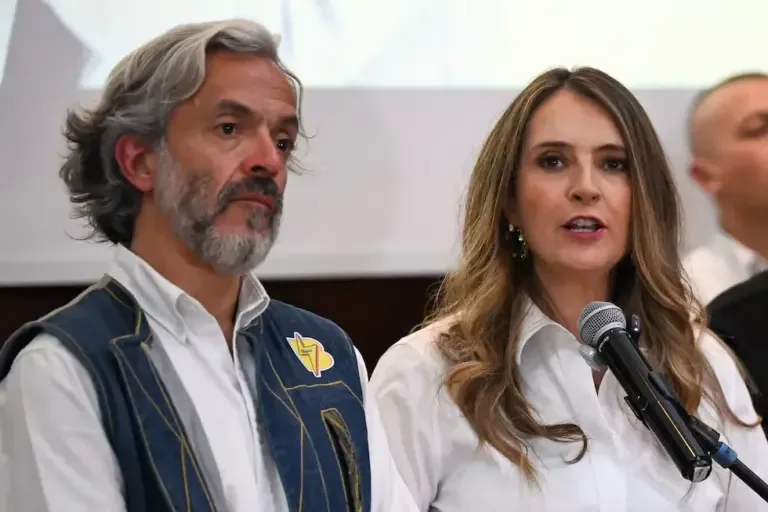
The expert considered that the candidate from Defenders of the Homeland absorbed much of the support that initially leaned towards Paloma Valencia, a candidate backed by traditional Uribismo.
“A good part of Paloma Valencia’s voters ended up seduced by De la Espriella’s more confrontational discourse. That vote ended up in Abelardo’s hands and led him to come first in the first round,” she stated.
In Muñoz’s opinion, while Valencia tried to approach the centrist electorate, De la Espriella consolidated a strategy aimed at mobilizing the most conservative voters and critics of Gustavo Petro’s government.
Was Petro and Cepeda’s refusal to recognize the preliminary count legitimate?
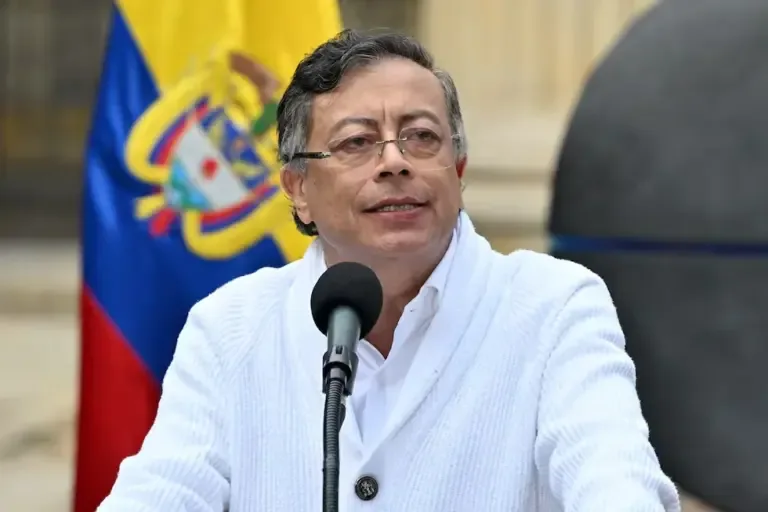
Asked about the initial decision of President Petro and Cepeda not to immediately recognize the preliminary results, the analyst was skeptical about the challenges made by the government side.
“I would tend to think that it is a political strategy in the face of an unexpected defeat,” she responded.
Muñoz recalled that the electoral process was accompanied by national and international observation bodies and stated that no significant complaints of irregularities were reported during the day.
“What we have heard from the observation missions is that the process has been organized, transparent, and clear. On election day, no relevant complaints were presented at the polling stations,” she indicated.
In that sense, she warned that subsequent complaints could affect citizens’ trust in institutions.
“Those complaints are concerning because they sow distrust and tend to delegitimize the results, but we believe it is more a voice to generate political tension than evidence of irregularities,” she said.
Who has the advantage going into the second round?
Although she recognizes that De la Espriella starts with an advantage, Muñoz considers that the contest is far from decided.
“The Historic Pact is by no means defeated,” she emphasized.
The analyst recalled that Cepeda obtained nearly 9.7 million votes and maintains important strengths in strategic regions such as the Caribbean Coast, the Pacific region, and Bogotá, territories that concentrate a significant part of the national electorate.
On the other hand, she pointed out that some of Paloma Valencia’s voters could lean towards De la Espriella, although she warned that the endorsements of leaders do not guarantee an automatic transfer of votes.
“Candidates do not own the votes. Some citizens will follow their leaders’ guidance, but many others will make a different decision, vote blank, or even abstain,” she explained.
“That is why endorsements will be important but not sufficient. Both campaigns will have to seek new voters and expand their support base,” she anticipated.
The message left by the polls
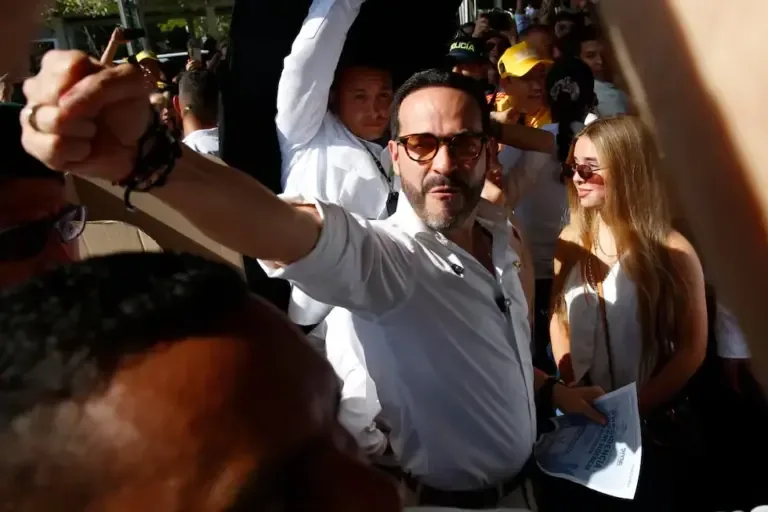
For Muñoz, the main political conclusion of the first round is the strengthening of polarization in Colombia.
“What we saw was a scenario of clear polarization between two political forces that have tended to position themselves at the extremes. The centrist options seemed to dissolve,” she stated.
The analyst considered that the success of De la Espriella and Cepeda shows that the more confrontational discourses were the ones that managed to connect with voters.
“What ended up resonating in voters’ intentions were the more radical discourses. There is an anti-Petro and anti-government sentiment that has settled in the country and ended up being relevant when voting,” she concluded.
Read more Emma Thompson is working on a feminist version of Homer’s «The Iliad»