



![Alberto Beingolea: “If they insist on not giving [the powers], they are complicating life for Peru”](https://insightermedia.com/wp-content/uploads/2026/09/bb3fa9e11304ea13fe2cd333955007bc-150x150.webp "Alberto Beingolea: “If they insist on not giving [the powers], they are complicating life for Peru”")



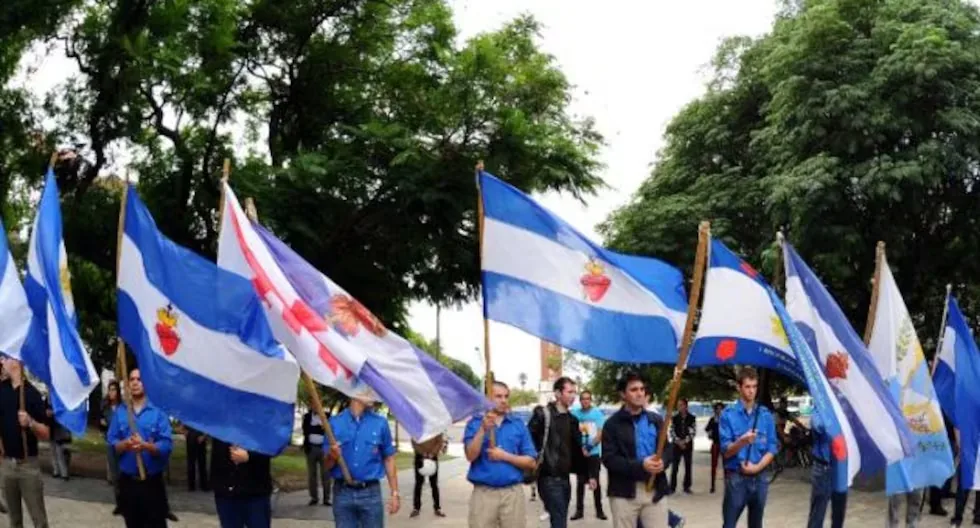
Hours before the 2026 World Cup semifinal between Argentina and England to be held this Wednesday in Atlanta, veterans of the Falklands War acknowledge in an interview with EFE that this football match, which revives a rivalry dating back to the 1982 armed conflict, “is not just another game.”
Read more Keiko Fujimori’s day: Does Carlos Espá leave open the option of taking over the foreign ministry?
In April 1982, an incursion by the then Argentine dictatorial government into the Falkland Islands sparked an armed conflict with the United Kingdom over the sovereignty of this South Atlantic archipelago that would last until June of that year, leaving a toll of 255 British and 649 Argentine dead.
Among the Argentines were many young people without military training who were conscripted and faced extreme conditions on the islands with outdated equipment.
YOU CAN SEE: At least two dead in Argentina during the match and celebrations for the 3-1 win over Switzerland
An open wound
The war and the conditions under which it was fought opened a wound in society that extended, among other areas, to football.
“A match will not bring back the islands nor the comrades who are buried there, but for all of us who were in the Falklands, anything that represents the Empire bothers and hurts us,” says veteran Germán Bonanni to EFE.
On June 13, 1982, while the last battle of the war was being fought in the Falklands, Diego Armando Maradona made his debut in the World Cup held that year in Spain.
“It was like a rescue, a refuge to life, trying to find out how the football match was going amid the bombs,” veteran and writer Edgardo Esteban tells EFE.
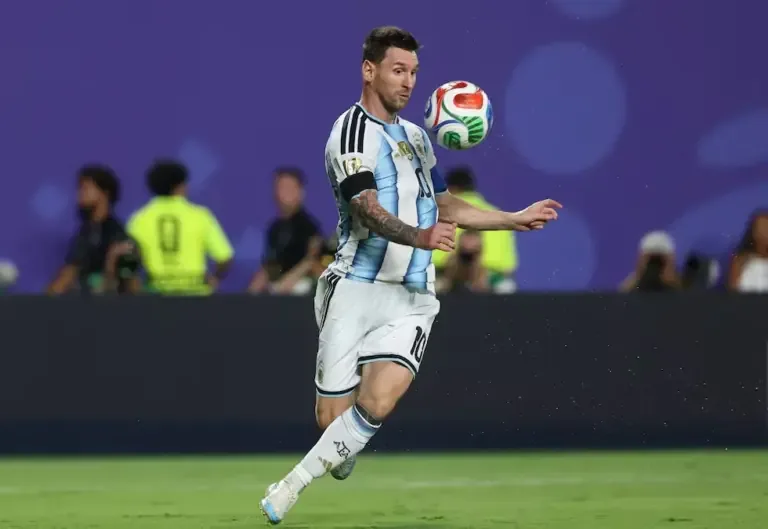
Four years after the war came the Mexico World Cup. On June 22, 1986, Argentina faced England in the quarterfinals and Maradona first scored with the so-called ‘Hand of God’ and then the legendary ‘Goal of the Century’.
“I remember those goal hugs, the hug I gave my mother, who at one point didn’t know if her son was alive or dead and to whom Maradona gave the revenge of having her son beside her and hugging him with that football passion, but also passion for the Falklands,” Esteban recalled.
Many years later, Maradona acknowledged in his autobiography ‘I am Diego’: “We knew many Argentine kids had died there, that they had been killed like little birds. And this was revenge, it was recovering something from the Falklands. No way it was just another game!”
For Argentine historian Federico Lorenz, author of several books on that armed conflict, each encounter between the two teams carries a meaning that goes beyond sports.
ALSO READ: Argentina to semifinals: This is how the international press reported their qualification in the 2026 World Cup
“It is the symbolization of a conflict between a dispossessed country and an imperial power on a playing field. In one match, all those emotions, tensions, and memories are summed up,” Lorenz explains to EFE, highlighting that there is an “enormous asymmetry in military and economic terms between the two, but not on the field, so each match is experienced as a vindication.”
Just a football match
Asked about this last Saturday after the 3-1 win over Switzerland that confirmed the clash with England, Argentine coach Lionel Scaloni tried to downplay the tension: “It’s a football match. Period. Nothing more than that.”
“It’s impossible not to have a different taste,” Bonanni admits to EFE, who, however, rejects the idea that it is a revenge: “It is wrong to put a war and a football match on the same level.”
The same message was conveyed this Monday by the Falklands War Veterans Federation, which asked to separate sporting fervor from the sovereignty claim over the islands and reminded that “sport is not war.”
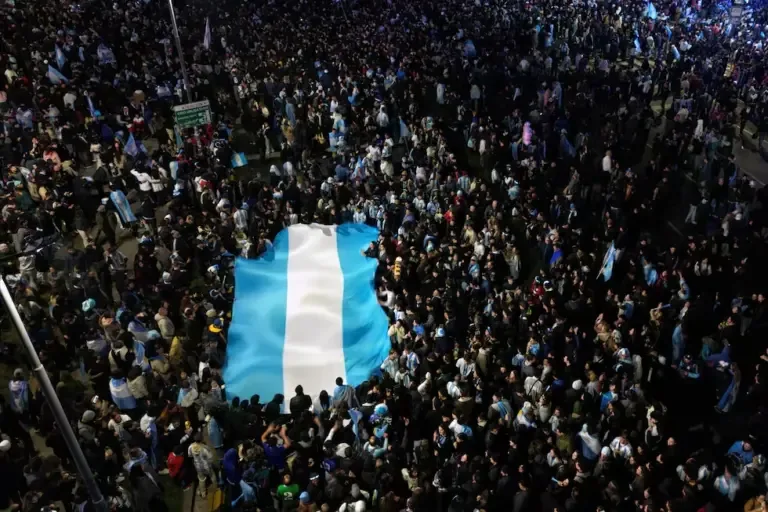
The Falklands, one of the last overseas territories of the United Kingdom and under British rule since 1833, continue to occupy a central place in Argentine identity. Their silhouette appears in murals, official maps, monuments, and even tattoos, while the sovereignty claim remains a state policy supported by broad political and social consensus.
“If there is something that unites Argentines, it is the Falklands and football,” Esteban emphasizes.
This is clear in the countless songs supporting the Argentine national team that highlight the claim for the islands and the memory of the fallen, including the iconic ‘Muchachos’ and ‘The Fourth Star,’ the new Albiceleste anthem in this World Cup.
According to a report by the consultancy Reputación Digital, mentions of the Falklands on social media multiplied tenfold after Argentina advanced to the semifinals, becoming one of the main topics of conversation ahead of Wednesday’s match.
<p“Without a doubt, in this match, beyond what Scaloni says, all this history is present,” adds Esteban, for whom “this is not just another game.”- Javier Milei confirms his attendance at Keiko Fujimori’s inauguration on July 28
- Chilean girl sought in Paraguay found in Argentina after her mother’s report
- Israeli singer Noa Kirel creates controversy with music video about Argentina and Spain in the World Cup
- Man dies during celebrations for Argentina’s victory over Egypt in the World Cup