




![Alberto Beingolea: “If they insist on not giving [the powers], they are complicating life for Peru”](https://insightermedia.com/wp-content/uploads/2026/09/bb3fa9e11304ea13fe2cd333955007bc-150x150.webp "Alberto Beingolea: “If they insist on not giving [the powers], they are complicating life for Peru”")

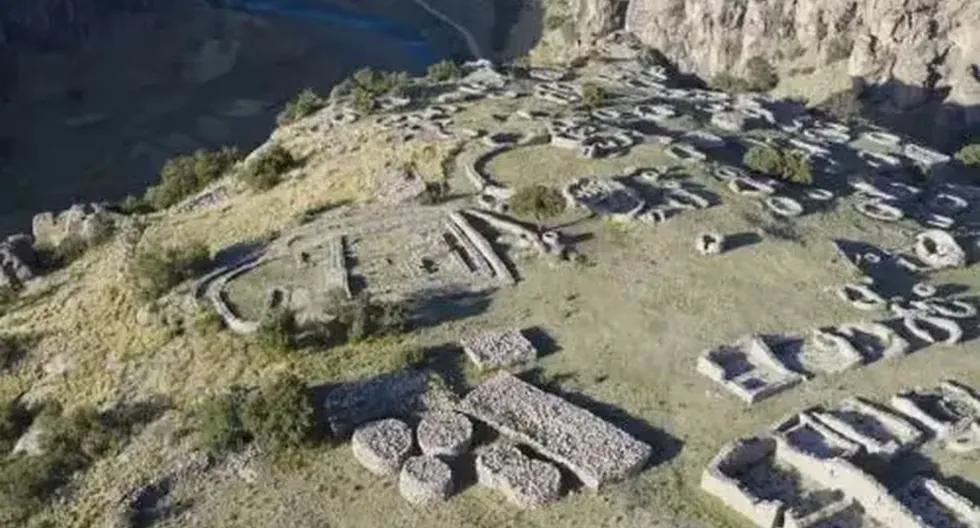
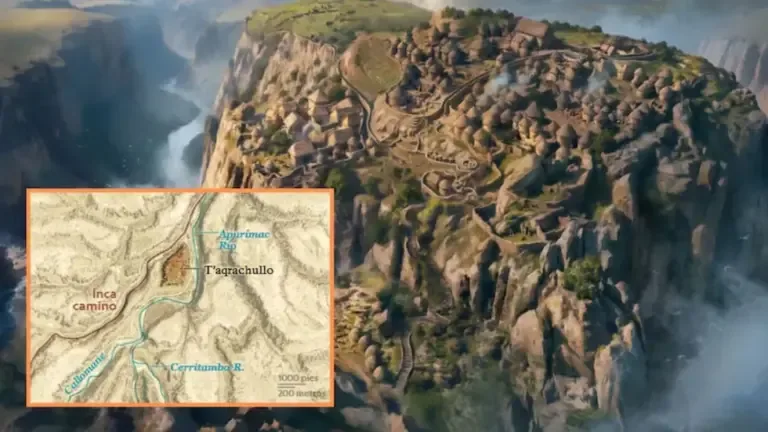
Recently, the archaeological complex of T’aqrachullo, located in the province of Espinar, in the Cusco region, once again attracted international attention after research published by National Geographic reinforced the hypothesis that this settlement corresponds to Ancocagua, an ancient ceremonial and political citadel mentioned by chroniclers of the Spanish conquest.
Read more 1926: Police information
The site is not new to archaeologists nor to the local communities. For decades it was known as an area covered by vegetation, even used as pasture for livestock. However, excavations carried out in recent years have revealed the magnitude of its structures and the historical value of the objects found, including thousands of gold, silver, and copper sequins associated with ceremonial garments of Inca elites.
Although some international reports describe it as a settlement “four times larger than Machu Picchu”, experts warn that size does not necessarily determine the historical or tourist relevance of an archaeological site. The comparison, rather than establishing superiority, reflects the territorial dimension of a complex that is still under investigation.
Why did it remain off the radar for so long?
One of the most striking aspects of T’aqrachullo is how a site of such extent could remain for decades outside the national media and tourist spotlight.
The citadel is located on a plateau near the Apurímac River, in a rural area with difficult access in the province of Espinar. According to Maritza Rosa Candia, director of the Decentralized Directorate of Culture of Cusco and one of the first researchers of the site, when archaeological explorations began in the 1990s, the conditions to reach the complex were extremely complicated.
“There were no vehicles to get to that site. We had to travel about 40 kilometers by bicycle,” she recalled. Added to this was the context of internal violence that the country was going through at that time, which made it difficult to find logistical support and personnel to carry out archaeological excavations in the area.
Besides the geographical isolation, much of the structures remained covered by earth and vegetation, making it difficult to recognize the true dimension of the complex from the surface. Candia detailed that the site is settled on a rocky outcrop surrounded by ravines and canyons, features that also contributed to keeping it relatively hidden for years.
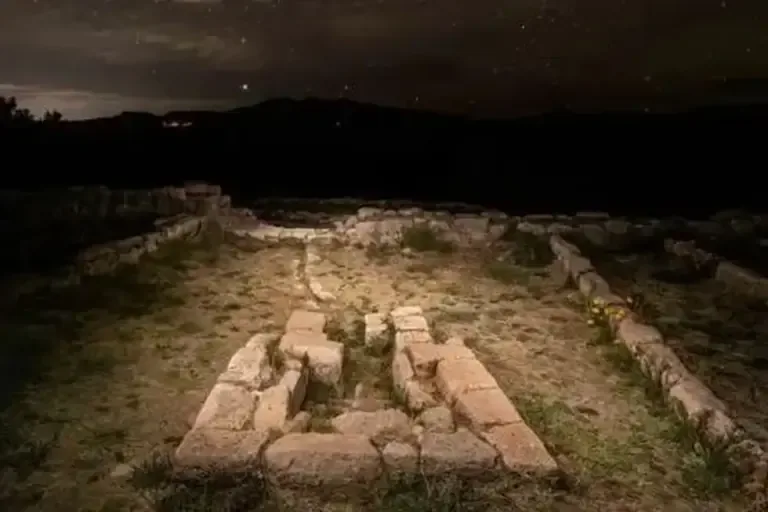
Another key factor was the limited dissemination of previous research. Although T’aqrachullo has been studied since 1994 and was declared a National Cultural Heritage site in 2010, much of that work remained confined to academic and regional circles.
“The delivery of the work, the research, and the publications were indeed carried out, but perhaps there was a lack of wider national dissemination,” Candia said in her interview with El Comercio. Even the hypothesis that the site could correspond to Ancocagua had already been proposed decades ago by explorer Johan Reinhard and later reinforced by local research.
While Machu Picchu consolidated from the 20th century as an international symbol of Inca heritage, T’aqrachullo was relegated to specialized studies and archaeological projects little known outside Cusco. Only after the recent international dissemination by National Geographic did the complex begin to attract mass attention inside and outside Peru. “The magazine has gone around the world and awakened national interest,” Candia affirmed.
The historical importance behind the discovery
The growing interest in T’aqrachullo is not only due to its size or the comparisons recently made with Machu Picchu. What really raises expectations among researchers and specialists is the possibility that the site played a political, ceremonial, and strategic role during different periods of Andean occupation, including the last years of the Tahuantinsuyo.
Colonial chronicles mention Ancocagua as one of the most important sacred temples of the Inca Empire and as a scene of confrontations during indigenous resistance against the Spanish invasion. In recent years, archaeological excavations have found stone projectiles, spear points, and bone remains with signs of violence, elements that could reinforce that historical narrative.
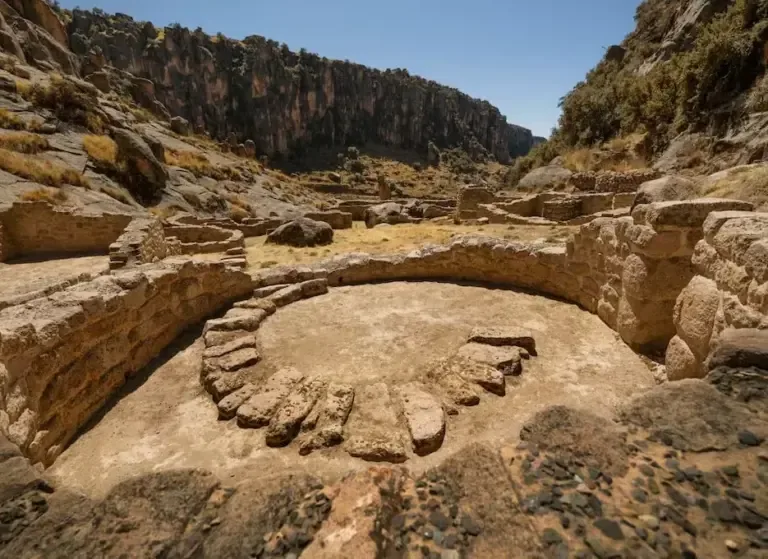
Additionally, research has identified around 600 structures including dwellings, ceremonial enclosures, and funerary contexts, as well as evidence of occupations prior to the Inca period linked to cultures such as Wari and Qolla.
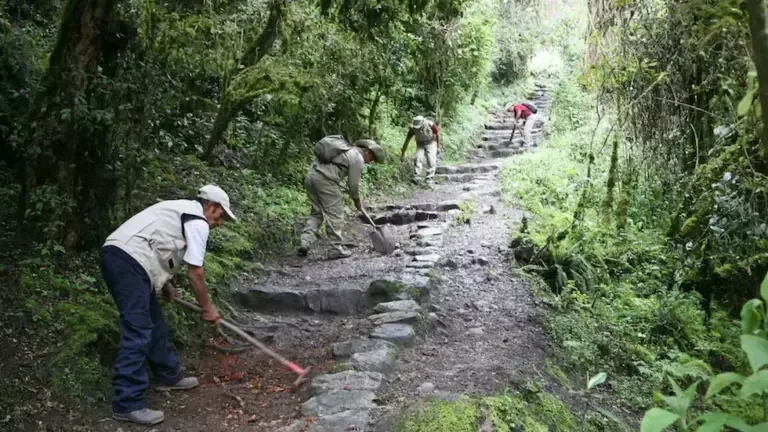
For Patricia Aparicio, professor of the Master’s in Built Heritage in the Andean Region at PUCP, one of the most relevant aspects of the site is precisely that historical and symbolic continuity that spans different cultural stages.
“The occupation of the site does not only belong to the Inca period but also to earlier periods, even Wari. That shows it was already a special place for the environment long before the Incas,” she explained.
The specialist considers that the geographical location of T’aqrachullo also reinforces its possible ceremonial and territorial importance. The settlement is located on an elevated plateau with broad visual dominance over the surroundings, a feature that, according to her, would have been key for previous societies and later reused by the Incas.
Aparicio adds that the historical value of the complex should not be understood solely from a monumental perspective but also from its relationship with the landscape and cultural dynamics of the southern Andean region.
“Understanding the landscape and the environment where these sites are settled is fundamental to understanding their social and cultural importance,” she states.
The tourism challenge: between enhancement and archaeological preservation
The possibility of turning T’aqrachullo into a new tourist destination raises expectations for Cusco and the country, especially in a context where tourism seeks to diversify routes beyond Machu Picchu. However, specialists and sector representatives agree that tourism growth must be accompanied by planning, research, and sustainability to avoid repeating overload problems seen in other archaeological destinations in Peru.
For Fernando Santoyo, president of the Cusco Chamber of Commerce, the archaeological complex could become one of the main drivers of tourism decentralization in the southern Andes. He estimated that T’aqrachullo could attract around 200,000 additional visitors to the Cusco tourist circuit and consolidate, along with Machu Picchu and Choquequirao, as part of a new trilogy of major cultural attractions in the region.
Santoyo considers the main challenge will be to build a new tourism management model involving the State, private operators, and local communities. “We need integrated governance over what tourist attractions and tourism products mean in Peru,” he said during his interview with El Comercio.
Read more Premios Somos 2026: find out which coffee shops are nominated
He also proposed the possibility of developing a southern tourist circuit connecting Cusco, Espinar, Suykutambo, and the Colca Valley, allowing cultural and economic integration of different localities in Cusco and Arequipa.
The business representative also noted that potential tourism development in the area could generate around 10,000 direct and indirect jobs during the first years of operation of the circuit. However, he emphasized that growth will depend on investments in infrastructure, roads, health, communications, lodging, and basic services that allow Espinar to become a destination prepared for national and foreign visitors.
On the other hand, Noelia Roa, Peruvian archaeologist, museologist, and cultural manager, considers that the integration of T’aqrachullo into future tourist circuits is feasible, provided that development does not prioritize only the tourist exploitation of the site. In her opinion, one of the greatest risks is that economic interest advances faster than archaeological research and heritage conservation.
“Uncontrolled tourism is one of the greatest risks for any archaeological site,” she warned in a conversation with El Comercio. For Roa, the success of an archaeological site should not be measured by the number of tourists or economic income it generates, but by the level of research, conservation, and cultural experience it offers.
The specialist also emphasized the importance of working alongside local communities and developing responsible tourism that allows generating economic benefits without altering the cultural identity or territorial balance of the area.
A road that seeks to turn Espinar into a new tourist hub
The growing interest in T’aqrachullo has also begun to generate movements from the political and infrastructure sectors. The Regional Government of Cusco announced the start of the Yauri–Suykutambo road, a road project aimed at improving access to communities near the archaeological complex and boosting tourism in the province of Espinar.
The work, which will begin execution on June 15, includes more than 44 kilometers of departmental road and an investment exceeding S/323 million. According to regional governor Werner Salcedo, the project will include paving, bridges, culverts, drainage, and road signage.
Besides reducing travel times and strengthening agricultural trade between Cusco and Arequipa, the new road seeks to facilitate access to T’aqrachullo, an area that has so far remained relatively isolated due to its geographical and connectivity limitations.
During her interview with El Comercio, Maritza Rosa Candia noted that the road already exists partially but said its improvement will allow easier connection to nearby areas of Arequipa and the Apurímac basin. She explained that the road intervention would help consolidate future tourist circuits in a province that concentrates several archaeological sites still little known.
Candia emphasized that T’aqrachullo already has minimum conditions to receive visitors, including signage, information panels, an interpretation center, and service modules. She also indicated that the archaeological site is part of a broader network of heritage monuments located in Espinar, such as Maukallacta, Kanamarca, and various pucaras in the area, which could be integrated in the future into a regional tourist circuit.
“The proposal is to generate tourist circuits within the province of Espinar, which has many very important archaeological sites,” Candia said. She also stated that road development could economically contribute to one of the high Andean areas with the highest poverty rates in Cusco, taking advantage of the existing cultural and landscape potential around the Apurímac canyon.
From the business sector, Fernando Santoyo considered that road infrastructure will be one of the decisive factors to turn T’aqrachullo into a sustainable tourist destination.
“We need communication routes that allow reaching the area quickly, safely, and well signposted,” he said.
The Chamber of Commerce representative also considered that the emergence of new destinations like T’aqrachullo could help reduce pressure on Machu Picchu by better distributing visitor flow to other provinces of Cusco.
Beyond its dimensions
The constant comparison with Machu Picchu has served to attract international attention to T’aqrachullo, but the value of the site should not be measured solely by its size or tourist potential.
Beyond the dimensions of the complex, the true contribution of T’aqrachullo lies in the historical information it could offer about the last years of the Inca Empire.
For Martín Mac Kay, Peruvian archaeologist, historian, and university professor, one of the main contributions of T’aqrachullo is that it allows approaching the Andean past from archaeological evidence and not only from the interpretations left by Spanish chroniclers.
“What we know about the Incas is very biased by the Western view of the conqueror,” he said during his interview with El Comercio. In that sense, he explained that archaeology allows contrasting, confirming, or even correcting part of the historical accounts built after the conquest.
Likewise, Mac Kay warned that tourism growth should not be accelerated solely due to the media impact generated in recent weeks. In his opinion, site development must prioritize scientific research, planning, and multidisciplinary work before promoting a tourism massification similar to that observed in other Cusco destinations.
In that line, the archaeologist proposed that the complex be part of a broader cultural circuit that allows understanding the historical evolution of different Andean societies that occupied the region for centuries.
Read more De la Espriella shakes Colombia: how he won the first round and what Cepeda needs to come back
- JNE plans to hire more than 2,000 contingency poll watchers for the second round in Lima and Callao
- Extortionists threaten Metropolitano drivers and demand monthly payments via QR codes
- ATU announces partial closure of the Expressway today due to construction of Line 2 station