




![Alberto Beingolea: “If they insist on not giving [the powers], they are complicating life for Peru”](https://insightermedia.com/wp-content/uploads/2026/09/bb3fa9e11304ea13fe2cd333955007bc-150x150.webp "Alberto Beingolea: “If they insist on not giving [the powers], they are complicating life for Peru”")


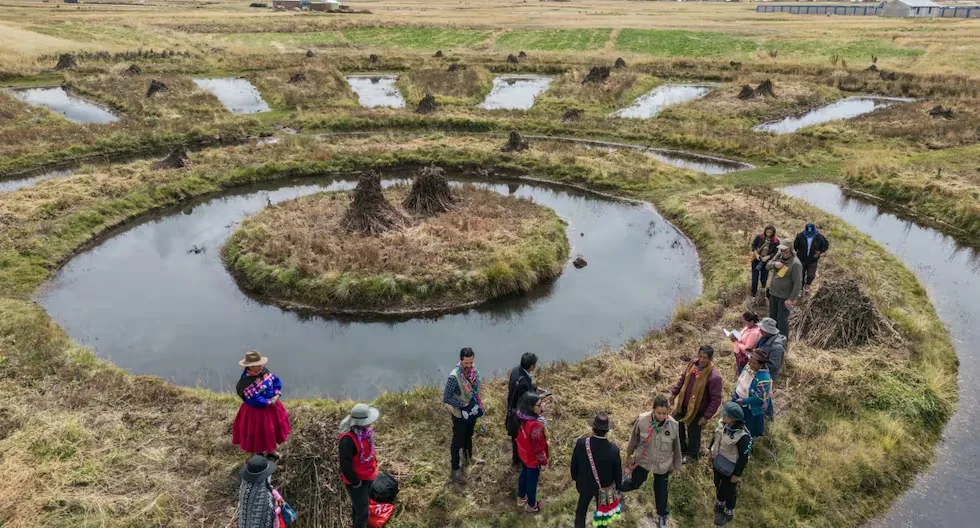
This cultivation technique, known as waru waru, was developed since ancient times by the Aymara communities of the high plateau, but was gradually abandoned during the 20th century due to lack of resources and communal labor, caused by the constant migration of new generations to the cities. However, in 2025, four communities from the Acora district, with the support of Cultivating Resilience, a program of the World Monuments Fund (WMF), which promotes the conservation of historic gardens and cultural landscapes worldwide, have been able to recover these ancestral crops, produce the first harvests, and offer effective solutions to the impacts of climate change.
Read more Quini 6, draw 3406: find out the jackpot and today’s results, Sunday, September 6
Agricultural fields
“The organization, through the Watch program, receives every two years applications from cultural sites around the world that are at risk of being lost. In 2025, 200 places applied, and 25 were selected, including the waru waru project,” says Juan Pablo de la Puente, executive director of World Monuments Fund Peru. The official specifies that later the project, under the title “Waru waru agricultural fields of Acora,” had to participate in another contest – Cultivating Resilience – where it was selected to receive the respective funds, along with projects linked to the chinampas of Xochimilco, Mexico; Central Park, New York; the king’s garden at the Palace of Versailles; the moat of the Tower of London.
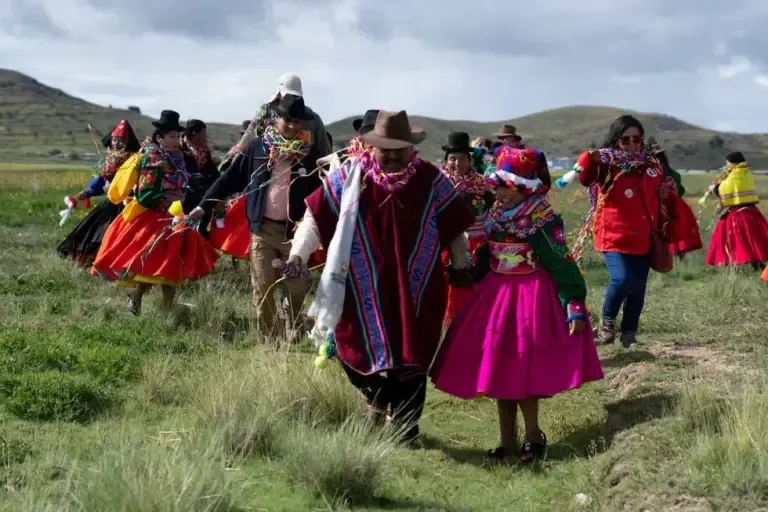
With this support and funding, the four communities, through the Aymara Association Suma Yapu, got to work. Through communal tasks, they organized to design and build the waru waru in the same way their grandparents did: raising the earth from the bottom of the lagoons to form elevated platforms (raised beds), securing the inclined support slopes, and transforming the high plateau into geometric fields of cultivation. This agricultural architecture, surrounded by water channels, helps regulate soil temperature, optimizes the use of water resources, and reduces the impact of floods or droughts.
Potatoes with energy
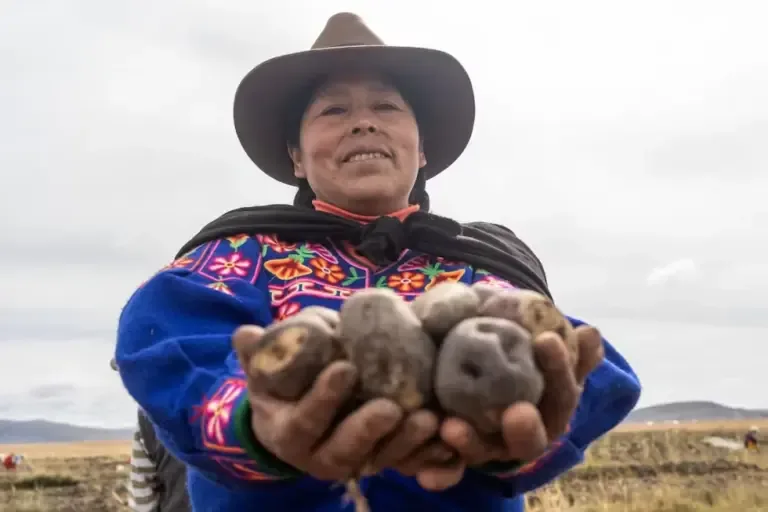
The first planting and harvesting cycle developed from the project has not only been successful – nearly four tons of native potatoes have been harvested – but has also filled these communities with pride. “We as Aymaras are proud of the legacy our grandparents left us; they have bequeathed more than three thousand varieties of potatoes, each with a different attribute and taste. We, as an institution, seek to recover this way of cultivating the chacra, with respect for Mother Earth,” says Eliana Apaza, executive director of the Aymara Association Suma Yapu.
She defines the waru waru as an ancestral cutting-edge technology against strong climate change, highlighting its thermoregulatory function in a region of extreme temperatures. “They have a controller – she explains – if there is little rain, the gates of the channels close to maintain soil moisture, and if there is a lot of rain, they open to let the water out. Also, if there are strong frosts, the water in the channels heats up with the sun’s rays during the day and at night radiates that heat to the soil so the plants don’t die. Additionally, in the water, there is a whole ecosystem; ducklings come, migratory birds come, and that creates a natural fertilizer, allowing organic cultivation.”
One of the current challenges is achieving the sustainability and permanence of this cultivation technique. De la Puente highlights the organization of workshops to record this knowledge, the development of exhibitions, such as the one held at Proyectoamil in Barranco, and the promotion of the communities and their products at the current Fusión por Gloria fair. “We know this is a big challenge, but the first step was to generate these meetings in Lima, to make this ancestral and cultural value known, as well as its practical usefulness to face current challenges. On that path, we have made important allies like the International Potato Center and Mater to study the varieties of tubers produced in the waru waru,” he adds.
On Sunday, September 6, representatives of the Acora communities will offer their products at the Fusión por Gloria fair market, on the Costa Verde esplanade, in Magdalena del Mar.
Read more F1 TV: where to watch F1 GP Italy live — Streaming signal to watch the race live
- Federico Kauffmann Doig: “I am interested in knowing how Peruvian civilization was formed”
- Common places, by Alonso Cueto
- Ideas to rebuild the Ministry of Culture: “A ministry should not be a spoils for a war between political parties”
- Uruguayan writer Fernanda Trías: “You always have to remain an amateur writer”
- Alejandra Costamagna: “Writing like cats is very suggestive”