







Since he started working as a teacher, for Jorge Eslava offering a version of the “New Chronicle and Good Government” to the younger generation was an impossible dream. A difficult project that was better not to get hopes up about. Only the purification and cleaning of a very complex text, interspersed with 400 illustrations, would scare off any publisher. Thus, the text of Guamán Poma de Ayala remained a cult book: one of those that everyone quotes, but few have read, except scholars and erudites. “That is a misfortune that haunts some books that, being so important, books that allow us to observe from the perspective of the defeated and the helpless, are nevertheless not read,” laments the writer.
Because, as Eslava warns, that is precisely what reading Guamán Poma produces in us: placing ourselves on the side of the Indians who had not been represented in those contemporary testimonies. “It is a book that tells us why we are like this, why we live with so much corruption. In that sense, it is a revealing book,” says Eslava, who finally fulfills his dream by adapting the texts of the indigenous chronicler. Comparing previous editions by Luis Bustíos (1956), Franklin Pease (1980), and Carlos Araníbar (2015), the writer rewrites the 1615 text to give it contemporary syntax and diction, while respecting traces of the old and admitting some mischievous colloquial turns.
—What difficulties do you find in the text when adapting it?
To begin with, it is a work written in Spanish influenced by other languages such as Quechua, Aymara, and various dialects. It is clearly written by a Quechua speaker, which can be noticed by the syntax, construction, and word order, among other characteristics of the text that I discovered when I set out to adapt it, which has been a fascinating linguistic discovery for me. For example, the abuse of pleonasm and redundancy. Repetitions are constant, as well as the use of enclitic verbs, where the pronoun is linked to the verb at the end of the construction. It is not just about translating a text, but thinking in another language. Guamán Poma was a person who had evidently read literature of the time as well as ecclesiastical books. He was a person with much education and culture, with a large reading background. Delving into that linguistic fabric is fascinating.
—Like every cult book, it has a story behind it. In this case, it is a manuscript that remained hidden for 300 years. Its discovery, in 1908, you tell at the beginning of the book in a comic drawn by Guillermo de Orbegoso. Why?
There was a story to tell about the chronicle, not properly about it, but about everything that happened after it was written until its fantastic discovery at the beginning of the 20th century. When I am behind a project or have started writing something, I have the habit of thinking like a considerate editor who thinks about his readers. So there was a story to tell and it could have been done simply as a prologue, or I could take advantage and present it in a comic format, which could later be confronted with Guamán Poma’s illustrations.
—What chain of errors must occur for a text that an indigenous author sent from Lima to the court of King Philip III to end up in a Nordic library?
Read more “Permission to Dance”: how to participate in the BTS-inspired dance contest by Somos
Some, with much imagination and boldness, thought it must have fallen into the hands of pirates, and told a similar legend. But the theory that seems to have more strength is that the text fell into the hands of collectors and was never read by the king. There is no sign that it was read by the monarch of Spain. From when Guamán Poma shipped his text in 1615, 45 years are lost until we find a record from 1660 in the Royal Library of Copenhagen that accounts for its existence. But until 1908, when the discovery was made, no one had opened that package. It was still in its wrapping. This is how the German researcher and librarian Richard Pietschmann told it in his first report of the discovery to a very small group of researchers. Then the war started, Pietschmann got sick and died. And it was Paul Rivet who took over and published the first facsimile edition in Paris in 1936, which allowed the international academic community to know the valuable manuscript.
—Do you think it was naive of Guamán Poma to send his chronicle to the king?
Totally. At that time there were certain requirements for a text to be printed. It had to pass first through the Inquisition Tribunal. I think it probably ended up being the somewhat interested friendship that Guamán Poma had with Cristóbal de Albornoz to get the Crown’s consent and allow him to publish what he was writing. One can find very risqué, very bold illustrations and texts as matters of denunciation; that is why one of the great charms of Guamán Poma’s chronicle is that it did not go through censorship. At that time all chronicles were reviewed and those that did not pass the exam simply went to increase the index of prohibited books.
—Guamán Poma has a complex relationship with Friar Martín de Murúa, the author of the “General History of Peru.” Murúa accused Guamán Poma, illustrator of his volume, of having plagiarized him unscrupulously. What do you think about that?
According to research, everything seems to indicate that Guamán Poma worked in Friar Martín de Murúa’s workshop, where he practiced drawing and worked as an illustrator. As Juan Ossio recounts, it has been verified that around 80% of the illustrations published in the Murúa codex belong to Guamán Poma’s hand. Until then, it seems their relationship was good. Then he parted ways with Murúa and started a personal enterprise that would take him 20 years. And it was then that Guamán Poma offered us more information: he mentions Murúa in his chronicle in quite censurable terms. He points him out as a bad religious man, as an exploiter of Indians. There is an illustration that shows him punishing an Indian woman. And although that relationship ended very badly, there is no record that Martín de Murúa sued him for his illustrations.
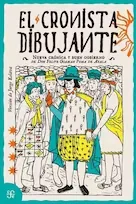
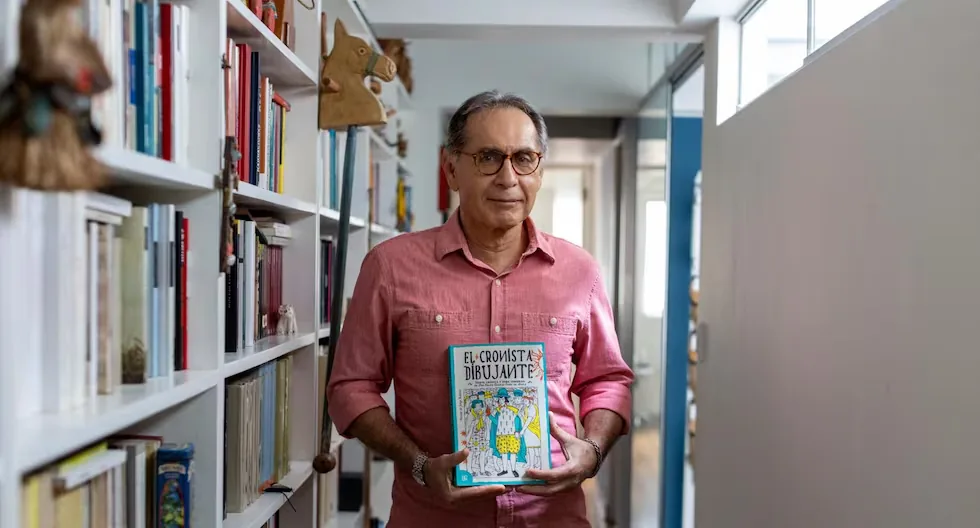
“The Chronicler Illustrator”
Author: Felipe Guamán Poma de Ayala, version by Jorge Eslava
Publisher: FCE
Year: 2026
Pages: 234
The volume also includes a comic illustrated by Guillermo de Orbegoso about the discovery of the manuscript in Denmark, as well as graphic materials that contextualize the work and highlight its historical importance.
Read more Elizabeth Zulema Tomás Gonzales is appointed executive president of EsSalud
- Federico Kauffmann Doig: “I am interested in knowing how Peruvian civilization was formed”
- Commonplaces, by Alonso Cueto
- Ideas to rebuild the Ministry of Culture: “A ministry should not be a spoils for a war between political parties”
- Uruguayan writer Fernanda Trías: “You always have to remain an amateur writer”
- Alejandra Costamagna: “Writing like cats is very suggestive”