



![Alberto Beingolea: “If they insist on not giving [the powers], they are complicating life for Peru”](https://insightermedia.com/wp-content/uploads/2026/09/bb3fa9e11304ea13fe2cd333955007bc-150x150.webp "Alberto Beingolea: “If they insist on not giving [the powers], they are complicating life for Peru”")



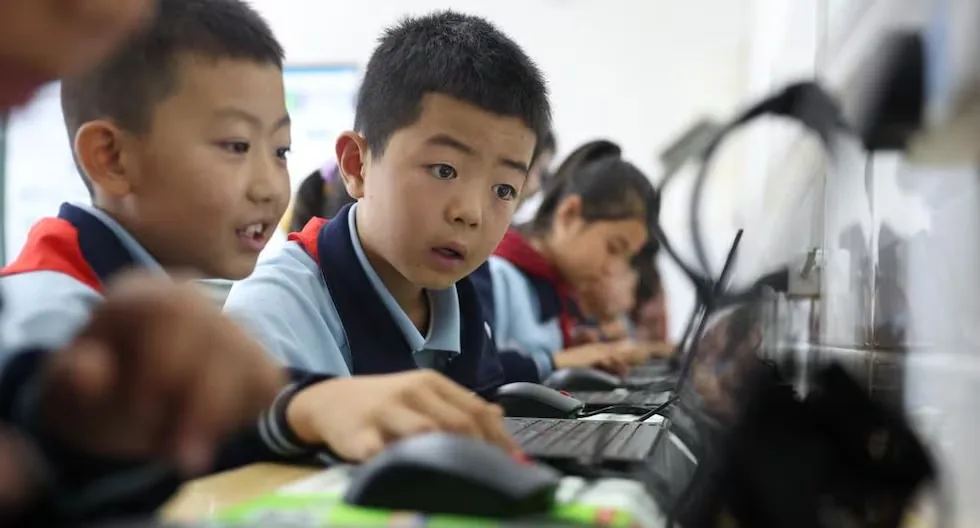
Classrooms are no longer the same. Students around the world, both in schools and universities, not only have answers to any question at their fingertips, but they can also turn to generative AI chatbots to produce essays, correct texts, complete research, and modify texts by other authors until they seem their own. And in a matter of seconds.
Read more Alberto Beingolea: “If they insist on not giving [the powers], they are complicating life for Peru”
This transformation has been worrying politicians, educators, and parents in more and more countries for months. Concerns about overexposure to screens and social networks – which have already led governments and schools to issue strict bans – are joined by fears from studies suggesting that AI could affect learning and critical thinking. A recent report from the Massachusetts Institute of Technology (MIT) warned that AI is causing a “cognitive surrender,” known as the tendency to adopt reasoning produced by artificial intelligence while minimizing analysis.
Norway began applying an almost total restriction on the use of generative AI tools for primary school students in August, while older children also face restricted use of this technology in their education. Another example of strict policies is in New York, where a few weeks ago the ban on the use of generative artificial intelligence in public schools from preschool through eighth grade was announced for one year.
At the same time, major tech companies – including Google, Microsoft, OpenAI, and Anthropic – have increased efforts to introduce AI into classrooms and compete to spread their AI chatbots in educational centers. A clear example was Google’s recent decision to enable the Gemini AI assistant in Google Classroom, an application used by millions of students of all ages.
1. Pilot program with chatbots in Iceland
At the end of 2025, a pilot program was launched to integrate AI into education responsibly. Teachers used chatbots like Claude (Anthropic) to generate games and ideas in class.
2. Age-differentiated guides in China
It promoted a national guide on the use of AI in primary and secondary schools, with age-based permissions. The guide became a state policy that includes mandatory courses and an AI exam for teachers.
3. Strict rule in Denmark
In August, it tightened rules to require students to orally defend their written work to curb fraudulent use of AI. It is also developing a broader national strategy to regulate AI.
4. Only for didactic support in Brazil
It has a regulatory framework that includes policies for schools and universities. It emphasizes that the teacher is irreplaceable and that AI should only be used as didactic support, discouraging its use in early childhood.
Complex debate
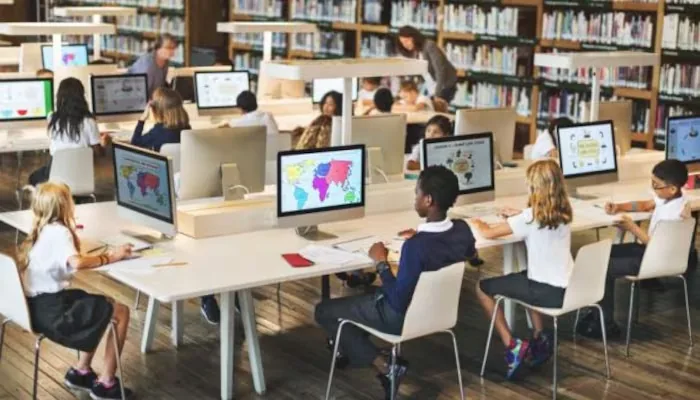
The responses from schools, universities, and even authorities who have dared to take a stance reflect the complexity of the debate. Even though the AI giants themselves have warned about the risks of this technology and urged slowing down its development, approaches to the impact of AI on education are diverse.
The latest report from the Programme for International Student Assessment (PISA), published on September 8, warned of a historic decline in school performance, with a particularly worrying deterioration in reading, largely linked to the use of digital devices, but also artificial intelligence.

The study conducted among the countries of the Organisation for Economic Co-operation and Development (OECD) in 2025 concludes that while the use of AI for school tasks is widespread, the relationship between the use of this technology and student performance is complex and varies depending on how and for what students use it.
- 46% of students in OECD countries use AI chatbots weekly or more frequently to help them learn, according to the 2025 PISA report presented in September.
- 28% of students interviewed say their classmates get distracted by the use of digital devices during most or all of science classes.
Ministers from 25 UNESCO countries recently signed a declaration to promote and monitor the use of AI in education, where benefits depend on “deliberate governance, human support, and adequate preparation.”
Julio César Mateus, a teacher and researcher at the University of Lima and an expert in education and communication, believes the debate about the impact of AI on education will remain open. A key point for the expert is that the rapid mass adoption of AI happened irresponsibly and before its own creators knew its effects, adding to problems that already existed with the digitalization of classrooms.
“I think the debate is misguided when it takes on rather radical, maximalist tones, reducing everything to yes or no. I always believe that the response and debate must have a contextual view, taking into account the level, the concrete situation of students, families, and the possibility of support. Reducing the discussion to talking about correct or incorrect use shows a totally wrong approach,” he told El Comercio.
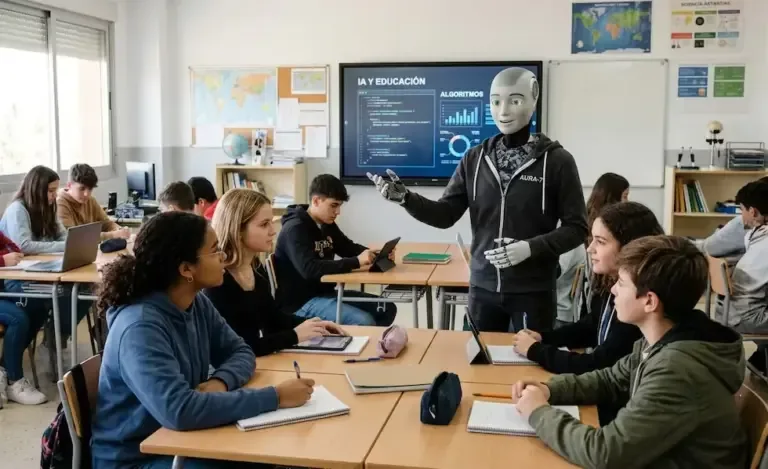
Mateus considers that since artificial intelligence is already abundantly present in school activities, teachers need concrete tools and guides to face the new challenges in the classroom.
“We all know or suspect that AI must have an ethical use, but what does that mean concretely? Teachers do not have the tools or complete elements to make a pedagogical decision. And we are talking about language models that change every week, so there is a high level of uncertainty and instability. I think there is a very large asymmetry between the real capabilities of teachers, the possibilities provided by institutions, and the uses of this technology that are absolutely uncontrolled by students,” he points out.
While uncertainty persists, millions of students worldwide will continue to be educated surrounded by increasingly sophisticated technology. The question is whether they will be able to adopt innovation without losing the skills necessary for their development and whether the necessary measures to guarantee this will arrive in time.
Read more Josué, who defends you?, a chronicle by Fernando Vivas about the Ombudsman
- This is how the US bases were left after Iran’s attacks: how serious is the damage?
- Canada challenges Trump and looks to Europe: how far can tensions with the United States go?
- Growing space tourism: a service for millionaires in which China also intends to compete with the US.