



![Alberto Beingolea: “If they insist on not giving [the powers], they are complicating life for Peru”](https://insightermedia.com/wp-content/uploads/2026/09/bb3fa9e11304ea13fe2cd333955007bc-150x150.webp "Alberto Beingolea: “If they insist on not giving [the powers], they are complicating life for Peru”")


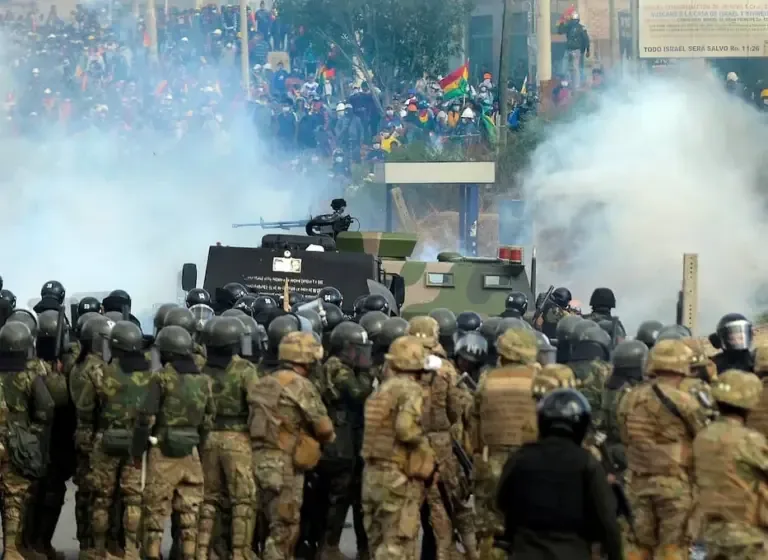
On Wednesday in Bolivia there were around fifty roadblock points on highways, several of them strategic routes.
Read more Dollar price today in Peru: What is the exchange rate this May 27?
The protests began in early May with economic demands, including the increase in the cost of living, fuel shortages, and wage demands, but later expanded to include other social and political actors. Over the weeks, the demands evolved into broader demands, including criticism of the Government’s economic measures and, in some sectors, calls for the resignation of Rodrigo Paz, who has been in power for only six months.
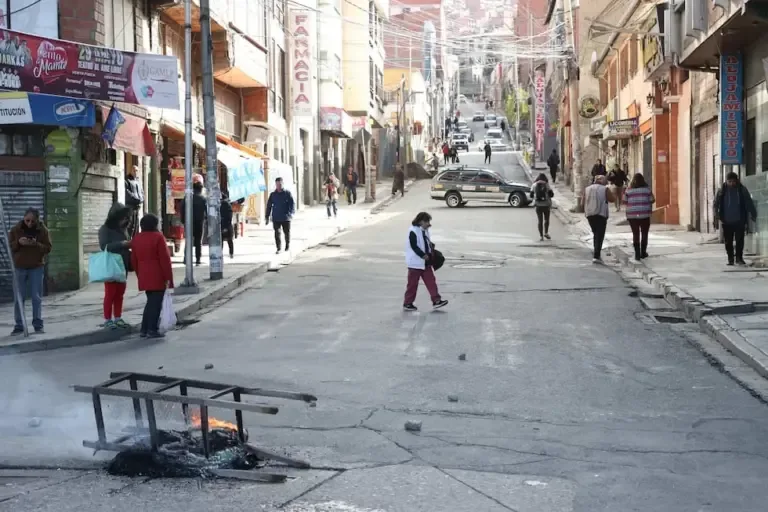
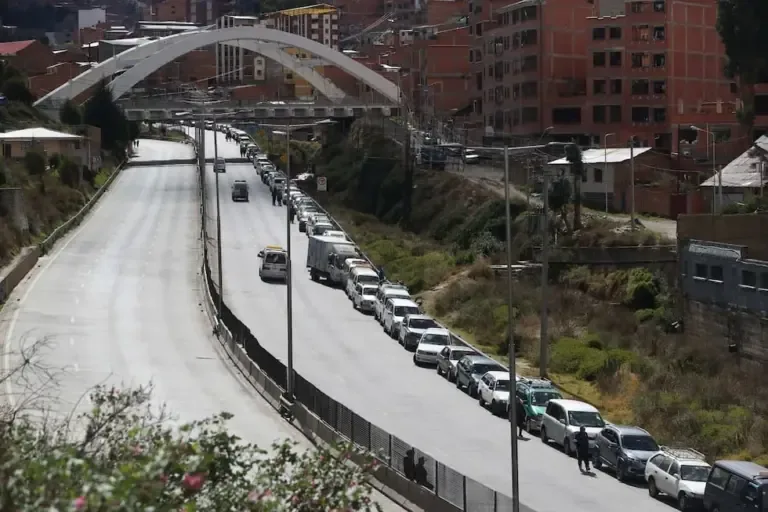
The road blockades have caused shortages of food, fuel, and medicine, especially in cities like La Paz and El Alto.
In this context, in the early hours of Wednesday Paz enacted the law that annulled the restrictions on the intervention of the Armed Forces in internal conflicts, although his Government has assured that the declaration of a state of emergency is the “last option” it will resort to if dialogue does not progress.
The origin of Law 1341
Law 1341 was born amid the 2020 political crisis with the intention of setting rules for the use of the State’s extraordinary powers, after a period marked by protests and debate over the use of public force during the interim government of Jeanine Áñez.
Specifically, the law defined the conditions for declaring a state of emergency, requiring that there be an extraordinary and duly justified situation.
It required delimiting the scope of the measure, specifying the affected territory, reasons, and duration.
It established legislative controls, so that Executive decisions would be subject to institutional oversight.
It imposed temporary restrictions and specific procedures, preventing exceptional measures from being open-ended or indefinite.
It reminded that states of emergency must be executed within the constitutional framework, without turning them into an unlimited suspension of the legal order.
What scenarios open up for Rodrigo Paz?
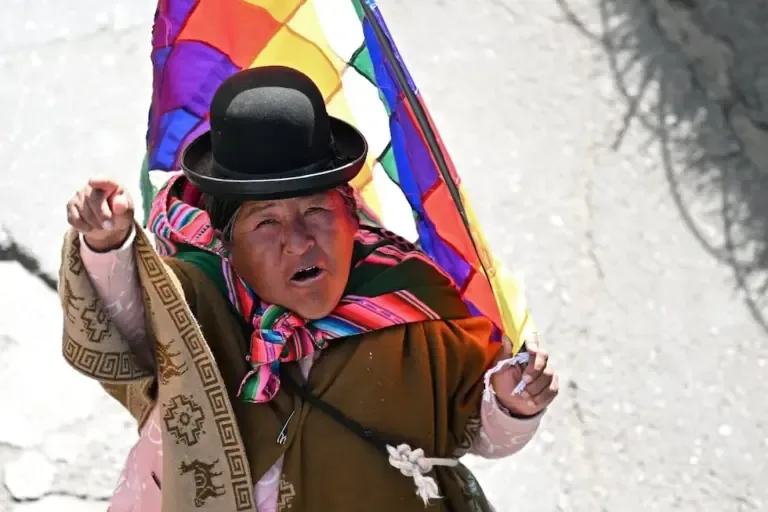
The repeal of Law 1341 opened a new debate in Bolivia about the margins of action that President Paz will have. Bolivian political analyst and former parliamentarian Erika Brockmann explains that this new scenario does not mean that the Government is automatically one step away from decreeing a state of emergency or moving towards militarization.
In an interview with El Comercio, Brockmann argues that before a decision of that magnitude, the Executive must evaluate political, institutional, and operational factors.
“Certain conditions have to be met for that to happen. A very serious analysis of the state of the Armed Forces must be done, of the logistical capacities after so many days of fuel shortages and also of the police themselves,” she states.
According to Brockmann, the Government not only has tools related to the use of force but could also apply targeted measures aimed at actors affecting public infrastructure or strategic sectors.
She emphasizes that “there are not even conditions to think about a break in the constitutional order.”
“In Bolivia, states of emergency have not worked for many years”
The political scientist warns that the country’s recent history shows that this type of mechanism does not necessarily resolve deep political crises.
“In Bolivia, states of emergency have not worked for many years,” she says.
Brockmann recalls that one of the most relevant precedents occurred in 2000, when the state of emergency declared by Hugo Banzer failed to contain social conflicts and, on the contrary, ended up strengthening forms of political pressure such as blockades.
Read more Today’s horoscope, Wednesday, May 27: read the most accurate predictions here
In her view, the strategies observed in the current mobilizations show a higher degree of organization and sophistication.
“It has been noticed in this conflict that the practices and strategies used in the blockade have become much more sophisticated, with greater violence,” she says.
The risk of militarization
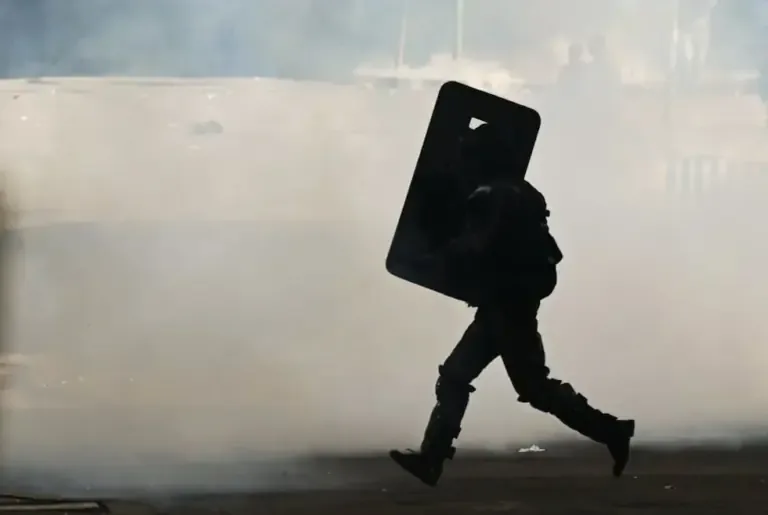
The analyst considers that the Executive would be evaluating targeted intervention options rather than a broad action across the national territory.
She added that the Government would face a particularly complex scenario due to the political and social risks involved in military deployment amid high conflict.
“When they see tanks, sooner or later a death occurs and it is not always known if it comes from the military or some radical people. They are waiting for the death,” she explains.
In that sense, she argues that any state action would have to be carried out under strict protocols and a “proportional and highly regulated” force.
“Rodrigo Paz came in to manage the catastrophe”
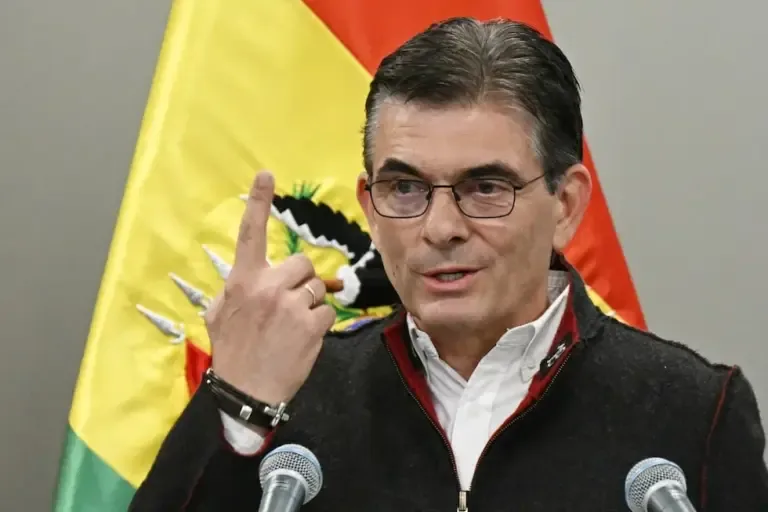
Brockmann frames the current crisis within a broader political and economic transition, marked — she notes — by economic deterioration, institutional tensions, and external factors.
“Rodrigo Paz comes to government to manage the inherited economic catastrophe”, she emphasizes.
The political scientist adds that the president simultaneously faces an energy crisis, economic pressures, and strong internal political tension.
And she delivers one of her most forceful phrases about the current scenario:
“The departure of President Paz at this moment would be a catastrophe. There must be no room for radical demands like those of Evo Morales, who calls for new elections, and I believe society in general has a contrary view on this.”
According to her reading, Bolivia is going through a “turning point” and a transition “that will not be simple” towards a new political stage that is still not fully defined.
Evo Morales and the “power of the street”
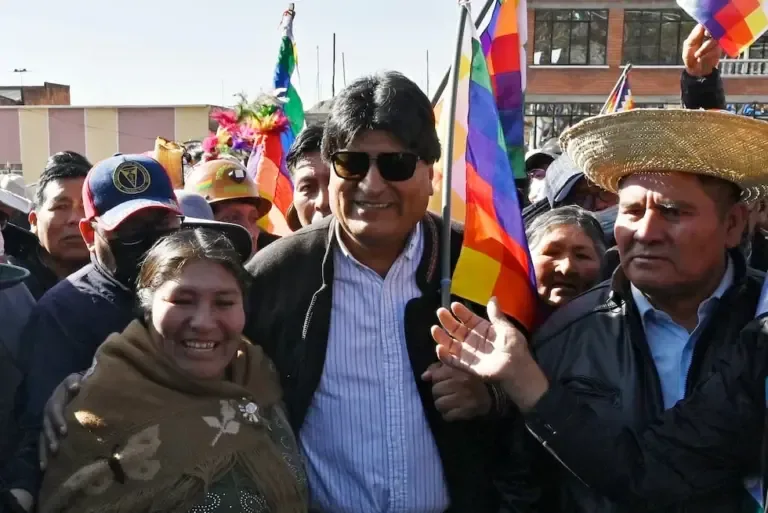
Regarding the role of Evo Morales, Brockmann considers that he retains influence, although he no longer has the same political weight as in previous years.
“He is an image behind the scenes, politically worn out, but when he intervenes he is pointing the way for this whole movement,” she says.
According to the analyst, during two decades of governments of the Movement for Socialism (MAS) intermediate leaderships and organizations that now have their own mobilization capacity were consolidated.
“There is a leadership dispute within the popular bloc that Evo Morales still represents”.
However, she argues that social support for certain forms of protest could be changing. “The popular is not a monopoly of Evo Morales and the popular is mutating at this moment”, she emphasizes.
Read more LIVE: PJ evaluates whether Roberto Sánchez will face oral trial for alleged forgery