




![Alberto Beingolea: “If they insist on not giving [the powers], they are complicating life for Peru”](https://insightermedia.com/wp-content/uploads/2026/09/bb3fa9e11304ea13fe2cd333955007bc-150x150.webp "Alberto Beingolea: “If they insist on not giving [the powers], they are complicating life for Peru”")


Why did the new Talara refinery quintuple its cost in the span of just a few years? Why does it continue to operate below 100% capacity and why does it still have defects? To answer these questions, the board of Petro-Perú gave the green light in November 2024 to carry out the ‘forensic detective audit’ of the mega energy project.
In that vein, it launched an international public tender that, on a second attempt, awarded the study to a global firm: the Brazilian Alvarez & Marsal Consultoria.

This was in November 2025. Then there was silence on the matter until just a few days ago when the president of Petro-Perú, Edmundo Lizarzaburu, revealed before Congress that the process had been canceled because it lacked “a basis.”
“A forensic audit – he said – starts from an important premise, which is to have clear and tacit evidence, and if there is none, a forensic audit cannot be done.”
He added that carrying out this study would complicate the company because “the international market will start to think that there is something hidden” and if there is something hidden “it is appropriate to file a complaint with the Comptroller and the Prosecutor’s Office.”
A week later, however, the state company’s president assured that the forensic audit “remains valid and is being carried out in accordance with the legal and administrative framework established by the company”.
Read more Dollar price today in Peru: What is the exchange rate this May 27?
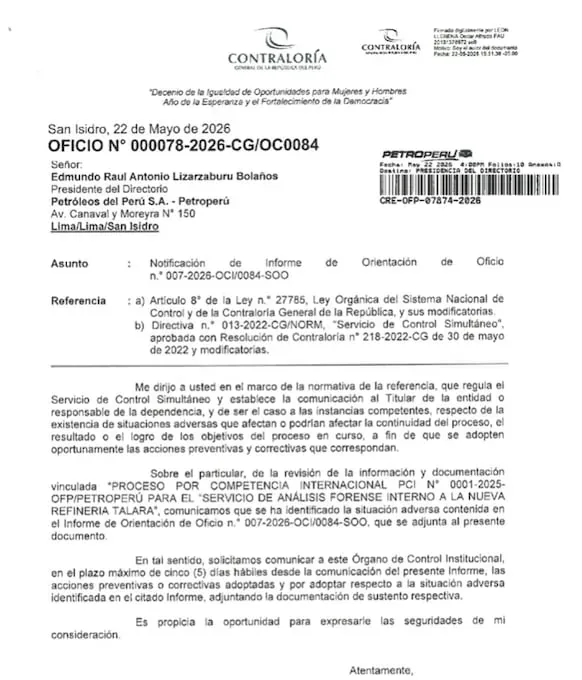
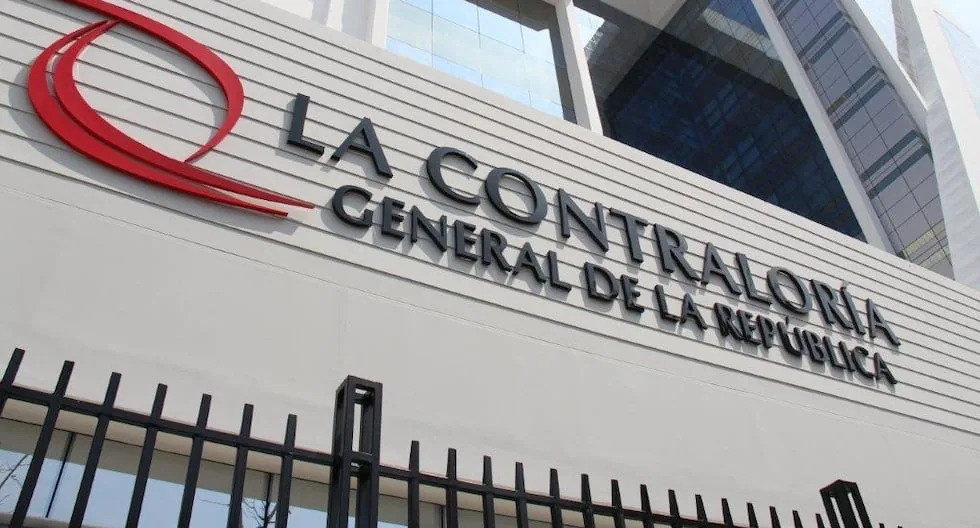
The situation was enough, however, for the Comptroller’s Office to take action, issuing an official guidance to Petro-Perú emphasizing that the forensic analysis is the responsibility of the state company and that its delay is affecting its interests.
“The process for contracting the service ‘Internal forensic analysis of the new Talara refinery’ has not yet concluded, despite 18 months having passed since the formation of the respective commission in November 2024, which poses a risk of affecting the efficiency and effectiveness of the process and the interests of Petro-Perú,” the letter warns.
Therefore, it urges the president of Petro-Perú, Edmundo Lizarzaburu, to take “the preventive and corrective actions that correspond, within the framework of his competencies and obligations.”
In that regard, it requires the official to communicate these actions to the Institutional Internal Control Body (OCI) of the state company within “a maximum period of five business days,” attaching the respective supporting documentation.
The official guidance was sent to the official on May 22, and published four days later.
Read more Today’s horoscope, Wednesday, May 27: read the most accurate predictions here