




![Alberto Beingolea: “If they insist on not giving [the powers], they are complicating life for Peru”](https://insightermedia.com/wp-content/uploads/2026/09/bb3fa9e11304ea13fe2cd333955007bc-150x150.webp "Alberto Beingolea: “If they insist on not giving [the powers], they are complicating life for Peru”")




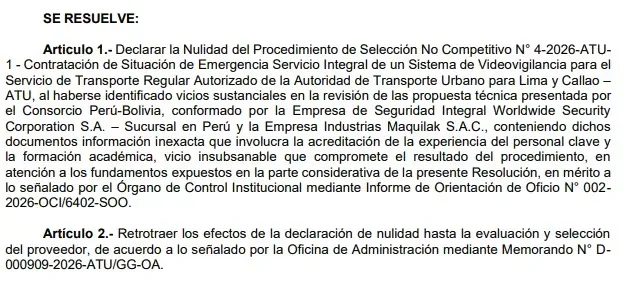
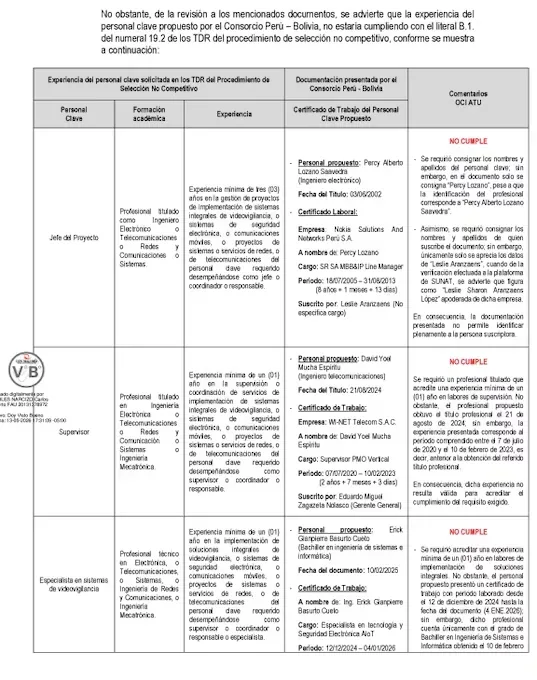
Resolution No. D-000072-2026-ATU/GG issued by the General Management of ATU declares the nullity of the Non-Competitive Selection Procedure No. 4-2026-ATU-1 and reverts the process back to the stage of evaluation and selection of the supplier. The measure is based on a report from the OCI that identified irregularities in the accreditation of experience and academic training of key personnel presented by the winning consortium. Among the observations detected are employment certificates with incomplete data, professional experience accredited before obtaining degrees, and specialists who did not meet the minimum years required for the position.
Read more Julio Velarde and the value of stability
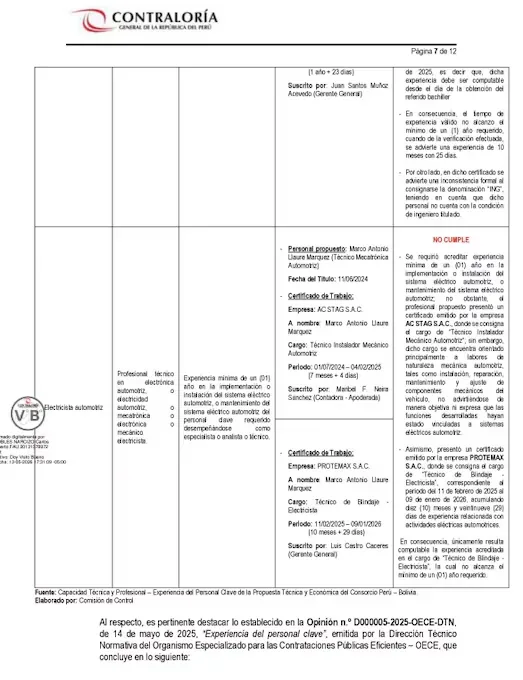
Weeks before the nullity, ATU had defended the procedure against questions about inconsistencies in the terms of reference (TOR) and alleged contradictions between technical annexes. During interviews with this newspaper, officials from the entity stated that the modifications made were a “feedback with the market” and were part of a usual technical adjustment process to broaden supplier participation. “I have to see how to adjust the TOR so that, I understand, I will no longer reach A, because the market is already telling me it won’t reach A,” said Pavel Flores, ATU spokesperson consulted by El Comercio.
The entity also denied that there were substantial errors in the annexes related to the technical specifications of the cameras and defended that the detected differences did not alter the required functionality. “The functional thing is that the minimum threshold is 80 degrees or higher. That is the key,” ATU stated in response to the differences between the annexes that set different characteristics for the surveillance lenses.
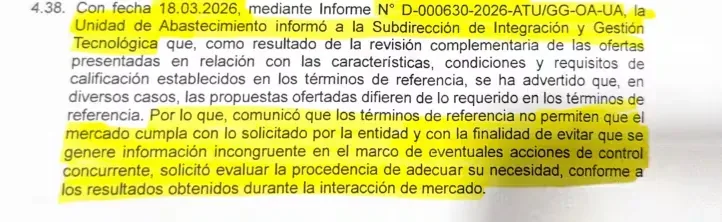
However, the new scenario reveals that the internal observations were not minor. Report No. D-000630-2026-ATU/GG-OA-UA, issued on March 18 by the entity’s own Procurement Unit, already warned that the terms of reference contained inconsistencies that could generate “incongruent information” and difficulties for the market to comply with what was requested. Despite this, the entity continued with the procedure, issued a new version of the file, and awarded the contract to the Perú-Bolivia Consortium in early April.
The direct contracting had been promoted under the argument of the emergency due to citizen insecurity in Lima and Callao and contemplated the installation of approximately 40,000 surveillance cameras on 8,000 public transport buses. The project included internal and external cameras, GPS, 4G connectivity, image storage, and monitoring from a control center managed by ATU. However, specialists previously consulted had already questioned the effectiveness of the model because the system would mainly depend on drivers detecting risk situations and manually activating a panic button during robberies or emergencies.
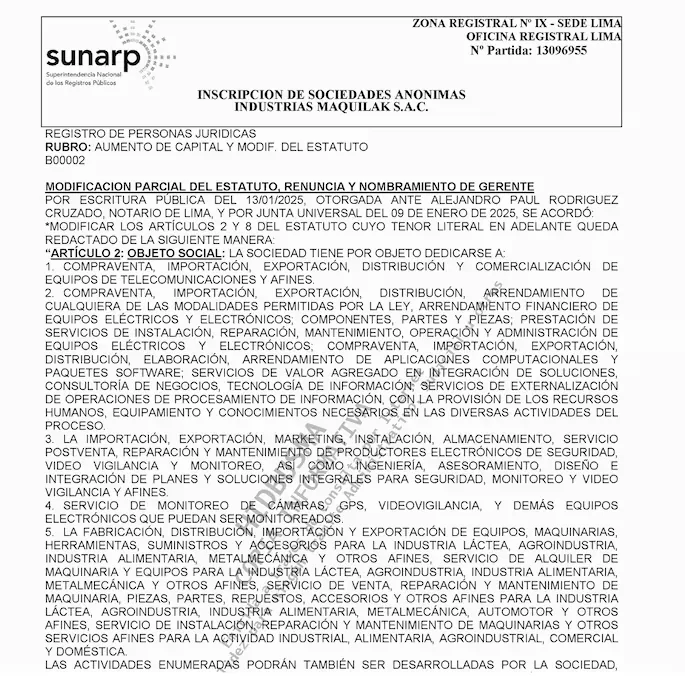
The controversy also reached the Perú-Bolivia Consortium. Registry documents reviewed by this newspaper show that Samuel Castro Yangalí appears as a shareholder of Industrias Maquilak S.A.C., one of the companies in the winning consortium. Castro Yangalí has been previously mentioned in journalistic reports as part of the Castro Yangalí family group, media-related to the Qali Warma/Wasi Mikuna case due to contracts awarded to companies supplying the state school feeding program.
For public procurement specialist lawyer Rodrigo Linares, the case also reflects broader questions about how the direct contracting was conducted and the inconsistencies detected during the process.
Read more These are the top 15 bakeries in Lima, according to the Somos Awards 2026
Linares stated that the nullity declared by ATU itself implies, first, the recognition of errors within the procedure. “Nullity is a tool granted by entities so they can correct errors they have made. First, the error is recognized,” he explained. He added that this mechanism also has a corrective purpose because it allows “reverting the selection procedure” to the stage where the irregularity would have occurred.
However, Linares questioned that the entity decided to revert the process only to the evaluation and selection stage of suppliers, despite previous reports where other offers had already been discarded. “What are they going to evaluate? With so much delay if it is an emergency contracting,” he questioned. In his opinion, if previously the entity itself had indicated that the other bidders also did not meet the technical requirements, “the correct thing would be to declare the procedure void.”
The specialist also disagreed with ATU’s position that there was no formal contract with the winning consortium because the final document had not yet been signed. As he explained, in emergency direct contracting “I contract first and then regularize.” In that sense, he stated that from the moment the entity selects the supplier and informs them that it will continue with the contracting, effects typical of a contractual relationship are already generated. “They ignore that the contract for the emergency cause is practically tacit from the moment there is acceptance,” he affirmed.
Regarding possible functional responsibilities, Linares indicated that the nullity opens the way for the start of an administrative liability process to determine the level of participation of the involved officials. “One of the main consequences of nullity is that the liability process begins,” he said. The lawyer also considered that the case acquires special sensitivity due to the insecurity context faced by public transport. “Measures need to be taken and the measures that have been taken have not been appropriate and that is seen in the current result,” he concluded.
At the close of this edition, this newspaper tried to contact ATU again to gather their statements regarding the nullity of the process and the observations made by the Comptroller’s Office; however, no response was obtained.