




![Alberto Beingolea: “If they insist on not giving [the powers], they are complicating life for Peru”](https://insightermedia.com/wp-content/uploads/2026/09/bb3fa9e11304ea13fe2cd333955007bc-150x150.webp "Alberto Beingolea: “If they insist on not giving [the powers], they are complicating life for Peru”")



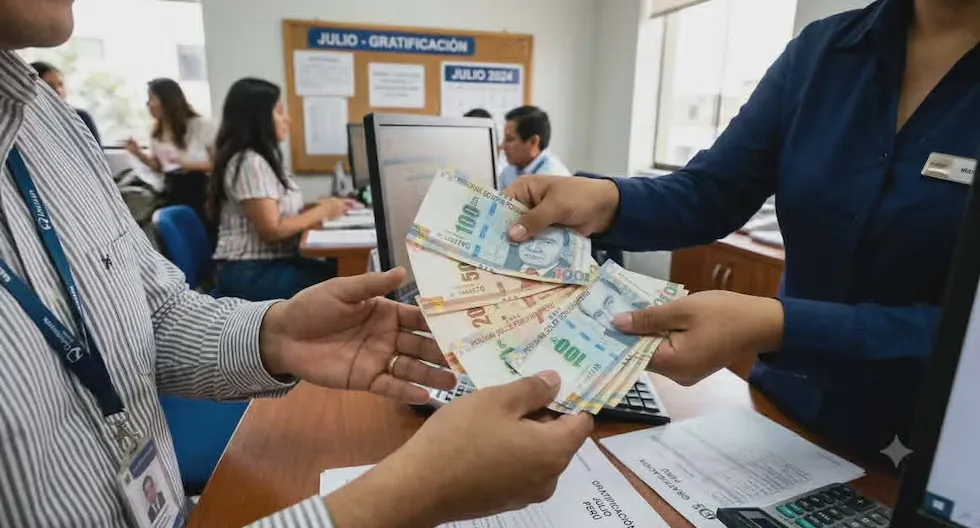
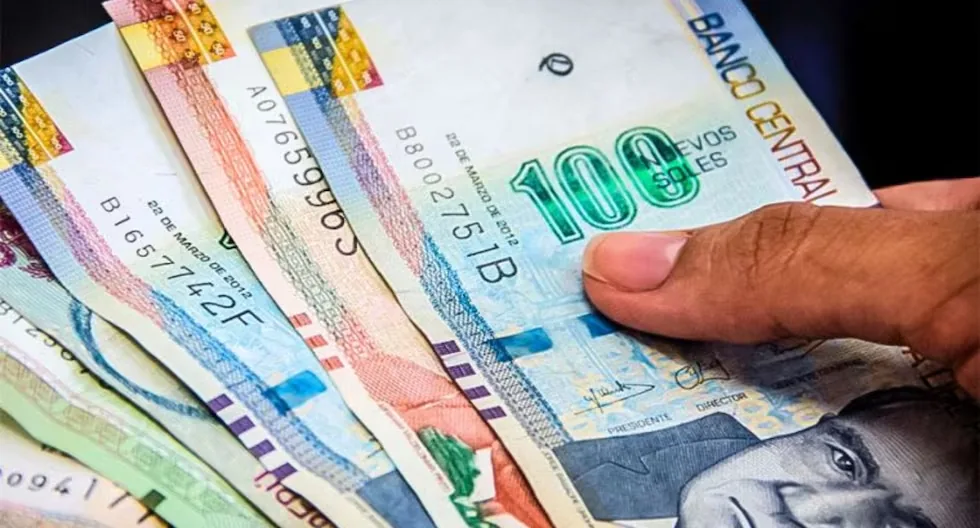
As the National Holidays approach, millions of workers eagerly await the arrival of an additional income that often represents significant relief for the family budget. It is estimated that more than 4 million formal employees will benefit from this extraordinary payment, considered one of the most valued labor rights of the year and which, for many, means the opportunity to catch up on debts, save, or make planned purchases. However, not everyone will automatically receive this benefit. The July bonus is aimed at those working in the private sector under a formal employment relationship and listed on the payroll, as well as public sector workers hired under the private sector labor regime. Knowing who meets the requirements and what conditions the regulations establish will be key to knowing if this expected payment is due.
Read more 2026 World Cup matches today, Tuesday, July 14: schedule, time, and channels to watch live football
When will the July bonus payments be made for workers in different sectors?
Before mid-July, a large portion of employees will see this income reflected in their accounts, although the exact date will depend on the labor regime and the schedule established by each employer. However, there is a detail that few know: not all workers receive the same benefit or under the same conditions. While some will receive additional payments provided by labor legislation, others will only receive their usual salary, so knowing who the beneficiaries are and when each deposit is due is essential to avoid confusion. Likewise, Jorge Carrillo Acosta, a Finance professor at Universidad del Pacífico, estimates that this year S/ 10 billion will be paid out as the July bonus 2026 in the country.
How can the bonus corresponding to each worker as a labor right be calculated?
Before the first half of July, workers who have worked continuously between January and June 2026 are entitled to receive a bonus equivalent to one monthly salary. On the other hand, those who did not complete the entire semester will receive a proportional amount, calculated based on one-sixth of the computable remuneration for each full calendar month worked. If the employee receives a family allowance, this concept is also included in the calculation. Likewise, variable remunerations, such as commissions, overtime, or bonuses, will be considered as long as they have been received at least three times during the semester.
Read more Argentine Falklands War veterans facing match against England: «It’s not just another game»
In addition to the bonus payment, the regulations include an extraordinary bonus established by Law 30334, equivalent to 9% of the benefit for workers affiliated with EsSalud and 6.75% for those covered by an EPS. Finance specialist Jorge Carrillo Acosta highlighted that this income is not subject to deductions for AFP contributions or Income Tax, which allows the amount received to be higher than the usual net salary. As a reference, a worker with a gross salary of S/ 2,000 would receive about S/ 2,180; with S/ 3,000, around S/ 3,270; with S/ 5,000, approximately S/ 5,450; and with a salary of S/ 10,000, the payment would reach about S/ 10,900.
What will happen to companies that do not comply with the payment of bonuses to workers?
Failure to make timely bonus payments can have serious consequences for employers. According to labor specialist Juan Valera, this non-compliance is considered a serious labor relations violation, so companies face significant economic sanctions imposed by the competent authority. In the case of small companies, fines can range from 0.45 to 4.50 UIT, representing amounts from S/ 2,475 to S/ 24,750, depending on the number of affected workers. For companies not part of the MYPE regime, sanctions are considerably higher and range from 1.57 to 26.12 UIT, that is, from S/ 8,635 to S/ 143,660.
Read more Keiko Fujimori’s day: Does Carlos Espá leave open the option of taking over the foreign ministry?