



![Alberto Beingolea: “If they insist on not giving [the powers], they are complicating life for Peru”](https://insightermedia.com/wp-content/uploads/2026/09/bb3fa9e11304ea13fe2cd333955007bc-150x150.webp "Alberto Beingolea: “If they insist on not giving [the powers], they are complicating life for Peru”")


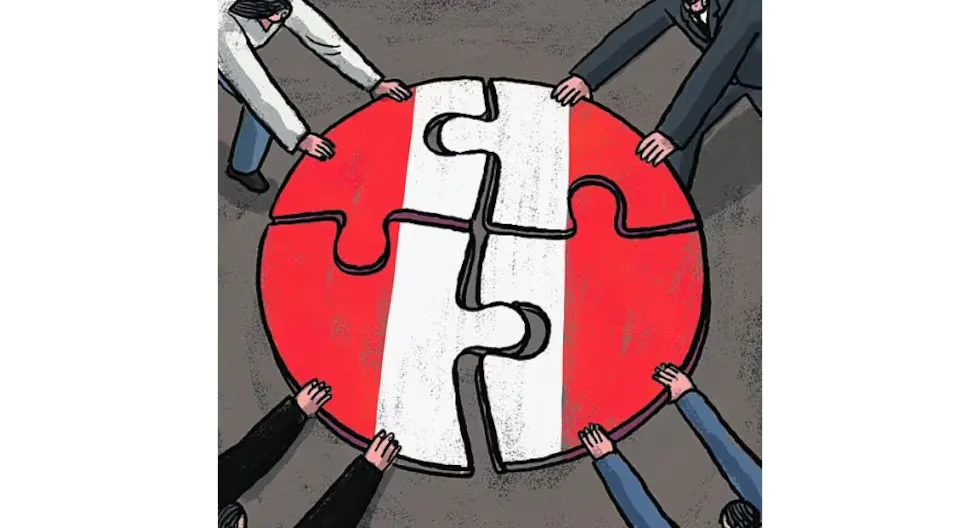
In times when the country is once again debating the direction Peru should take, it is hopeful that children, young people, the elderly, and the most vulnerable families are once again taking a central place on the public agenda. For too long, many of their needs were sidelined by the political situation. Today there is a new opportunity to remember that the true development of a country only makes sense when it improves the lives of those who need it most.
Read more They launch a solidarity campaign to support families affected by the earthquake in Junín
However, people do not only need speeches or good intentions. They need decisions that translate into real opportunities. For a mother who fights every day to raise her children, for a young person seeking access to education or decent employment, for an elderly person waiting for timely care, or for a community that trusts in the presence of the State, time is not measured by changes in government, but by the days that pass without answers.
The past few years have left a lesson that Peru cannot afford to forget. Political and institutional instability, high turnover of authorities, and the interruption of processes have shown that when a public policy stops, it is not only an administrative procedure that is postponed. The hope of thousands of people waiting for an opportunity to move forward is also postponed.
Therefore, governing also means building on what has been learned. The best legacy a government can leave is not to start from scratch, but to have the ability to recognize which public policies have generated results, which need to be corrected, and which must be transformed to better respond to the country’s needs. Public policies must be evaluated by their results, not by the ideologies that drove them. What works must be strengthened; what needs improvement must be corrected; and what no longer meets the population’s needs must be responsibly transformed. That is the best way to build a State that learns, matures, and generates trust among its citizens.
That learning also requires strengthening merit, technical knowledge, and a vocation for service. Public institutions need prepared professionals, with experience and commitment, capable of ensuring that accumulated knowledge is not lost with each change of administration. When talent guides decisions and experience is preserved, public policies stop depending on one administration and begin to consolidate as true State policies serving the people.
As Nelson Mandela recalled, overcoming poverty is not an act of charity, but an act of justice. That reflection remains fully relevant. Social inclusion only achieves its true purpose when there is a permanent commitment to those who need it most and when public policies manage to transcend government periods to become a sustained effort capable of generating opportunities, reducing gaps, and strengthening citizens’ trust.
Because, in the end, governments change, authorities are renewed, and priorities may evolve. But there is something that does not change: the needs and hopes of people. There are girls and boys who dream of a future full of opportunities; young people who want to transform their talent into a life project; the elderly who expect dignified care; mothers and fathers who tirelessly fight to support their families; and communities that continue to trust that the State will reach where it is most needed.
The true strength of a country is reflected in the peace of mind of a mother who knows she is not alone; in the hope of those who find an opportunity to move forward; in the trust of a community that feels its needs are heard; and in the certainty of millions of Peruvians that the State can become an ally to build a better future. Because when public policies put people at the center of every decision, they cease to be mere government actions and become opportunities, hope, and, above all, a true act of justice. In recent years, Peru has gone through a period of political and institutional instability. Authorities changed repeatedly and many institutions had to reorganize. Beyond ideological differences or who has governed, this experience leaves an important lesson: when continuity is interrupted, those who suffer the most are those who depend most on the State.
Every time a public policy stops, it is not just a procedure that is postponed. The hope of an elderly person waiting for a response with trust in the State, of a mother seeking an opportunity to raise her children, and of a community that opened its doors with the hope of building a better future is also postponed. For those living in vulnerable situations, time is not measured by changes in authorities, but by the days that pass without answers.
In public debate, we often focus on who arrives and who leaves, but rarely on those who remain waiting. That is why strengthening the State is not only about promoting new initiatives but also about protecting and consolidating those public policies that have already proven to generate results for citizens.
Every new administration has the opportunity to demonstrate that governing also means continuing what works. Betting on merit, technical capacity, institutionality, and professionalism strengthens public management and generates trust among citizens. When decisions put people at the center, the State stops reacting only to the situation and begins to respond sustainably to the real needs of the country.
As Nelson Mandela recalled, overcoming poverty is not an act of charity, but an act of justice. That reflection remains fully valid. Social inclusion only fulfills its true purpose when there is a permanent commitment to those who need it most and when public policies manage to transcend government periods.
In the end, more than names, positions, or political differences, what must remain is the commitment to people: to mothers who fight every day to raise their children; to boys and girls whose future cannot be put on hold; to young people who finish school with dreams, talent, and the desire to move forward, but who need a State that expands their opportunities to transform that potential into education, employment, and a life project; to the elderly who expect dignified care; and to families who trust in a State that should not start from scratch every time its authorities change.
Because governments change, authorities are renewed, and priorities may evolve. But the needs of people remain. Recent years have left us lessons that Peru cannot afford to forget. The true strength of a country is not measured only by its ability to start new projects, but also by the wisdom to build on what has been learned and strengthen what proves to generate opportunities for those who need it most. Because when public policies put people at the center, continuity also saves lives.