





![Alberto Beingolea: “If they insist on not giving [the powers], they are complicating life for Peru”](https://insightermedia.com/wp-content/uploads/2026/09/bb3fa9e11304ea13fe2cd333955007bc-150x150.webp "Alberto Beingolea: “If they insist on not giving [the powers], they are complicating life for Peru”")



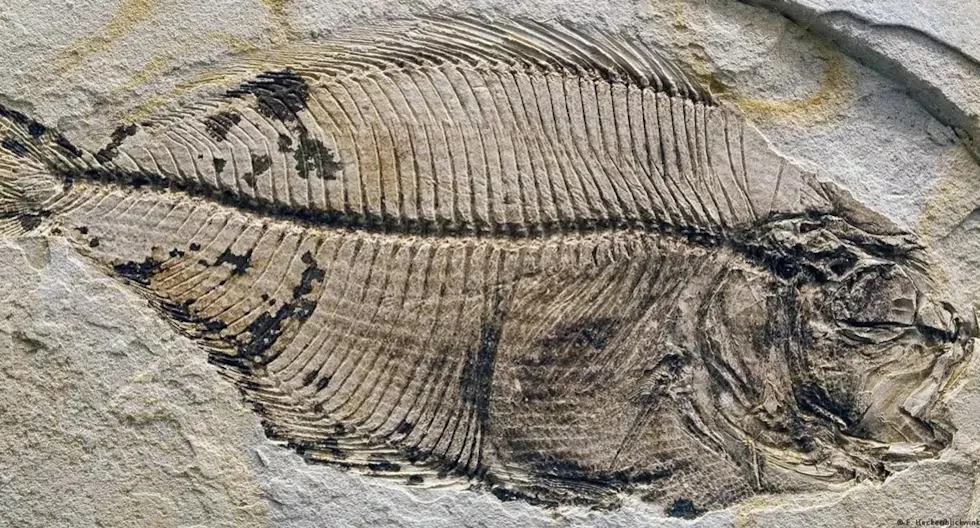
What for decades seemed to be only a small fish fossil ended up becoming an extraordinary piece for science. Researchers from the University of Chicago and the University of Kansas studied a specimen of Trawdenia planti, a Carboniferous fish found in Lancashire, United Kingdom, using computed tomography scans. The analysis allowed the identification of preserved neural tissues inside the skull, an extremely rare feature in the fossil record because soft tissues usually decompose shortly after death.
Read more Alianza Lima vs. Sport Boys: minute by minute of the match for Liga 1
What was the fish that preserved its brain like?
- Trawdenia planti was a small fish, approximately the size of a minnow-type fish, that lived more than 300 million years ago in an ancient swampy environment of what is now northwest England. Its remains were trapped in deposits associated with ancient coal deposits in the Burnley region.
The fossil also has a particular history: it was discovered in 1888, when workers in the Lancashire coal mines used to collect fossil remains found during their work. The specimen ended up divided into two parts and remained in collections of a natural history museum for decades, until researchers managed to recognize that both pieces belonged to the same fossil.
This is what the brain of more than 300 million years looks like
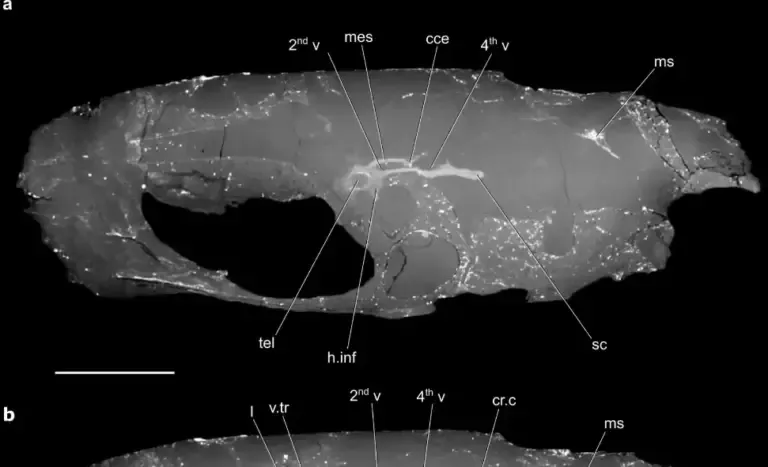
The big surprise appeared when the scientists used modern tomography techniques to observe the inside of the skull. The images revealed structures compatible with neural tissues, including signals of internal membranes and cavities related to the ventricular system, which allowed reconstructing the brain’s arrangement in three dimensions.
Unlike other fossils of ancient brains, where the preserved tissue may seem small in relation to the available space inside the skull, the brain of Trawdenia practically occupied the entire brain cavity. The researchers also identified a striking feature: a part of the cerebellum surrounded the central area of the brain, a trait that could provide clues about the evolutionary relationships of these fish with groups that still exist.
The discovery may change how fossil brains are studied
The importance of the discovery goes far beyond knowing the appearance of a prehistoric brain. The study, published in Proceedings of the National Academy of Sciences (PNAS), indicates that the close correspondence between the preserved brain and the skull cavity allows using the internal shape of other fossil skulls as a more reliable reference to reconstruct brain size and anatomy, even when the nervous tissue has already disappeared.
Ray-finned fishes represent about 99% of the more than 30,000 current fish species, so understanding their early evolutionary steps is fundamental to reconstructing the history of a huge part of vertebrates. Researchers consider that Trawdenia planti could be related to an ancient evolutionary line linked to current sturgeons and paddlefish.
The discovery also demonstrates that museums can hide scientific information that remained invisible for generations. In this case, a fossil found in a mine in the 19th century needed modern imaging technology to reveal its content. More than three hundred million years after that small fish died, its brain now offers an exceptional opportunity to understand how the nervous system of fish evolved and how some of the features present in species that still inhabit the planet’s oceans and rivers arose.
Why do we almost never see fossilized brains?
The reason there are so few fossil brains is simple: soft tissue is the great absent in the fossil record. Under normal conditions, when an animal dies, its internal organs decompose quickly due to bacteria, oxygen, and other environmental factors. For a brain to be preserved, it needs to be buried unusually quickly, in an oxygen-poor environment with minerals available that replace the organic tissue before it completely disappears. It is such a delicate balance that it only occurs on very rare occasions.
In recent years, paleontology has begun to reveal more examples of fossilized organs in ancient fish, including fragments of heart, eyes, and meninges, thanks to exceptional deposits in places like Brazil and England. Each new specimen not only expands the list of known species but also opens a microscopic window into the biology of animals that lived hundreds of millions of years ago. And, as in the case of this prehistoric fish, it allows connecting those intimate details—a brain, a nerve, a cavity—with the grand narrative of vertebrate evolution.
Read more Pension 65 Increase: who will receive the amount of S/ 700