



![Alberto Beingolea: “If they insist on not giving [the powers], they are complicating life for Peru”](https://insightermedia.com/wp-content/uploads/2026/09/bb3fa9e11304ea13fe2cd333955007bc-150x150.webp "Alberto Beingolea: “If they insist on not giving [the powers], they are complicating life for Peru”")


LOOK: Ivalú Acurio, the daughter of two culinary icons who follows in their footsteps and now leads seven venues in Switzerland
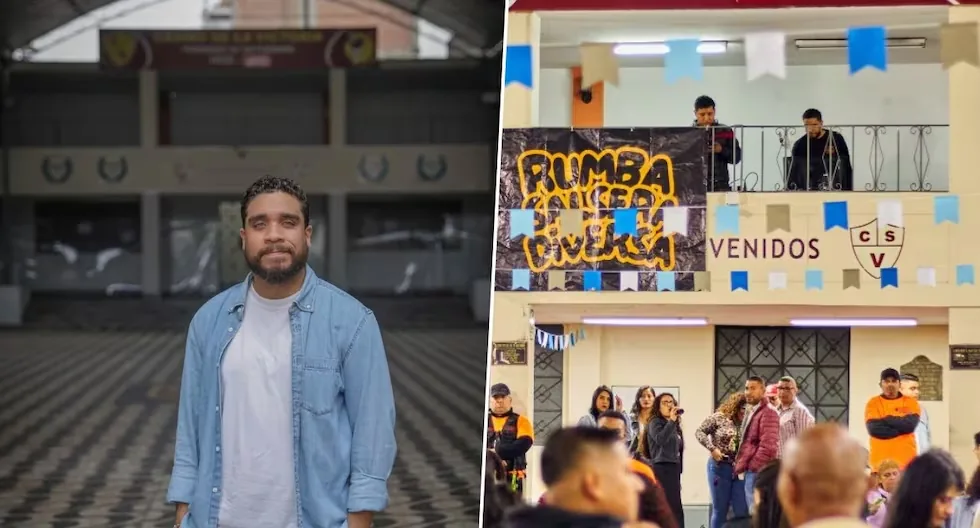
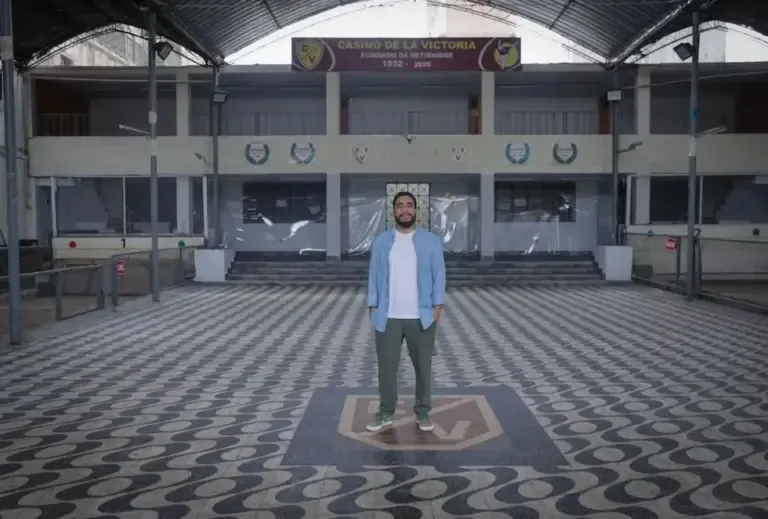
The first edition took place on July 20, 2024, Luis rented a small space at the Club Casino de La Victoria, expecting to receive 80 people, but around 180 showed up. The call was mainly made through his social networks and, although at first the audience was made up of close people, soon the party began to grow organically.
That’s how RSD’s popularity started, by the second edition, the call had already begun to transcend Gonzales’ close circle. TikTok played an important role, Luis has an account under the name “No soy melómano”, where he shared songs he liked and then began to show what was happening at the parties. It spread quickly and, by September 2024, around 400 people arrived. By November, even an elderly couple told him they had discovered the party precisely through TikTok.
When Luis noticed that RSD was no longer just a party for his acquaintances, he was clear that he wanted to build a different place. One where people could dance as if they were at home. “I want it to be a safe and respectful space,” he explains. That idea ended up becoming one of the features that most identifies the proposal and that, over time, made the community itself adopt the party as a meeting place.
And salsa? That came naturally, Luis grew up surrounded by music, his grandfather and great-grandfather were musicians and, since childhood, this genre was part of his life. Although he does not consider himself a DJ or professional musician, he has always had a close relationship with music. In school he played trombone as an amateur and, for years, he was one of those friends who came to gatherings with songs ready to make everyone dance. Today that habit has become one of the tasks he enjoys most: preparing the playlist for each edition, laughing he says he just presses “play” on each song, there are no turntables, nor anything sophisticated.
He prepares between 50 and 60 songs for each party, but he also watches those on the dance floor and decides on the fly which song might work. “I go by feeling,” he says. It is a way of understanding music that also explains the diversity of the audience: “at RSD people who deeply know salsa can coincide with others who just want to dance to a song that reminds them of their childhood.”
The meeting between generations is perhaps one of the most powerful images of RSD. Luis recalls seeing from the booth a woman about 70 years old dancing and thinking of his own grandmother. For him, that moment summed up what was happening: salsa could bring together people who, in other nightlife spaces, would hardly coincide. Older adults, young people, couples, friends and members of the LGTBIQ+ community share the same dance floor, RSD stopped being just a party to become a cultural phenomenon, as Luis has called it.
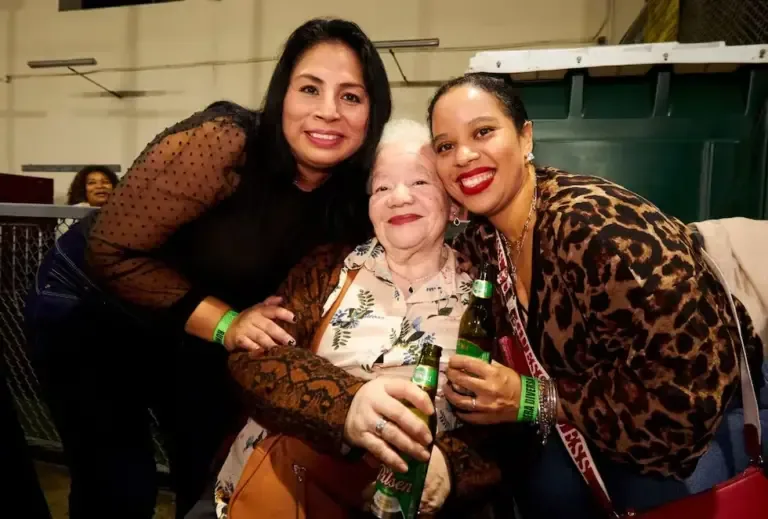
But along those lines, the word “diverse” is not just decoration in the name, it is part of the party’s DNA. For the creator of RSD, diversity begins by recognizing that families themselves are diverse and that many people do not necessarily find spaces where they can show themselves as they are. That is why he insists that the pillars of RSD are two: respect and safety. Salsa is the meeting point, but not the only goal.
That philosophy also translates into concrete rules. If someone makes others uncomfortable, invades another person’s personal space or crosses established boundaries, the security team intervenes. There are not many discussions: respect is non-negotiable. For Luis, the idea is that what is learned inside the party can also be transferred to everyday life. “What happens at RSD should be replicated in your daily life,” he states.
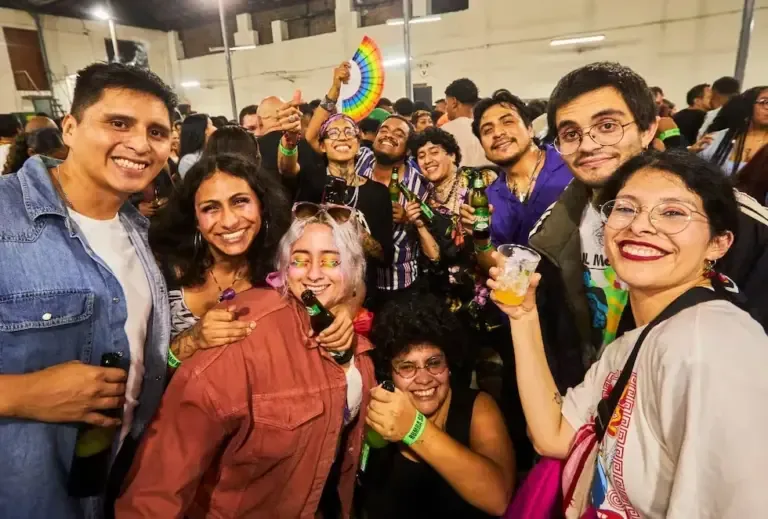
Safety is also present in details that could go unnoticed: the venue’s lights are always on because they allow people to see each other and facilitate space control, the event ends around four in the morning and there is staff attentive to what happens even outside the venue. In a city where the night is often associated with insecurity, Luis seeks to make the experience different.
Read more Government appoints Lizbeth Maceda as advisor in Keiko Fujimori’s Presidential Office
Known faces have also come to dance, singer Susana Baca attended one of the editions and her presence was received with enthusiasm, but without changing the essence of the event. Luis says the artist integrated naturally and even made sure to maintain an environment where she could enjoy without being constantly interrupted.
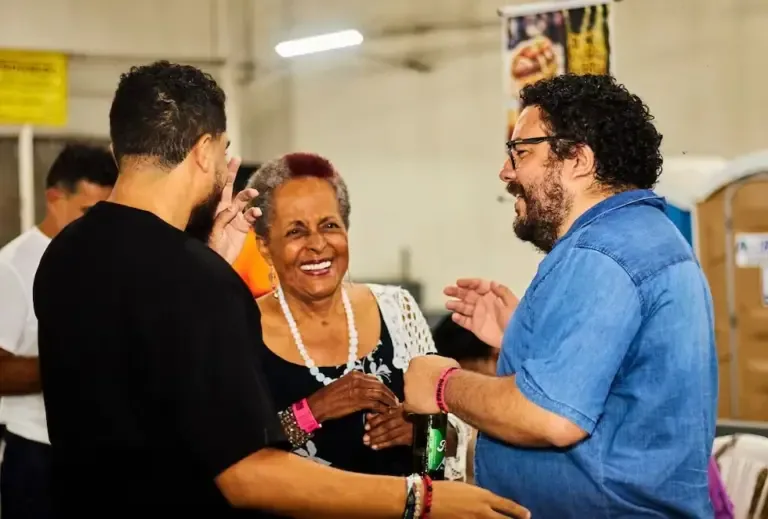
Salsa, the heart of RSD
Luis does not intend to turn RSD into a party exclusively for salsa connoisseurs, nor to fill the dance floor with songs that only he enjoys. His playlist seeks to build bridges between generations. There are classics that evoke parents and grandparents, songs that are part of the collective memory, and more recent tracks that can surprise the audience. For him, a good song is not measured only by its popularity, but by what it provokes when it starts playing.
There are songs that have already become rituals, like “Perdóname” by Gilberto Santa Rosa and “Dicen que soy” by La India, when they start playing, phones go up and the dance floor turns into a collective choir. Those are the minutes when differences seem to disappear and everyone shares the same musical memory.
For the rest of 2026, RSD has new editions planned, the most challenging will be on October 31, competing with big parties, but Luis prefers not to call it competition because he says there is always an audience for everyone.
However, one of Luis and his team’s goals is to take the concept outside Lima, in February they held a Yunza in El Carmen, like the first edition of RSD in Lima, it exceeded the few expectations the team had, now their big challenge is precisely that: to show that the community can grow without losing what made it special. He has imagined parties in other cities in Peru and even in places where Peruvian compatriots live, like New York, Miami, or Italy.
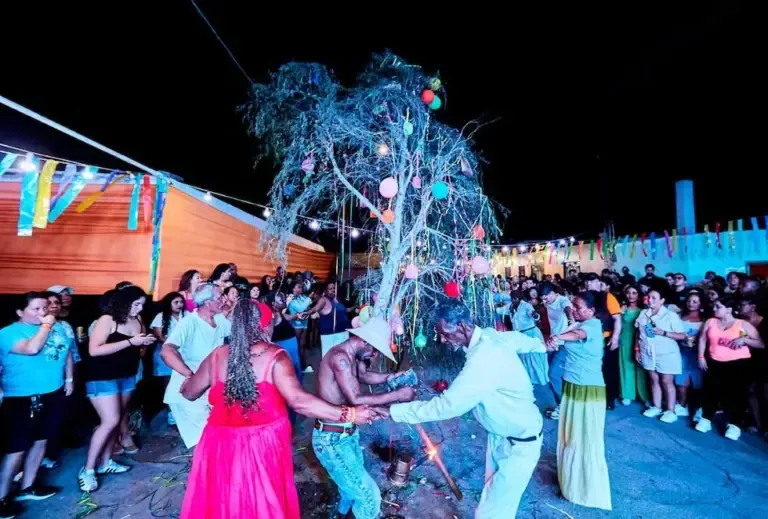
But despite the growth, Luis does not talk about RSD as a project built exclusively by him. On the contrary, he recognizes that the community has been taking ownership of the experience. What started with him, his sister, his dad, and a security person now involves about 50 people in the organization. “It is being built with all the attendees and all the people who help us,” he says.
Perhaps that is the true story of Rumba Salsera Diversa. It is not just a party that found an audience, on the contrary, it is a party that found a need: to have a place to dance without fear, meet others, listen to songs that awaken memories, and share the dance floor with people who, outside of it, probably would never have met. And as long as salsa keeps playing, Luis seems clear that the party is just beginning and that it has a long way to go.
Address: Club Social “Casino de La Victoria” (Av. Bauzate y Meza 479 – La Victoria)
Schedule: 8:00PM to 4:00AM
Tickets: +51948646826
Social Networks: Rumba Salsera Diversa – RSD
- The story of the Boza and Solís mansion in Ayacucho: the urgency to save a historical monument of Peru
- Bogotá: the other side of the city, from its tejo and viche traditions
- Am I repeating my parents’ mistakes? How to heal to raise without resentment
- El Rincón de Juancho: how a passageway in Rímac became “the narrowest restaurant in Peru”
- “I wanted to be able to dance Beyoncé without losing my flamenco essence”: the story of Bravata, the Peruvian dance group that became a viral phenomenon