




![Alberto Beingolea: “If they insist on not giving [the powers], they are complicating life for Peru”](https://insightermedia.com/wp-content/uploads/2026/09/bb3fa9e11304ea13fe2cd333955007bc-150x150.webp "Alberto Beingolea: “If they insist on not giving [the powers], they are complicating life for Peru”")



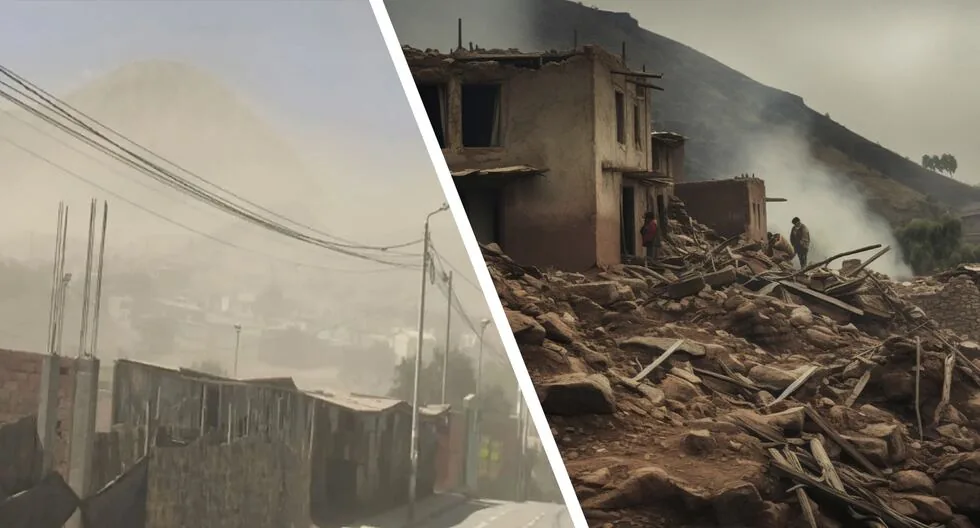
Strong winds, unusual rains, and sudden weather changes often raise doubts when they occur near an earthquake, in a country where seismic movements are frequent and part of everyday reality. Therefore, every coincidence between an atmospheric phenomenon and an earth movement can raise questions and fuel old beliefs about possible warning signs. However, the fact that both phenomena coincide does not mean there is a relationship capable of anticipating an earthquake, although this idea still remains among the population and reappears after some earth movements, especially when the weather presents unusual conditions. Discover what specialists say about this belief, its origin, and what aspects should be considered to be prepared for an earthquake.
CAN STRONG WINDS AND RAINS ANNOUNCE AN EARTHQUAKE?
Specialists rule out that wind or rain can announce a seismic movement. Hernando Tavera, executive president of the Geophysical Institute of Peru (IGP), explained that earthquakes respond to the planet’s internal dynamics and can occur at any time, regardless of season, date, or hour.
Nelson Quispe, specialist at the National Meteorology and Hydrology Service of Peru (Senamhi), agreed with this explanation and ruled out a proven association between atmospheric phenomena and earthquakes. “There is also no evidence that a seismic movement produces changes in the atmosphere.”
Therefore, a day with unusual winds or rains should not be interpreted as a seismic signal, according to Infobae.
WHY DOES THIS BELIEF PERSIST AMONG PEOPLE?
The relationship between weather and earthquakes is centuries old. In Ancient Greece, Aristotle held that Earth movements could be linked to air currents or gases accumulated beneath the surface. Although discarded, similar ideas continued to be passed down.
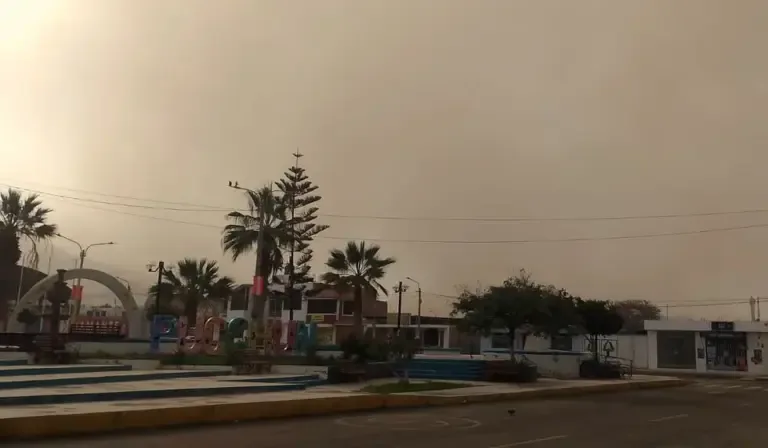
In Peru, the perception can be reinforced when strong winds, rains, or dust storms coincidentally occur with an earthquake. The proximity can generate a false cause-and-effect relationship, despite having different origins.
WHAT IS THE DIFFERENCE BETWEEN A METEOROLOGICAL PHENOMENON AND AN EARTHQUAKE?
Rains and winds belong to atmospheric processes, while earthquakes originate from geological processes related to the interaction of tectonic plates. Observing a climate change does not allow anticipating a seismic movement.
Tavera indicated that science can study certain meteorological scenarios, such as periods of rain capable of generating mudslides, landslides, or river floods, but that does not mean predicting earthquakes.

HOW MANY EARTHQUAKES HAVE BEEN RECORDED IN PERU DURING 2026?
Between January and August 10, 2026, the IGP recorded 543 earthquakes in Peru. Arequipa registered 92, Lima 66, and Ica also 56. July concentrated the highest number of movements and about 60% occurred off the coast, where the Nazca and South American plates interact.
WHAT SHOULD BE CONSIDERED TO PREVENT DAMAGE?
The recorded seismic activity does not allow knowing when a large-magnitude earthquake will occur. Also, magnitude alone does not determine damage: a magnitude 4 earthquake can generate a shaking intensity similar to a magnitude 8 depending on the distance to the epicenter. Therefore, prevention should focus on safe housing, adequate soil conditions, and family preparedness, not on signs from the wind or rain.
Read more Do you take B Complex? These are the types of vitamin B that exist and what they are for