




![Alberto Beingolea: “If they insist on not giving [the powers], they are complicating life for Peru”](https://insightermedia.com/wp-content/uploads/2026/09/bb3fa9e11304ea13fe2cd333955007bc-150x150.webp "Alberto Beingolea: “If they insist on not giving [the powers], they are complicating life for Peru”")



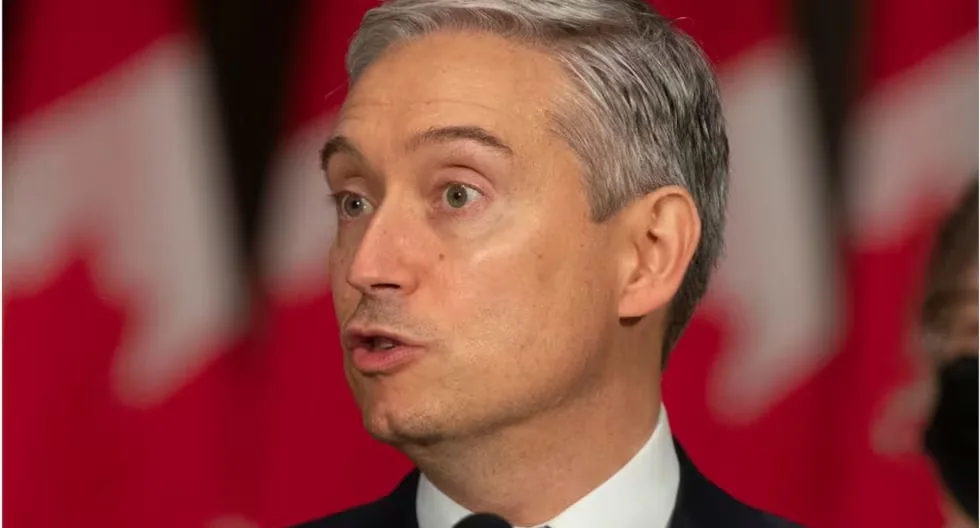
Canada announced this Tuesday tariffs of up to 50% on U.S. products worth about 27.6 billion Canadian dollars (about US$20 billion).
It also announced a 7.5 billion Canadian dollar aid package for workers and businesses affected by the trade war with the United States.
The new tariffs, which will take effect at 00:01 local time on September 8, will be 15%, 25%, or 50%, depending on the product, and will mirror the rates applied by Washington to Canadian goods, according to the Ministry of Finance.
When announcing the measures, Canada’s Finance Minister, François-Philippe Champagne, stated that the trade war declared by the U.S. against the country “is an unprecedented challenge.”
“But Canada will rise to the occasion. Canadians will rise to the occasion. We will face it united,” he said.
The retaliations affect sectors such as steel, dairy products, appliances, agricultural machinery, pulp and paper, and electronics. The extensive list also includes fish and seafood, honey, cheeses, refrigerators, freezers, and furniture, some of which have tariffs of 50%.
Senior Canadian officials indicated that the retaliations aim to protect the Canadian market and rejected the idea that the list of products announced today is intended to harm certain U.S. states.
Carney informs the opposition
This Tuesday, the Office of the Prime Minister of Canada stated that Carney spoke with the leaders of the main opposition parties to “provide them with the latest information on the Government’s response to the unjustified U.S. tariffs.”
The tariffs are a “dollar-for-dollar and rate-for-rate” retaliation by the government of Prime Minister Mark Carney, in response to the new U.S. tariffs on 27.6 billion Canadian dollars in exports, which came into effect last Saturday.
Read more Check your horoscope for today, Tuesday, August 25: predictions for your sign
Canada is, along with China, one of the two countries that has responded with tariff retaliations to the levies imposed by the administration of U.S. President Donald Trump.
Ottawa’s response includes 7.5 billion Canadian dollars in new aid, adding to nearly 25 billion mobilized over the past 18 months to address U.S. trade measures.
The package includes an additional 1.5 billion for small and medium-sized enterprises through regional development agencies; a new 500 million liquidity line through the Business Development Bank of Canada (BDC); 2 billion for investment projects of companies affected by the tariffs; and 3.5 billion intended for workers and employers.
Labor measures include the extension of several temporary flexibilities in unemployment insurance, including extended benefits for long-term workers, as well as a new program for companies to retain and professionally retrain their employees.
The escalation comes after trade negotiations between Ottawa and Washington collapsed on Friday, when Carney ordered the suspension of talks after considering that the new U.S. demands were “unfair” and economically harmful, and compromised Canadian sovereignty.
The leader summarized Ottawa’s position on Saturday by stating that the United States “asked for too much and offered too little.” Carney toughened his tone on Monday and said that during negotiations Canada found that Washington intended to “destroy” important Canadian industrial sectors, including automotive, steel, and aluminum.
“That was one of the main reasons we said no. It was a bad deal,” said the Prime Minister, adding that Canada will not accept negotiating under the premise that it is “a subsidiary of the United States.”
Despite the confrontation, Carney assured that Ottawa remains willing to reach a trade agreement with Washington as long as the talks take place between two sovereign countries and produce a mutually beneficial pact.
Read more Earthquake in Chile: magnitude of the latest earthquakes reported today, Tuesday, August 25