


![Alberto Beingolea: “If they insist on not giving [the powers], they are complicating life for Peru”](https://insightermedia.com/wp-content/uploads/2026/09/bb3fa9e11304ea13fe2cd333955007bc-150x150.webp "Alberto Beingolea: “If they insist on not giving [the powers], they are complicating life for Peru”")
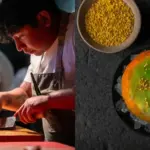

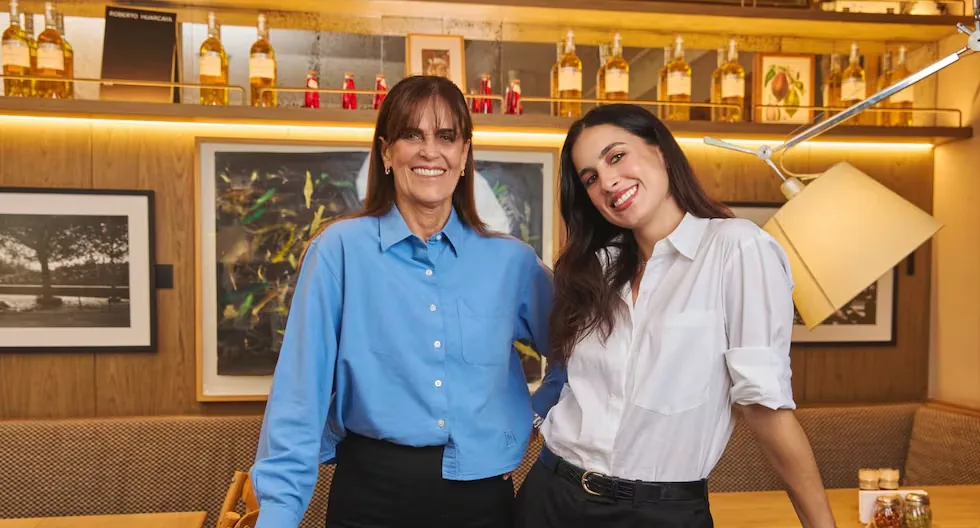
When Maria Plevisani (29) decided to return to Peru (she lived in New York, where she worked at a bank), not even in her wildest dreams did she imagine all the challenges she has achieved today. Her praised granola recipe is now available in supermarkets, her digital content is increasingly conquering social media, and she co-hosts a television program with her mother, Sandra Plevisani, one of the most recognizable figures of Peruvian cuisine on screen. Additionally, she has a podcast, various brands trust her image, and she is preparing a more complete line of healthy foods.
“It’s crazy because I remember perfectly the first interview I had when I returned to Lima as I was starting to make my way in gastronomy. It was with Somos, almost two years ago. So many positive things have happened in my life that it still seems like a dream that everything happened so fast,” says the middle daughter of the Ugo and Sandra Plevisani clan, excitedly.
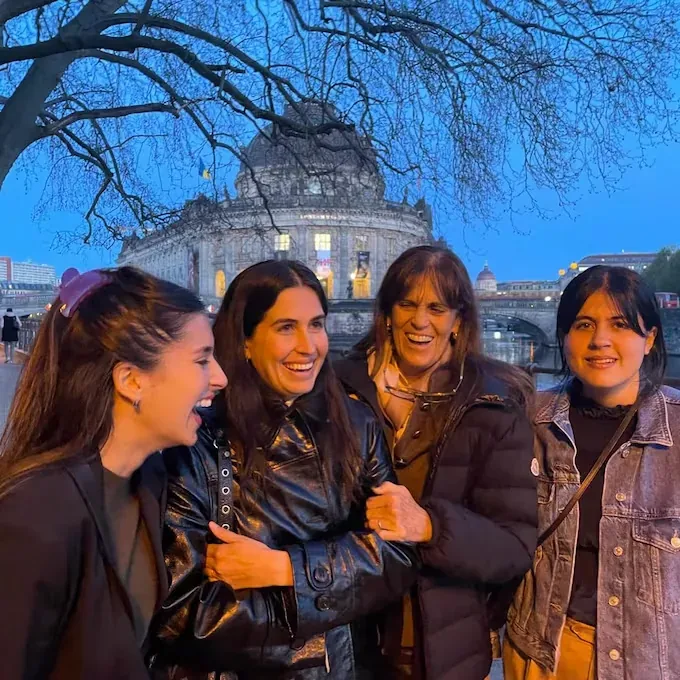
To understand her story, however, one must go back to before the cameras and supermarkets. Her love for cooking, she says, began in the restaurants she would go to after school for lunch, and in a family for whom food was always part of everyday life.
Although at first she did not necessarily see gastronomy as a destination, Maria never detached herself from it. She studied finance abroad, worked at a bank, and for years knew she wanted to start a business, while finding in her stoves the connection with her country and the care of her health, with the recipes she treasured from her parents.
“I love food, I’m passionate about it, and I entered the world of healthy food for a personal reason. Unintentionally, I started studying nutrition and got into that field. It has been a wonderful way to give a different perspective to what my family does, while being super connected with them,” she explains.
The particular thing about this story is that Maria never felt tied to dedicating herself to cooking. In fact, she did not come to it to continue Sandra’s path, but rather after deviating from it and seeking it again to feel at home. In that sense, Sandra, far from pushing her, did quite the opposite: she let her find her own place.
“I have never forced anything on my daughters. I have let them be. I have had the philosophy that one always ends up where they are happy. For me, it’s better that you are who you are than that you force yourself to do something you don’t want and resent it,” Sandra tells Somos.
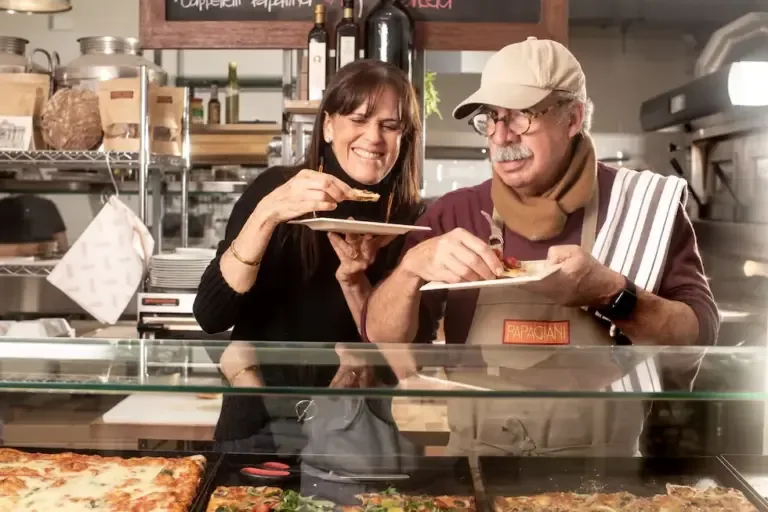
A lesson that has undoubtedly worked, since although Maria studied Finance, she now dedicates herself to healthy cooking; her older sister, Arianna, studied Visual Anthropology and now shines with a restaurant in Berlin; and although Valentina, the youngest, has not yet succumbed to cooking, both her sisters and her mother believe it won’t take much for it to happen. The stoves, of course, will always be waiting for her.
TELEVISION DUO
The proposal to bring Maria to television came with a mix of enthusiasm and panic. The idea was for her to represent a younger generation and bring her perspective on healthy eating. But one thing was to record recipes from home and quite another to face a live program, for almost two hours, in front of an entire country. A country that also has her mother as a reference, a true icon of desserts and pastry.
“No way,” was her first reaction. Then, she understood that there was an opportunity she did not want to miss.
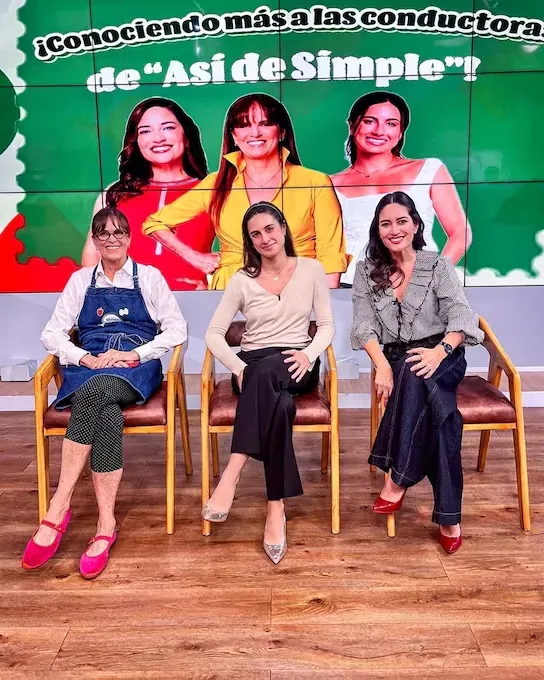
“How could I miss the opportunity to work with my mom, who is the person I admire most? Not only as a mom, but for her ethics and work. I have never seen anyone work harder than my mom. Watching how confident she is on television and with the people she works with inspired me to be by her side, and that made the process of going on TV much easier,” Maria recalls. Today, the program “Así de simple,” on ATV, has been on air for half a year.
Although enthusiasm took her to the set, the first days facing the challenge were another story. Maria admits she didn’t know which camera to look at or how to behave on a live set. However, Sandra (@sandraplevisani) was always there to remind her that she didn’t have to know everything from the start.
“I will never forget my first program. I prepared a recipe and didn’t know what to use, and my mom was always there telling me: ‘Calm down, calm down, little by little.’ That has been incredible for me. We have already completed six months of the program and little by little we have been able to develop a space where our essence really shows. What you see on the program is who we are,” says the clan’s heir.
Sandra has also discovered a new facet of her daughter in front of the cameras. She describes her as willing, open, and without too many barriers when a new task appears. For her, that youthful and charismatic attitude has been fundamental to finding the rhythm of the program, a project that individually also excites Sandra especially.
“It’s my first time on open television. It was something I needed to do a long time ago, honestly. To reach all those homes that I couldn’t reach with cable, where I was for 20 years. Now I feel I can connect more with everyone, that those who have always treasured my recipes can see me live and get to know me more,” she specifies.
After 20 years as an icon of desserts on cable television and cookbooks, Sandra made the leap to open signal on ATV’s morning show “Así de simple,” hoping to reach more homes with her talent and charisma. Additionally, she is an ambassador for brands like Gloria, Imaco, and Volvo.

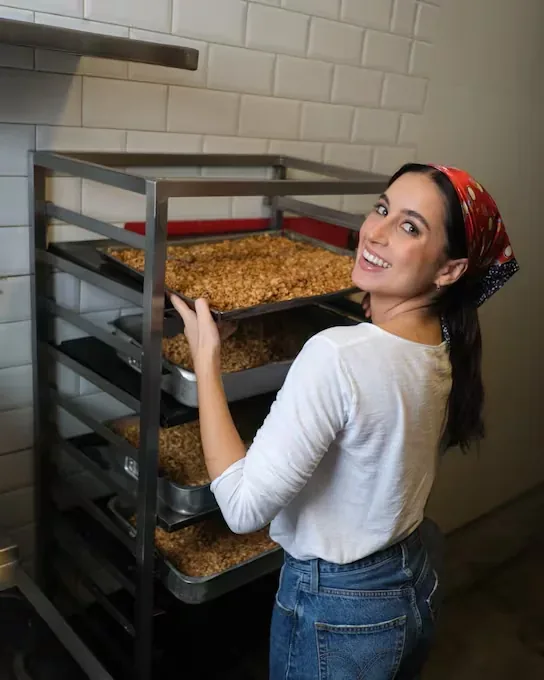
Maricucina’s delicious granola is now available at Plaza Vea and Vivanda, as well as on Rappi and PedidosYa.
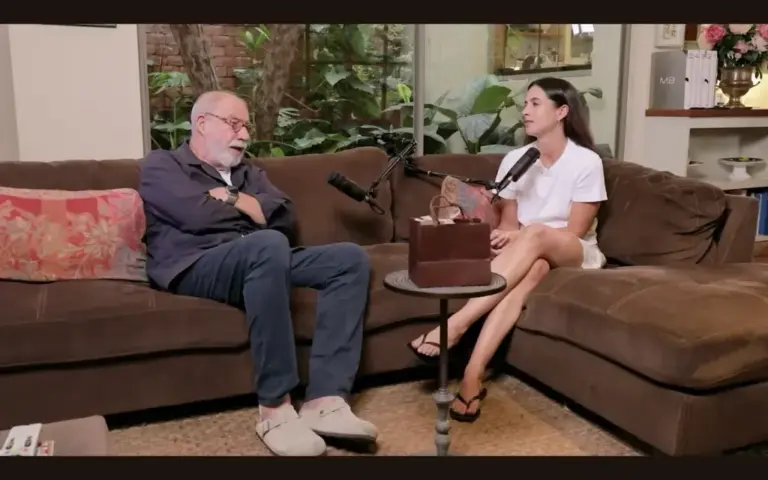
On her interview channel, Maria has had guests from the gastronomic field such as her parents, Ugo and Sandra, as well as other content creators, including Ariana Bolo Arce.
FROM THE OVEN, WITH LOVE
Before television, there was granola. Maria started making it when she lived abroad, after going through a moment of great stress and health problems while working at a bank.
She then began experimenting with her own recipes. She gave jars to friends and coworkers until everyone started making the same suggestion: she had to sell it. When she returned to Lima, the preparation moved to her home ovens. She packaged it, made deliveries, and saw how it sold out every week.
The project grew until it became Cucinella, a brand that soon hopes to offer more healthy products, and that has finally landed in supermarkets.
For Maria, that leap does not only mean selling a product. It is putting a part of her own story within reach of more people. And in that, she also finds a meeting point with her mother: both want cooking to be accessible. Sandra has done so for decades through recipes explained down to the last detail (considering she was always self-taught); and Maria seeks to do it from a generation that perhaps never felt particularly comfortable among pots and pans.
At Christmas, for example, while her sisters divided the pastas and vegetables, her father prepared the sauces and Sandra took care of the dessert, she did not have a defined role. Her great contribution was almost always grating the cheese. “I was always the designated ‘cheese grater.’ But it’s incredible because now I have been able to learn to make recipes I like, and the people who follow me learn too. I love having reached the ‘designated cheese graters’ of other families and that they can now also enjoy cooking,” she says.
On social media, television, restaurants, supermarkets, or cookbooks, the Plevisani legacy reaffirms that it is more alive than ever. Just like a good family meal that, despite time, will always be a reason to gather around a table. //
Read more Dollar price in Peru on Saturday, August 29: what is the exchange rate of the day
- The golden child of jiu-jitsu: the Peruvian who dethroned the powers of the U.S. and Brazil and is now number one in the world
- The ghost friend syndrome: why do some friends disappear when they fall in love?
- Kimba Fá turns 25: the story of the group that turned everyday sounds of Peru into a percussion show
- Having a boyfriend is no longer fashionable: why more and more women prefer to be single?
- The history of the school uniform in Peru: how the classic “rat gray” was born and why it still dresses millions of students