



![Alberto Beingolea: “If they insist on not giving [the powers], they are complicating life for Peru”](https://insightermedia.com/wp-content/uploads/2026/09/bb3fa9e11304ea13fe2cd333955007bc-150x150.webp "Alberto Beingolea: “If they insist on not giving [the powers], they are complicating life for Peru”")


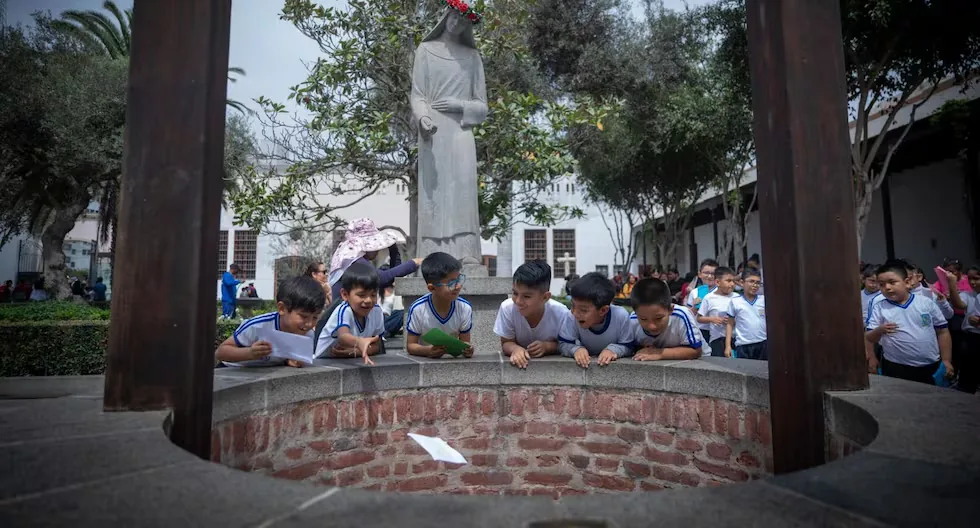
A week before August 30, the lines to enter the Convent of Santa Rosa de Lima, in the Historic Center, already fill the entire courtyard and reach the portico of this temple of faith, built by the Order of the Dominicans in 1669. Most visitors are schoolchildren coming from different parts of the capital: Breña, Comas, San Juan de Lurigancho. They all arrive with a letter in hand and the hope that the first saint of America will grant them a wish.
Read more Dollar price in Peru on Saturday, August 29: what is the exchange rate of the day
The image, beyond the festive context, speaks of the relevance and transcendence of a woman who, almost five centuries after her birth, continues to draw crowds seeking comfort, hope, and the possibility that their prayers will be heard.
FAITH INTACT
Inside the Sanctuary and House Museum of Santa Rosa de Lima, on the first block of Tacna Avenue, survive the spaces where the nun spent much of her life and which today allow a close approach to her story in an intimate way. There are the hermitage, a small place of retreat and prayer that she built with her brother Hernando; her room and the old infirmary, where she cared for the sick; as well as a chapel that preserves everyday objects, ornate altars, and viceregal artworks inspired by her life.
The place that draws the most attention is the wishing well. It is about 20 meters deep and, for centuries, the faithful have thrown letters with their requests and thanks into it. Children and adults experience it with the same emotion: they approach, drop their writings, take photos, and continue their tour. A ritual that, in Internet times, resists disappearing.
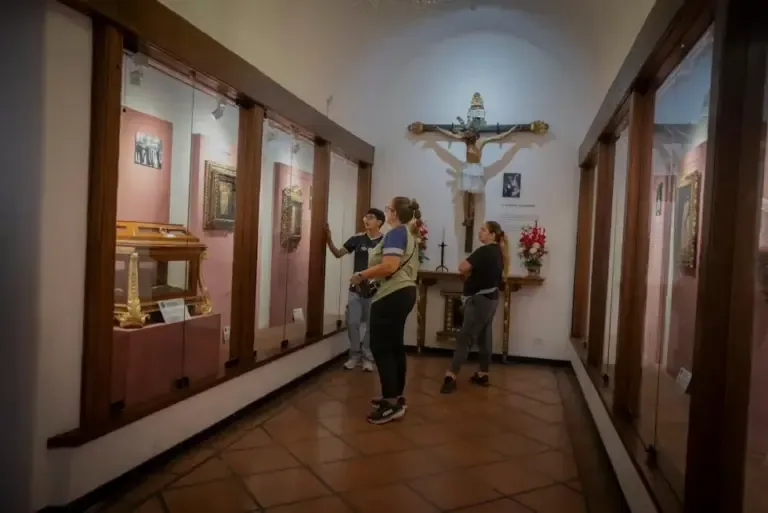
For Friar Alejandro Maquera, a religious of the Dominican Order and director of Radio Santa Rosa, devotion to the Limeña saint has not lost strength over time. On the contrary, he believes her figure continues to offer answers in a society going through moments of uncertainty. “The faith of our people remains,” he asserts.
In Santa Rosa, he also recognizes a person who was capable of challenging the circumstances of her time and becoming a figure of unity. “Beyond the mystical and penitent saint, she was a woman close to others, compassionate, and determined to follow her vocation in an era when the role of women was relegated to a secondary place,” says Friar Alejandro.
Read more Wall Street closes in red due to fear of interest rate hikes, but records weekly gain
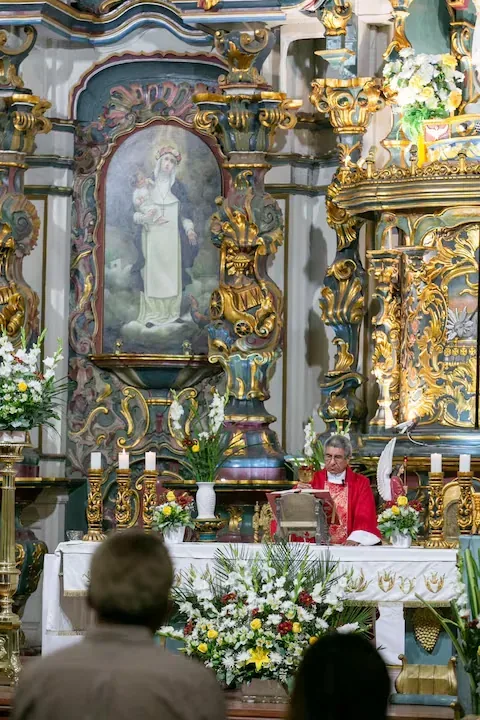
Touring the convent allows us to know a fundamental part of the history of viceregal Peru. Maquera comments that this is not only a religious legacy but a heritage of the city and the country, as Santa Rosa has become, he says, one of its great ambassadors. “Preserving this place is preserving one of the emblematic places, I believe, of our homeland,” he states.
In this sense, he highlights the recent discovery of the old Hospital of the Holy Spirit, whose structures are even older than the current sanctuary buildings (more information in the box). Today, the community seeks to open these treasures to the public through the museum, while recovery and enhancement work is carried out.
ROSA AND THE CITY
There are other places in the quadrant of the Historic Center that transport us to different passages of the life of Isabel Flores de Oliva. At the intersection of Ica and Chancay streets, stands the Church of San Sebastián, where Santa Rosa was baptized in its historic baptismal font. This element is one of the most valued treasures of the temple because San Martín de Porres and other illustrious Peruvian figures, such as Francisco Bolognesi, were also baptized there. A place that connects the first steps of the Limeña saint with the path that would lead her to become the patroness of America and the Philippines.
v
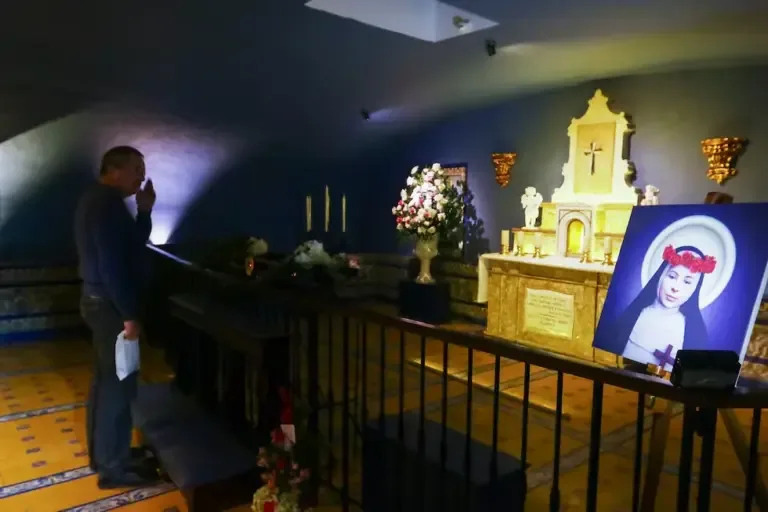
The tour then leads us to the intersection of Camaná and Conde de Superunda streets, where the Basilica and Convent of Santo Domingo is located, which completed a restoration process just a year ago. In this place rest the remains of Santa Rosa, in an underground mausoleum located inside the convent. As a last will, the religious figure expressed her desire to join the Dominican Order: “I donate my body to my Dominican brothers.” Today, centuries later, that wish remains intact.
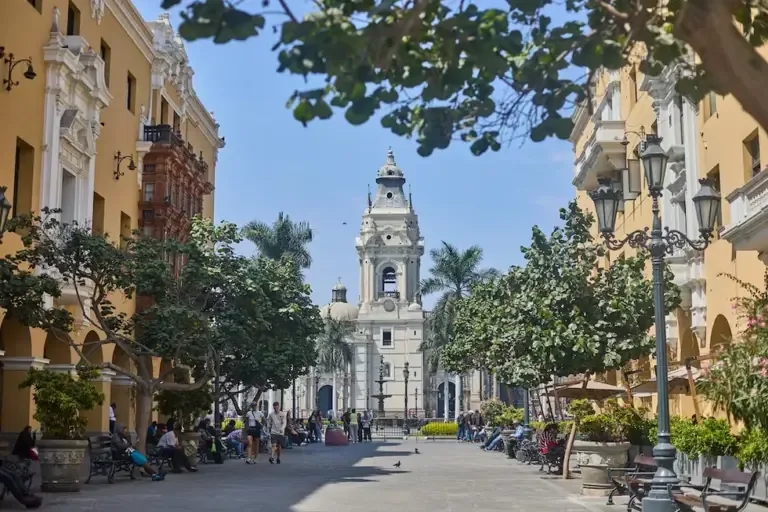
The route ends very close to the Plaza de Armas, at the renovated Santa Rosa Passage. Built in the 1940s, this pedestrian walkway has gone through different stages and uses until today recovering part of its former splendor. Its cafés and restaurants have made it a meeting point for Limeños and visitors, ideal for taking a break and closing this walk following the footsteps of Santa Rosa through the Historic Center. //
Read more Earthquake in Peru LIVE Friday, August 28: magnitude 4.2 tremors reported in Tacna
- The day Los Prisioneros were saved from tragedy in Utopía and the revelations of the book about the Chilean band’s time in Peru
- “Confessions II” by Madonna: a return to the dance floor that leaves mixed feelings
- “It was a very hard life”: the biography of Blanca Varela that delves into her love, political, family side, and her Peruvian identity
- After 30: the muscle mass loss no one told you about
- Julia Codesido’s house in Pueblo Libre and the dream of turning it into a cultural circuit like Frida Kahlo’s in Mexico