




![Alberto Beingolea: “If they insist on not giving [the powers], they are complicating life for Peru”](https://insightermedia.com/wp-content/uploads/2026/09/bb3fa9e11304ea13fe2cd333955007bc-150x150.webp "Alberto Beingolea: “If they insist on not giving [the powers], they are complicating life for Peru”")



The magnitude 7.2 earthquake that occurred on Thursday, August 20, once again raised a question that Peru can no longer postpone: how prepared are our schools to face a larger magnitude earthquake?
Read more Dollar price in Peru, Sunday, August 30: what was the exchange rate at closing
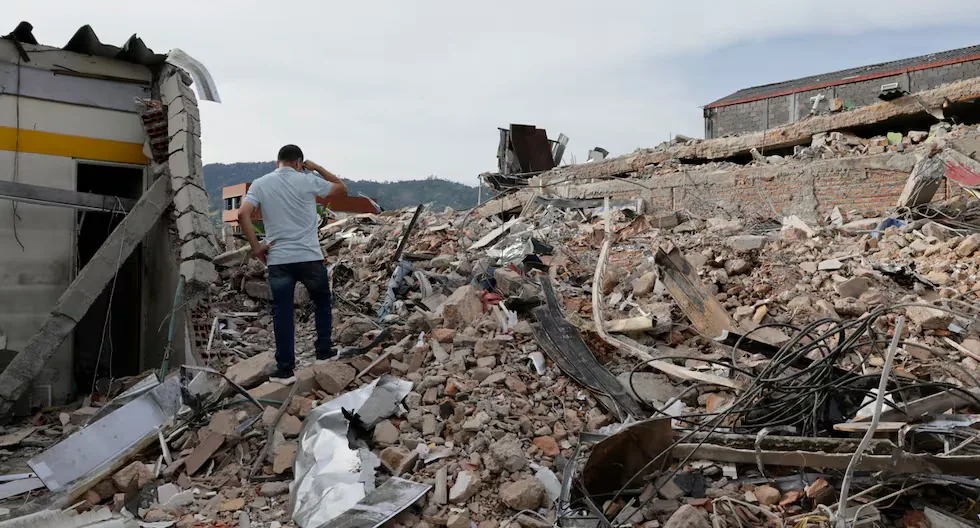
The movement occurred at one in the afternoon, right during school hours. Its depth, 108 kilometers, helped reduce its effects on the surface; even so, the Regional Education Directorate of Ica suspended classes in the region and Civil Defense reported damage in populated centers of Ayacucho. The episode left concrete evidence: an earthquake of these characteristics was enough to disrupt the functioning of schools in the south of the country.
The concerning scenario is another. Off the central coast, there is an area of approximately 400 kilometers where the plates remain coupled and have not released a significant amount of energy since 1746, when an earthquake destroyed Lima and Callao. We do not know when a new major earthquake will occur, but we do know its destructive potential and, above all, we know that part of our educational infrastructure is not prepared to face it.
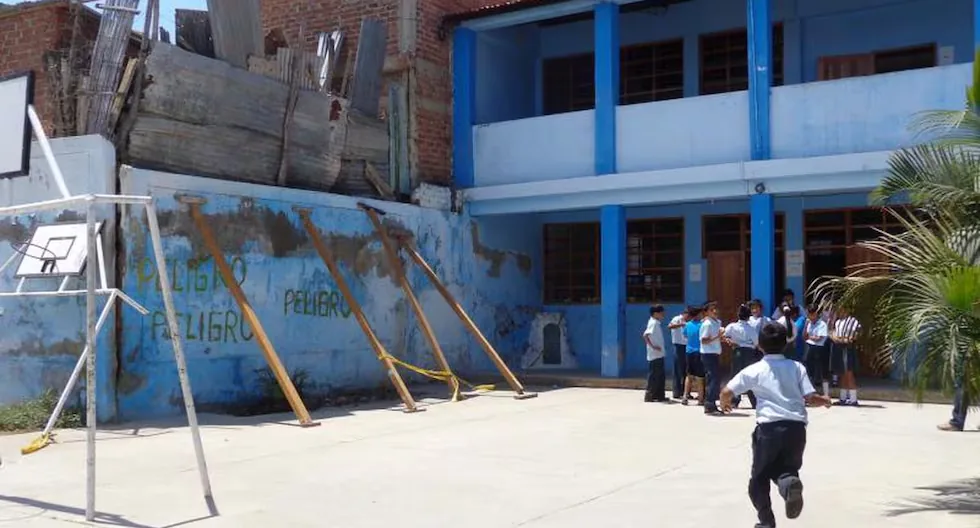
The problem is that the risk is already identified. Peru has about 55,000 public educational facilities and, according to the diagnosis of the Ministry of Education, more than 26,000 are in seismic risk conditions. This means that more than 1.2 million students — one in every five public school students — attend spaces daily that require attention to reduce their vulnerability. In Cajamarca, Cusco, and Puno, the highest proportion of facilities at risk of collapse is concentrated, while in Metropolitan Lima the DRELM identifies more than 400 schools in high and very high risk conditions.
The case of the Micaela Bastidas educational institution, in Los Olivos, is illustrative. The educational community, which serves around 1,600 students, has been requesting attention since 2020 due to the deterioration of walls and floors. After the June 2025 earthquake, even glass from several windows was reported to have fallen. According to the public information consulted, the school’s reconstruction is not expected until 2032.
If a school needs to be intervened to guarantee adequate safety conditions, what is the point of identifying the risk today if the solution will come several years from now?
Read more Sport Boys vs Sporting Cristal LIVE today | Matchday 7 of the Clausura Tournament, Liga 1 2026
The question is not minor. An emergency that forces schools to close not only affects infrastructure. It also interrupts learning and especially impacts students who already face greater educational gaps. The pandemic experience showed the cost that a prolonged interruption of classes can have: the World Bank estimated that learning poverty in Peru could rise from 56% to 76%. Subsequently, educational results confirmed a significant setback: in fourth grade, the satisfactory level in mathematics fell from 34% in 2019 to 23% in 2022.
That is why prevention cannot be reduced to knowing which schools are at risk. The real challenge is to ensure that this information is timely transformed into projects, budgets, and works.
The delay has multiple causes: coordination between different levels of government, difficulties in the public investment system, and limited capacity to manage reconstruction and reinforcement works. But precisely because of this, it is necessary to review how these decisions are being made and executed.
The new government now has the responsibility to accelerate these interventions. It is not just about adding schools to a priority list, but about ensuring that those whose risk has already been identified finally move from diagnosis to construction.
Because in the face of a major earthquake, a vulnerable school will not be a surprise. The surprise would be that, after so many diagnoses and years of waiting, we still have not done the work.
Read more Panama Lottery Results: numbers and first prize of Sunday, August 30