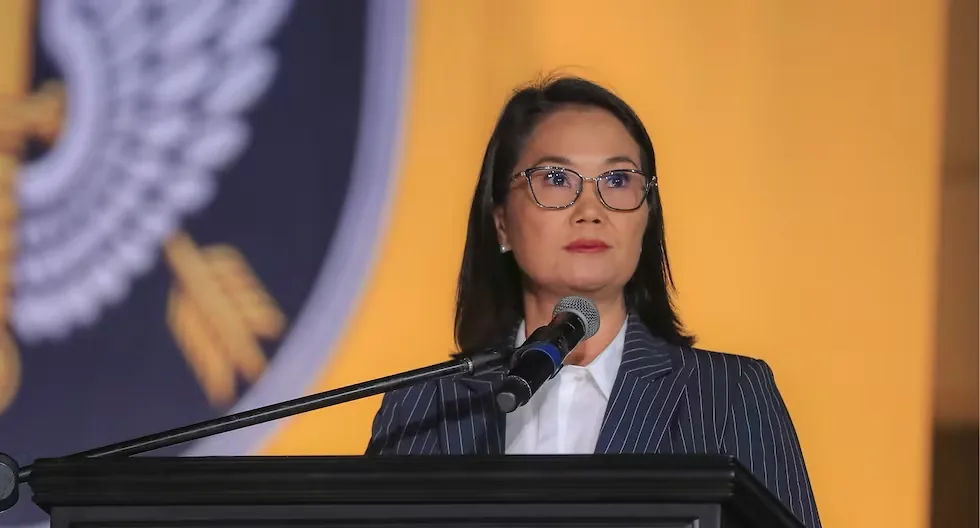
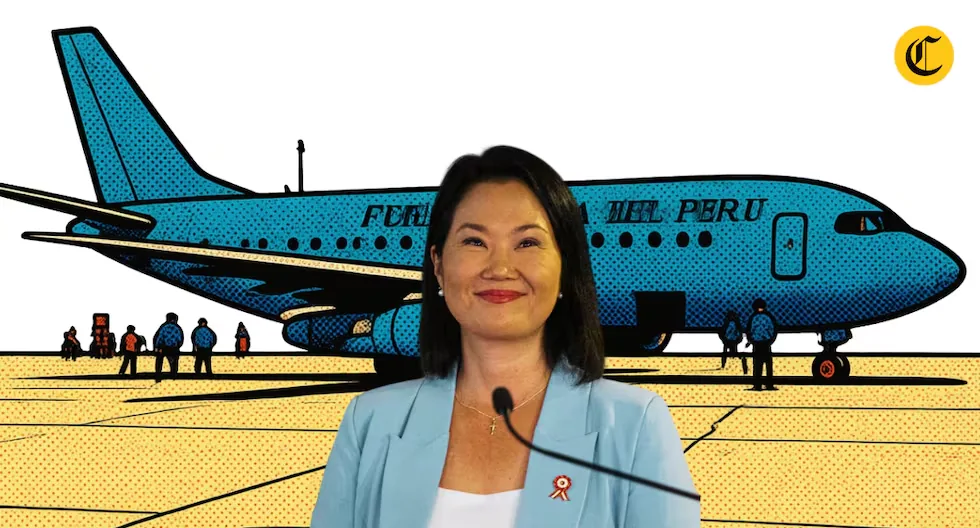
During her first month in office, President Keiko Fujimori has made nine trips to regions with an agenda focused on responding to emergencies caused by natural phenomena and visits to military and police facilities. Her recent arrival in Puno, where she received one of her worst electoral results, added a particular political reading to her agenda.
The first official trip took place on July 31, two days after taking office. She arrived in Junín to oversee aid to those affected by a 5.1 magnitude earthquake that left at least six dead, destroyed dozens of homes, and affected health centers, educational institutions, and monuments.
So far, the president has traveled to Junín, Cusco, Ayacucho, Piura (where she returned this Wednesday to supervise work in preparation for El Niño), Lambayeque, La Libertad, Tumbes, Arequipa, and Puno. For political analyst Enrique Castillo, she is very likely trying to emulate the actions and trips of her father, the late former president Alberto Fujimori, which yielded good results.
“However, the country is not the same, and presidential trips must be well paced and prepared,” he said in an interview with El Comercio.
On August 3, Fujimori traveled to Piura to oversee dredging and cleaning work on the Piura and Chira rivers. On August 7, she returned to Junín.
The sequence continued on the northern coast. On August 11, she arrived in Lambayeque and La Libertad to supervise cleaning and dredging work on the Reque River and participate in the delivery of water use licenses. On August 13, she was in Tumbes, where she supervised the dredging of the Tumbes River, inspected health centers and schools, and participated in the launch of a dengue vaccination campaign.
Enrique Castillo highlighted that, considering the main promise of Fujimorism in the presidential campaign was order and security, there are indeed regions that required the urgent presence of the president and ministers.
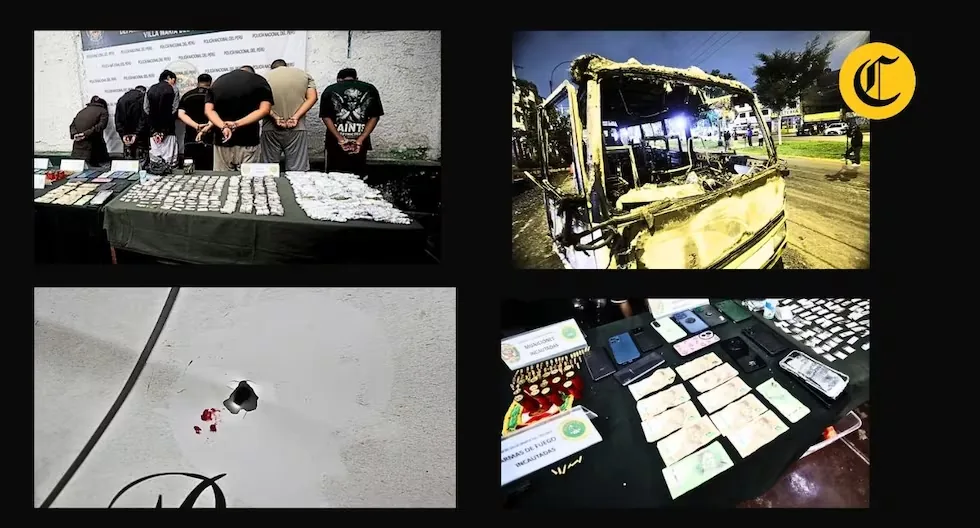
“What happened in La Libertad is the unfortunate consequence of an absence of the State (national and regional) in regions suffering from the most severe criminal violence,” he said referring to the murder of four people and the kidnapping and subsequent release of a businessman in Trujillo.
“That is where the presence of the president is needed. The same applies to Iquitos, Madre de Dios, or Ayacucho, and the south, for example,” he asserted.
“The real impact [of the trips] should be measured with control of a concrete and real work plan and the transfer of resources, as well as a budget and a work schedule. Otherwise, they will only be announcements and wasted resources.”
Enrique Castillo, political analyst
Political scientist Karen López Tello, executive director of Impacto País Consultores, added that the president’s travel agenda was imposed by the current situation, so it is still necessary to clearly see what will be the government’s deliberately own agenda and how it translates into regulations, management instruments, responsible parties, and monitoring mechanisms.
“A priority is not defined solely because the president dedicates time to it, but because there is a decision and execution chain behind it that allows producing results,” added López, a public management specialist.
“At thirty days it would still be premature to evaluate structural results, but it is already possible to observe how the government’s capacity is being built”
Karen López Tello, public management specialist
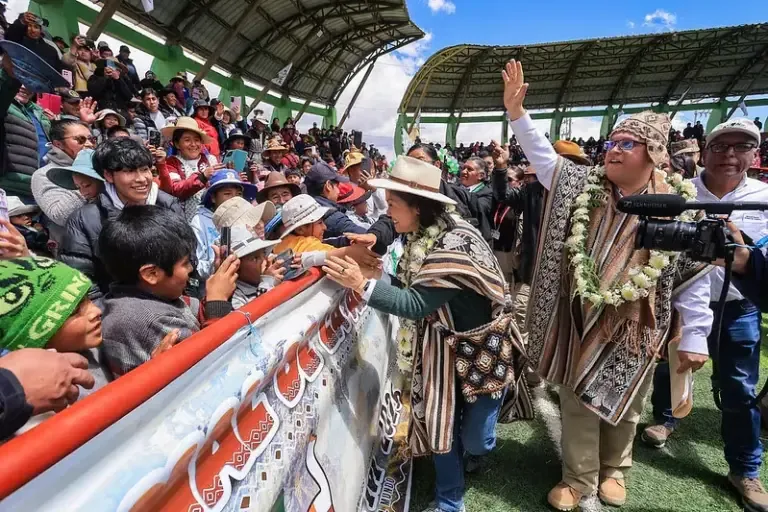
Visit to Puno
On August 30, the president arrived in Puno on a visit that took part of the population by surprise, according to Luis Idme, a communicator and analyst of social and political issues, who explained to El Comercio.
Until then, the information circulating in the region indicated that only the Minister of Agrarian Development and Irrigation, Marco Vinelli, would arrive. Even the mayor of Carabaya, Edmundo Cáceres, host of the event, had denied the president’s presence in statements to Pachamama Radio.
(Photo: Presidency of Peru)
/ LINO CHIPANA
For Idme, the visit should be understood in light of the relationship between Fujimori and Puno after the elections. “Puno basically does not want her as president. Post-elections, the region is processing the result, the political defeat, as it mostly supported another option. And regarding Keiko Fujimori, what she wants is territorial legitimacy,” he said.
In the presidential runoff, Fujimori obtained 13.59% of the votes in Puno, while her opponent, Roberto Sánchez, from Juntos por el Perú, reached 86.40%.
“The territory of Puno represents a challenge for this government. For almost four years, no president came to Puno. Neither Dina Boluarte nor José Jerí came. José María Balcázar did, and now Keiko Fujimori does. It is also a symbolic matter,” added Idme.
Karen López agreed that Puno adds an additional dimension. “There is not only a deficit of investment or services there. That is, there is also a fracture of trust and legitimacy with the State that deepened after the protests and deaths of 2022–2023,” she highlighted.
While the president maintains a travel agenda marked by the current situation, another dimension of her administration is being defined in Lima. Recently, Fujimori requested legislative powers from Congress to promote measures in areas such as citizen security, prevention regarding the El Niño phenomenon, and debureaucratization.




![Alberto Beingolea: “If they insist on not giving [the powers], they are complicating life for Peru”](https://insightermedia.com/wp-content/uploads/2026/09/bb3fa9e11304ea13fe2cd333955007bc-150x150.webp "Alberto Beingolea: “If they insist on not giving [the powers], they are complicating life for Peru”")



![Alberto Beingolea: “If they insist on not giving [the powers], they are complicating life for Peru”](https://insightermedia.com/wp-content/uploads/2026/09/bb3fa9e11304ea13fe2cd333955007bc.webp "Alberto Beingolea: “If they insist on not giving [the powers], they are complicating life for Peru”")