



![Alberto Beingolea: “If they insist on not giving [the powers], they are complicating life for Peru”](https://insightermedia.com/wp-content/uploads/2026/09/bb3fa9e11304ea13fe2cd333955007bc-150x150.webp "Alberto Beingolea: “If they insist on not giving [the powers], they are complicating life for Peru”")


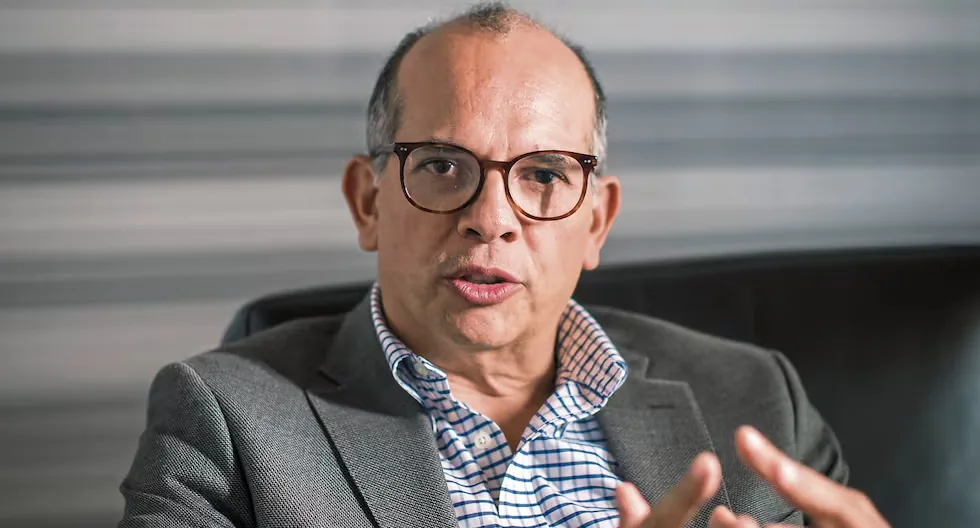
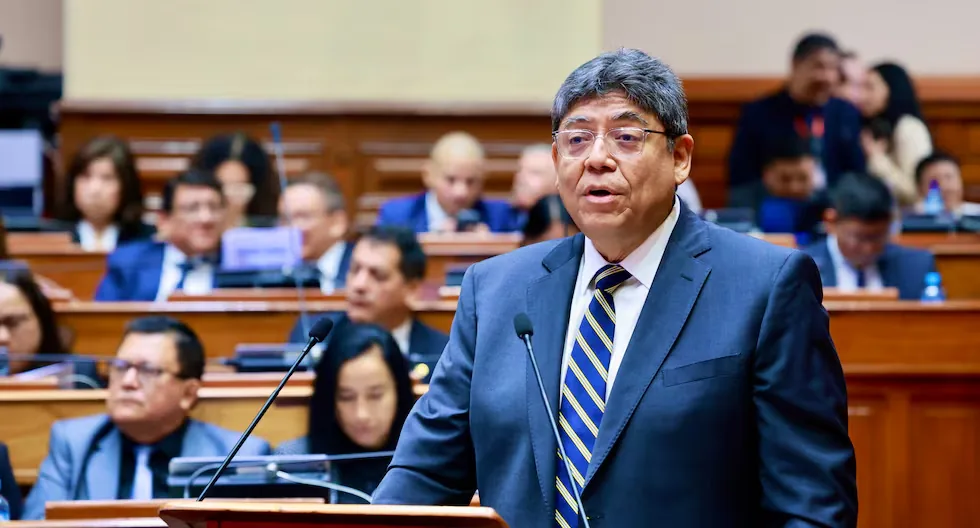
This week Hágase Instituto was presented, the think tank that, among other objectives, seeks to support the public sector in order to generate positive changes in the State. El Comercio spoke with Luis Miguel Castilla, president of the institution, who together with Paola Bustamante and Milton Von Hesse, seek to get to work.
Read more Luis Enrique renews with PSG until 2030: know the details of the millionaire contract
WATCH | Senate Committee begins process to ratify Julio Velarde as president of the BCR
– Hágase Instituto is born in a year of government and Parliament change, this time bicameral, and subnational authority elections. How important or crucial is your participation?
The timing is important, because there is a learning curve that can be costly depending on where one stands. In the case of regional and local governments, if you look at the first year of management, public investment execution falls sharply. It is a problem, because a whole year passes from when the new authority enters, defines priorities, assembles the team, and learns how to govern. In the case of Parliament, we also have a lot of renewal: 80% is new and there is also a learning curve.
The moment is opportune: the country wants to leave behind a period of chronic instability at the Executive level, with so much change and rotation of authorities, and move towards one of greater stability.
– How did the idea of creating Hágase Instituto, a think tank, arise, together with Paola Bustamante and Milton Von Hesse?
There is a consensus that we know what to do, but not how. There are many diagnoses, but we have the central problem of management and law enforcement. We are not only creating a think tank, but one of action: it is a ‘Think & Do Tank’. The ‘Do’ part is related to implementing, doing and, even, that is why the word “Hacer” (to do) is in the name.
This is developed based on evidence and proven proposals, helping in their deployment and implementation. There are different views. One is public management and here it is support for new authorities on the ground. We cannot reach all, but at least we will do so in six prioritized regions.
We have already worked on this modality [before] in regions such as Arequipa, Cusco, Junín, and Cajamarca and we want to replicate it.
– Are there other types of interventions?
There is also training of personnel with scholarships. The difference from other options is the experience of teachers in public management. Something that is also new is the part related to evidence: promoting changes and implementing them. Beyond public management problems, we have a very significant gap between what a norm says and its application.
The gap between the legal world and reality explains a great discretion on the part of authorities. It can be seen in processes or permits that affect a certain sector. We are creating an observatory that looks at administrative and regulatory costs, not only to identify them, but to go to the competent authorities.
– In this view of diagnosis and actions, how has the participation of academia or the private sector gone? Are many more initiatives needed to help the public sector?
There were many efforts, but they have not been maintained. For example, those deployed by the Ministry of Economy and Finance (MEF) in support were shortened because they had to apply austerity policies and the financing of these teams decreased. Also, there is not enough technical support in the management of public investments, for example.
This is exacerbated by the volatility and high rotation of authorities. The idea is to fill gaps and work in alliances, because we do not do it alone, but with a broad alliance with public and private [sectors] at the regional level, with professional associations, chambers of commerce. This helps not to invent new things, but to support efforts that already exist.
There are many small and valuable efforts, but isolated. And that is reflected in electoral results. It is important to get ahead and with a long-term commitment, persevere on the ground.
– Can the results be maintained over time? Can this support to public sectors translate into better outcomes for citizens?
The lessons learned from our previous professional experience is that, regardless of the political or ideological orientation of the regional governor in office, in the end, he will be judged by whether he manages to unblock works or complete projects. That should not have political color or ideology.
The lesson is that you have to be on the ground constantly and what we see are efforts from the private sector with projects that interest them in their area of influence, for example. However, there is no intention to cover different regions, providing this service as a public good – because this work is done non-profit -. It does imply a high level of commitment and also having a counterpart. Just as there is rotation in ministries, there is also at the regional government level and that hinders the work.
WATCH | Petro-Perú responds to El Comercio note on risky operation of the Talara Refinery
– Does the follow-up also translate into monitoring indicators?
What we have done are technological platforms that allow having appropriate follow-up dashboards according to the reality and interests of each actor. For example, monitoring how executing units are doing, a certain region, or a portfolio of projects to be completed.
In the end, what matters is that this translates into services to the citizenry and that is why we see there is a huge space. This does not mean that we leave aside discussing national proposals, we even have the possibility to support the boards of the Senate and the Chamber of Deputies to have an independent contribution.
– Do you have allies for the work of the ‘Think & Do tank’?
Our allies include the three multilateral banks that work in the country: the IDB, CAF, and the World Bank, and working in alliance with other entities. It is not an isolated task, but articulated with all actors who have this common goal.
The interventions we envision are aimed at implementing instruments that improve the efficiency of public management and the country’s regulatory quality.
Read more The missing of 9/11: a search that persists 25 years later
Are there specific points analyzed in the Regulatory and Administrative Costs Observatory?
We wanted to do a study on what the cost was for small businesses of all the over-regulation that exists in the country. At one point we quantified the cost of insecurity with street-level businesses with surveys and fieldwork; the same [we want to do] at the business level. We saw that the Indecopi Administrative Barriers Reduction Commission does not have all the existing cases of administrative barriers, because reporting is costly and companies are reluctant to report a public entity or a municipality for fear of reprisals.
So, there is an information gap and we try to fill that effort. In that case, we have been in talks with the World Bank for some time to have a baseline with the ‘Business Ready Subnational’ that is planned to be done in the country, and that it allows identifying specific cases of bureaucratic obstacles or barriers that prevent project realization or represent a cost to business growth.
– Shouldn’t this work be done by the State?
This should be the responsibility of a public entity to do it, but the absence of that forces the private sector, civil society, and research centers to adapt to address these issues.
The important thing is to work hand in hand with the private and public sectors, and that there is a clear commitment from universities and professional associations to give these processes a level of impartiality and credibility. We do not start from zero, we have a lot of experience, but we believe there is space to support the country from the private sector and especially those of us who have been in the State for a long time, with different specialties and experiences, to be able to channel them into an institute like Hágase.
WATCH | Government formalizes emergency decree on “Services for Taxes” to accelerate works ahead of the El Niño phenomenon
– What are the six regions that will be prioritized by Hágase Instituto?
It is defined to work in La Libertad, Cusco, and Arequipa, but we will be adding other regions. In fact, we have launched the initiative and we will do it in Arequipa on September 17 and in Trujillo on the 29th. Reaching all the regions of the country will be difficult.
The way we will reach the 23 regions outside Lima is through our public management scholarship program aimed at mid-level officials of regional governments and decentralized entities. The other is to work on different pilots and be able to give them continuity. The idea is that this generates tools, can be internalized, and also that the advisory remains, because there is a sustainability issue.
You cannot promise things you will not be able to fulfill. So, the idea is to reach the most important number of regions, without lowering the quality or coverage of the topics we are promoting. Resources are a constraint, but I believe much can be done in alliance with other public entities and companies. We are at the beginning of a new political cycle and the citizenry will not have the patience to wait years of management without results. This is a moment to emphasize action and service vocation in the territory.
– Likewise, there are six sectoral focuses that will be closely observed. On one hand, there are macroeconomic and sectoral issues such as mining or energy, but there are also aspects of welfare, sustainability, and green economy. Are these focuses aimed at addressing future problems?
There are two cross-cutting issues: sustainability and security. A clear example is the work we will continue in the energy sector, because the idea is not only to raise the issue of sustainability, but also energy security, which is key in the country, and also issues of energy poverty. One of the topics is to support the process of designing a new national energy policy for 2040 that is being developed. In the case of mining, we are supporting the processes of the Ministry of Energy and Mines, and hopefully Congress, in proposing effective proposals for the formalization of artisanal and small-scale mining (MAPE).
Now that we are in a time of natural disasters and that shows our vulnerability, [we must] resume the agenda of infrastructure and housing resilience.
We have advanced a lot in the role of digital transformation, but we have not advanced enough to adopt technology and automation in the provision of basic services.
– With the publication of the Multiannual Macroeconomic Framework and the Public Budget project, what perception is generated of the government regarding the management of the national economy?
The Institutional Opening Budget (PIA) changes every day and is reflected in the Modified Institutional Budget (PIM). And when you compare the project that enters with the one approved, you find that there are many additional provisions. That tends to inflate spending pressure. Now, I think that this time and learning from the past, Congress and its new regulations have been more precise to avoid not only spending initiatives but also non-budgetary issues being introduced into the law.
I think there are more new locks that have been incorporated to reduce the gap between the Executive’s proposal and what Congress finally approves.
In real terms, the budget does not grow, but one should not be complacent with that snapshot, because it can vary. According to the Fiscal Council itself, it can vary depending on the intensity of the El Niño phenomenon and can change due to government containment before Congress.
The fiscal rules need to be clarified, as Minister Cuba promised, because the Budget Law by November 30 must reflect the fiscal rules in force for the coming year.
– Did the change in fiscal rules have to be in the request for powers?
I think it is good that it was not included in the request for powers, that has to be discussed openly with the participation of many actors. I cannot know exactly how much austerity or discipline there is, because we do not know what the rule will be in force next year.
The budget project sounds austere, there are certain spending recompositions, but to have a very clear reading, you have to know the margin that the MEF will give in the fiscal rules and if that margin projects credibility. It seems that austerity does not match the aggressive government plan announced by President Fujimori, intensive in public spending.
Read more Velvet, Joel Chirinos’ bar that goes beyond the ‘speakeasy’ cliché