








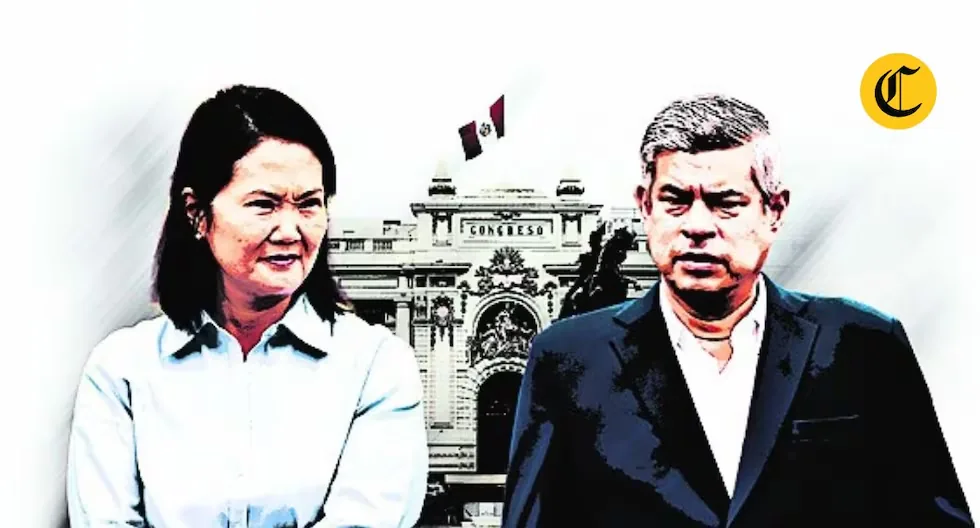
But the request for powers does not go directly to the Senate, it first goes to the deputies. There, the correlation is adverse to the ruling party by 18 votes against it. That is, there are three scenarios, two extremes and one very likely. The first is that the Deputies approve everything. Let’s discard that because there are 66 requests, some very vague that include sensitive matters that no bench will want to delegate. Several deputies have already expressed this. The other extreme scenario is that they approve nothing. There, yes, Deputies would have the last word, as everything would be archived without going up to the Senate. This would lead us to a very high point of national confrontation that clashes with reality and with the fact that several opposition congressmen have said that, despite their criticisms, there are indeed issues that can be approved. Everything leads to the most likely third scenario: that some requests are approved. At least, the most urgent and consensual ones.
Read more Minimum wage increase 2026: latest news, new amount, and when it will take effect
“What the Deputies undo, the Senate remakes with interest, if it has the votes to approve it, of course.”
César Delgado Güembes , expert in parliamentary law
The Executive plays all its cards on that intermediate scenario and that is why it dared to make such a big request, challenging the patience of the Deputies. Its calculation is this: if deputies approve little, it does not matter. The Senate has the power to modify what the deputies approve by doing the following: validating what is approved and restoring what is disapproved. I raised the issue with an authority in parliamentary law, César Delgado Guembes, and he told me: “What the Deputies undo, the Senate remakes with interest, if it has the votes to approve it, of course.” They have them.
What could undo this strategy? I already anticipated it but I asked César anyway: “The regulations were made by the unicameral Congress thinking of controlling the Senate and that it does whatever it wants. I can only think of one thing. That deputies reject everything. There, yes, the Senate would have nothing to do. But I do not see it possible now that the opposition will pull the rug out from under the government like that.” I agree with César. I know there are radicals in Juntos Por el Perú who want to reject everything, but among the Good Government Party (PBG), Obras and Ahora Nación (AN), partial approval or rejection would prevail.
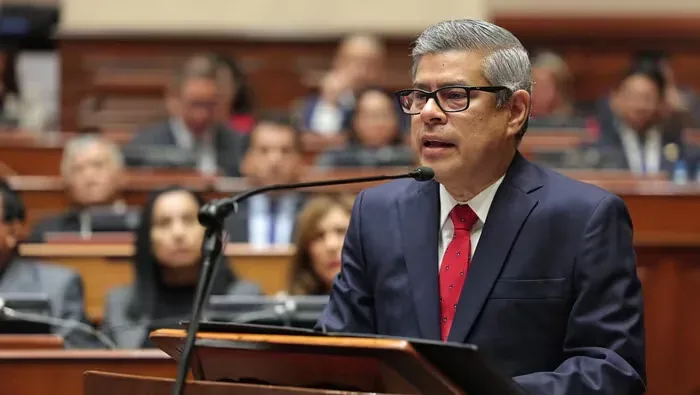
Let’s take another look at the unlikely scenario of total rejection. The bill that includes the 66 requests is a single one, precisely to ensure that it reaches, at least trimmed, the Senate. If there were several different bills, that is, one for each issue, then what the Deputies reject would be archived without remedy. Once again, to be clear: it is enough that one of the 66 requests is approved, and the Senate could restore, if it wants, everything rejected by the Deputies. Now, I also do not think it will do it 100%, since RP has objections to some issues and will assert them in the Senate as a way to display its power in the middle of López Aliaga’s municipal campaign. That said, they could restore the issues of economy, labor rights or environment, which the left coalition rejected. One thing is to put an anti-Fujimorist left filter on the 66 requests, another is to put the right-wing blue filter.
Can the Senate restore?
Fuerza Popular has already assumed and admitted the bicameral ‘restoring’ strategy. Carlos Mesía from FP, former president of the TC and president of the Constitution Commission that will receive what comes from Deputies, told me frankly, in an interview on RPP, that they can “modify and improve” what the other chamber does, including restoring the items left aside. Martha Chávez shares the same opinion. The orange bench in the Senate, starting with the president of the board, Miki Torres, is aligned with that goal. They trust that deputies will approve ‘at least a little’.
The opposition benches sitting on the Deputies’ board already know that the Senate will redo what they undo. These days they are calibrating strategies not to be so snubbed by the Senate. They also know that a resounding no is a warlike extreme that they would very hardly reach. In most statements from PBG deputies, there are harsh criticisms of the government and its request, but they firmly state that they will approve something. Alfonso López Chau has said the same regarding his bench of Ahora Nación (AN) and Daniel Barrgán agrees from Obras.
Breaking down the Executive’s request into parts, to approve/reject them separately, is not procedurally valid. The Executive’s project, I repeat, is an integral whole. Deputies made a procedural observation – the project had not attached the minutes of the Council of Ministers that approved it – which was remedied on Monday the 31st by the Executive. In that way, it corrected it but also validated it. There was a first meeting in the Deputies’ Constitution Commission chaired by Giannina Avendaño, from JP. The ruling party proposed that the commission declare itself in permanent session and the majority voted in favor. President Avendaño will have a prominent role in the debate, supported by her vice, Fernando García Huby, from PBG. Although Giannina was invited by Roberto Sánchez (she is a JP militant and worked in the Ministry of Commerce and Tourism when he was minister), she has kept herself away from the frictions between castillistas and sanchistas.
Read more Cusqueña victory! Cusco FC defeats CD Moquegua in matchday 8 of the Clausura
“…Modifications cannot distort the legislative proposal sent by the Chamber of Deputies.”
Art. 142 of the Senate Regulations
Of course, it is essential that among the requests there are some consensual ones, that even JP does not feel like saying no to. There are, and it was not necessary to force their inclusion to convince the deputies. The situation helped impose them. Just one example: laws to speed up the response to the FEN emergency (El Niño Phenomenon). Still, there are opponents who say that regarding the FEN, it is enough to govern with DU (supreme decrees). The fight against crime is, politically, more pressing, but the issue of partial militarization of its strategy generates reluctance in much of the left. However, who could oppose a law that toughens the punishment for indiscriminate sale of cell phone chips, or that penalizes the entire extortion chain? No matter how radical the left wants to behave, saying no to specific laws that pass their technical and ideological filters would corner them into a ‘pro-crime’ position they would want to avoid.
Deputy Fernando García from PBG, on RPP, cited Articles 25 and 142 of the Senate Regulations as a brake on what the Senate can do with the archiving of requests by Deputies. Article 142 expressly says that the Senate approves, rejects or modifies and if it opts for the latter, “modifications cannot distort the legislative proposal sent by the Chamber of Deputies.” Article 25 elaborates more. It says that what comes from Deputies, the Senate can “modify it complementarily and in accordance with its purposes. Through such modifications, different matters from the legislative proposal cannot be incorporated.” Could it be said that restoring discarded items from an extensive request is ‘distorting it’ or adding ‘different matters’? Yes and no. Everything can be discussed in the realm of interpretation, but the Constitution reformed to fit bicameralism, in its Article 105 recognizes that the Senate can ‘modify’ what comes from Deputies and in that simple assertion there is considerable elasticity. If the legal discussion reached the Senate plenary, it can be foreseen that the votes would resolve it in favor of the power of that chamber.
I spoke, for this chronicle, with Senator Ruth Luque from AN and full member of the Senate Constitution Commission. She was a congresswoman in the last five years and intuited what was going to happen with bicameralism. For her, “an indispensable and necessary debate is imposed to understand how far the Senate can modify what comes from Deputies. For example, in this case, the concept of distorting [citing Articles 25 and 142] should be established based on what Deputies resolved, not on the Executive request that originated it.” I tell Ruth that the debate will most likely reach a point of order motion, it will be voted on and the position most favorable to the right-wing Senate majority will win. “But I am working on a third position,” she tells me and explains: “We spend our time voting thoughtlessly only thinking about the balance of power, but I want us to establish criteria that serve not only for this case but for the future.”
Let’s go back to take a look at the resounding no scenario in Deputies. Of course, this has been evaluated by the Executive and the orange bench. They see it as unlikely, but it could happen. An orange source told me that in that extreme case, the Senate would have its hands tied but the Executive would not. The occasion would arise to debut the bicameral arsenal: Keiko’s government could present its first vote of confidence. If that and a next one are rejected, Deputies is dissolved but the friendlier Senate remains intact. However, no side is seriously thinking that this battle is imminent.
Recent history is pro delegation of powers: Alan García obtained it in 2006, Humala obtained it in 2011, the absolute Fujimorist majority gave it to PPK in 2016, and even the right-wing bloc gave it to Pedro Castillo in 2021 while seeking a way to remove him. The scenario of partial rejection/approval in Deputies remains the most reasonable. And the restoration by the Senate of part of what Deputies rejects remains the most likely.
Read more Where do you vote in the ERM 2026? Check your polling place with your ID
- Marco Rubio: What is the impact and relevance of the US Secretary of State’s visit to Peru?
- Rafael, beware of Defense, a chronicle by Fernando Vivas about the role of Minister Belaúnde Llosa
- Marlon Aguirre: the story behind the deputy who threatened to resign from Juntos por el Perú, but remains in the bench
- Marco Vinelli: What are the reasons of the Prosecutor’s Office to accuse and request a sentence against him?
- Pier Figari and José Chlimper: What is the situation of the announced lawsuits against those who were part of the Lava Jato prosecution team and two judges?