




![Alberto Beingolea: “If they insist on not giving [the powers], they are complicating life for Peru”](https://insightermedia.com/wp-content/uploads/2026/09/bb3fa9e11304ea13fe2cd333955007bc-150x150.webp "Alberto Beingolea: “If they insist on not giving [the powers], they are complicating life for Peru”")


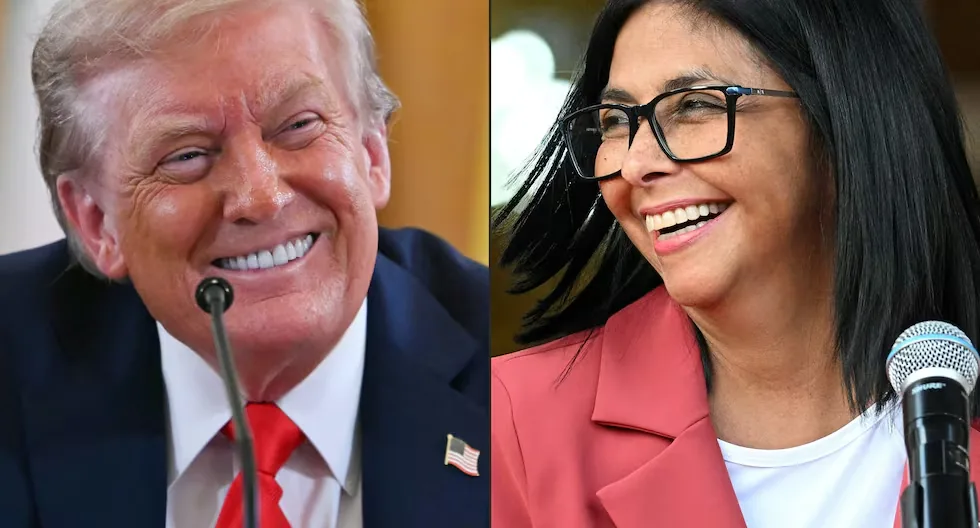
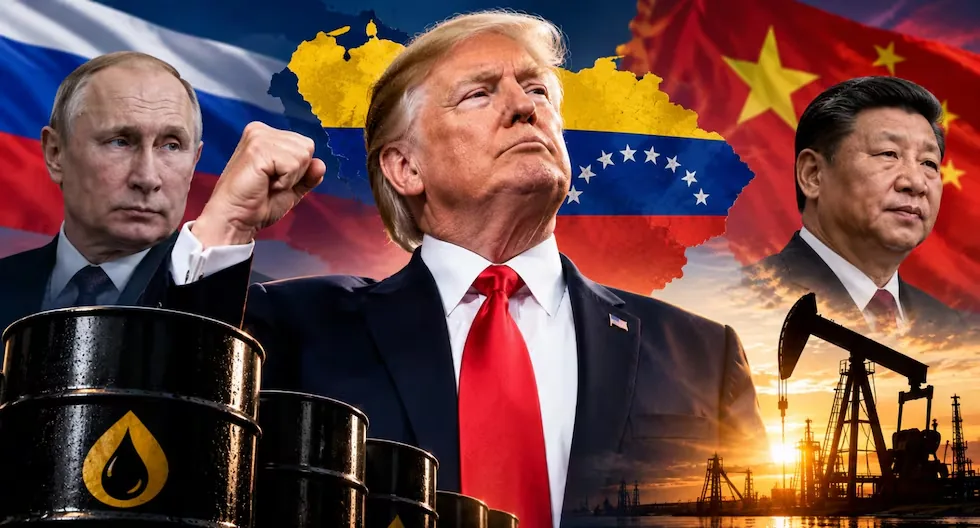
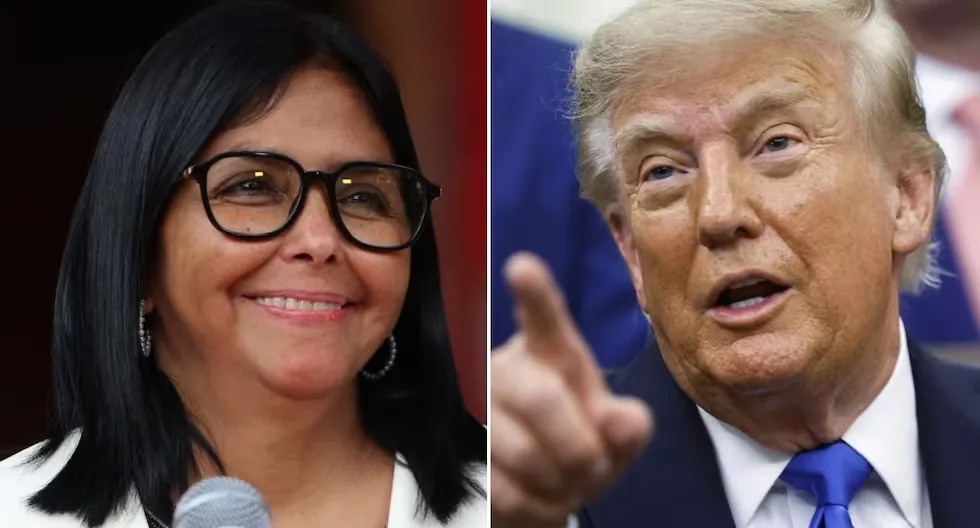
The President of the United States, Donald Trump, and the interim leader of Venezuela, Delcy Rodríguez, agreed on Wednesday that the country is still not ready to hold elections, although both assured that the elections will take place when the necessary conditions exist. Meanwhile, Washington and Caracas sealed an oil agreement that includes the development of 17 fields and American access to reserves of about 65 billion barrels of crude oil.
From the White House, Trump said that Delcy Rodríguez wants elections in Venezuela, but the country is still not ready to hold them.
“I don’t think they are ready yet. We took them out of a dictatorship and we get along very well with the Government. Delcy, as you know, is doing a very, very good job. She is very respected and we want that (elections) and they also want it. Delcy wants it, but they are still not ready”, Trump told the press.
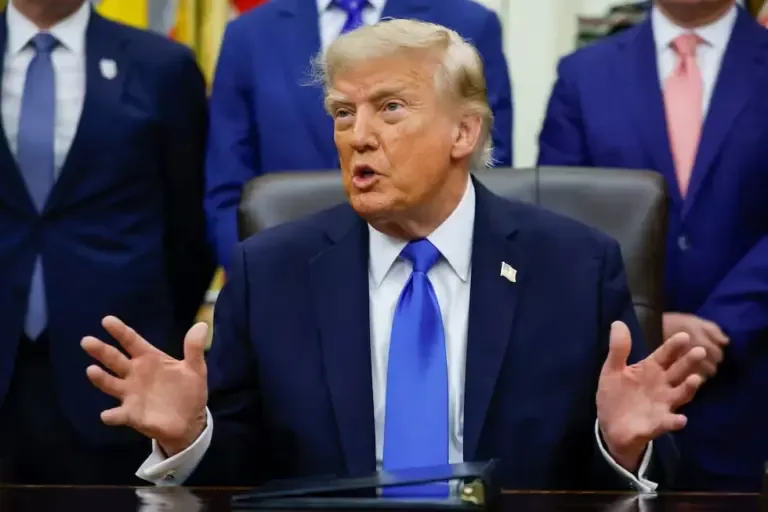
He added that although he considers that Venezuela is still not ready, he believes elections could happen soon. “They are still not ready. But soon. We hope to be able to do it soon.”
In Caracas, after Trump’s statement, Rodríguez also assured that “there will be an electoral process”, but conditioned its holding on Venezuela being ready.
“Don’t doubt that, there will be an electoral process, but under the conditions in which Venezuela is ready,” Rodríguez responded to a journalist during a conference after signing million-dollar oil agreements in the presence of U.S. Secretary of Energy Chris Wright.
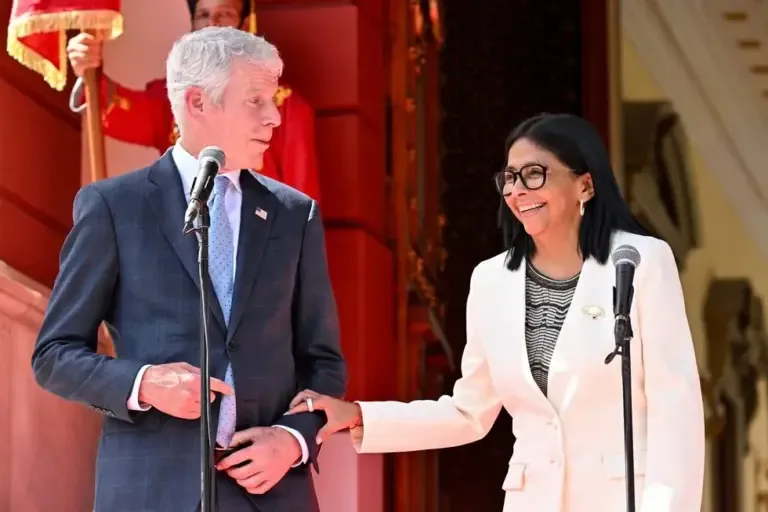
“In Venezuela there is a Constitution and an electoral and democratic system provided for” that establishes the electoral calendar, she continued. “I do not set the date” for the elections, she said.
Nicolás Maduro was overthrown by the United States last January 3 and is currently imprisoned in New York. His vice president, Delcy Rodríguez, assumed the interim presidency with Washington’s approval.
The Constitution of Venezuela provides that in the absence of the president, the vice president takes the reins for a maximum period of 180 days, a period that has already expired.
Regarding the oil agreement, Rodríguez and Trump have highlighted that taking a price of 65 dollars per barrel as a reference, Venezuela could receive 209.335 billion dollars in revenue.
For its part, the White House confirmed that it granted a 100-year concession to the private company North American Blue Energy Partners (NABEP), of the controversial Venezuelan businessman Alejandro Betancourt.
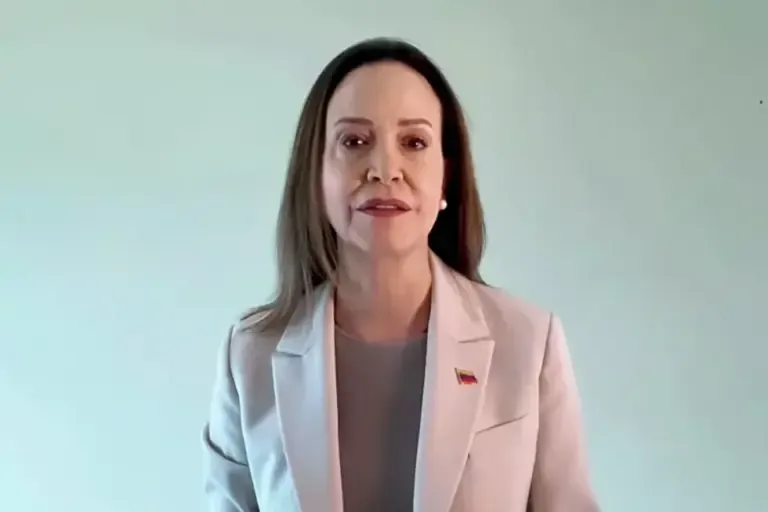
In this context, on Thursday opposition leader María Corina Machado published a video where she questioned the oil agreement for having been signed with Rodríguez’s government, which she considers illegitimate, and warned the United States that its “enemies” remain in the presidential palace of Miraflores.
Machado demanded that economic reforms in Venezuela advance in parallel with an electoral calendar that allows the election of a new president.
There are conditions for elections in Venezuela
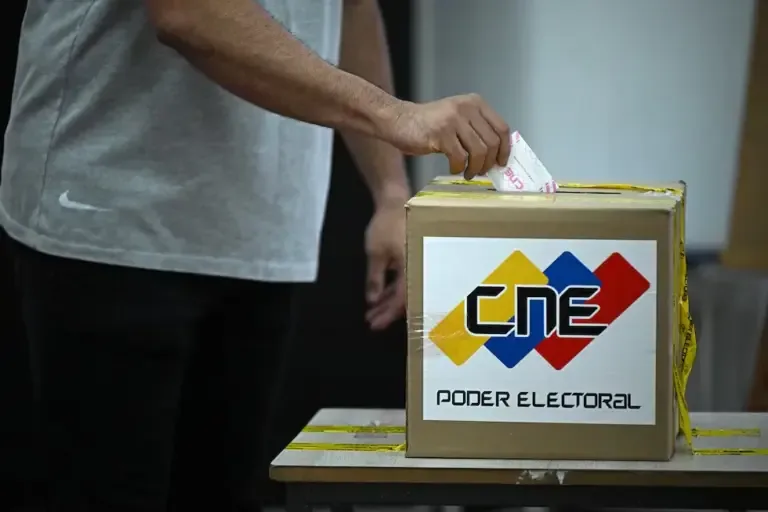
El Comercio spoke with William Santana, Venezuelan diplomat, international analyst, and columnist for the newspaper “El Nacional,” who said that the agreement between Trump and Rodríguez does not respond to a real lack of conditions to start organizing elections, but that behind this stance there are political and economic interests that favor the permanence of the current interim chavista government and the continuity of the economic agreements reached between Caracas and Washington.
“Here in Venezuela there are indeed conditions to start preparing the ground for a presidential election,” Santana said. He considered that Rodríguez’s position mainly seeks to prolong her stay in power.
He recalled that the current government emerged after Maduro’s fall and that Rodríguez acts as interim president, so the elections are precisely the mechanism that will resolve the current institutional situation of the country.
For Santana, Trump’s stance must also be analyzed from an economic perspective. “Donald Trump, ultimately, more than democracy, has shown that his interests are economic,” he said. He stated that Washington’s main objective is related to the control and exploitation of Venezuela’s oil resources.
Read more Did he try to kiss her? Pamela López tells what Paco Bazán did after his breakup with Cueva
The analyst considered that competitive elections could substantially change that scenario, especially given the possibility that María Corina Machado comes to power.
“With elections, with a result where it is most likely that María Corina Machado becomes president of Venezuela, then he [Trump] would not have such favorable conditions,” he said, referring to the relationship Trump currently maintains with Rodríguez.
The oil agreement and the unknowns of its conditions
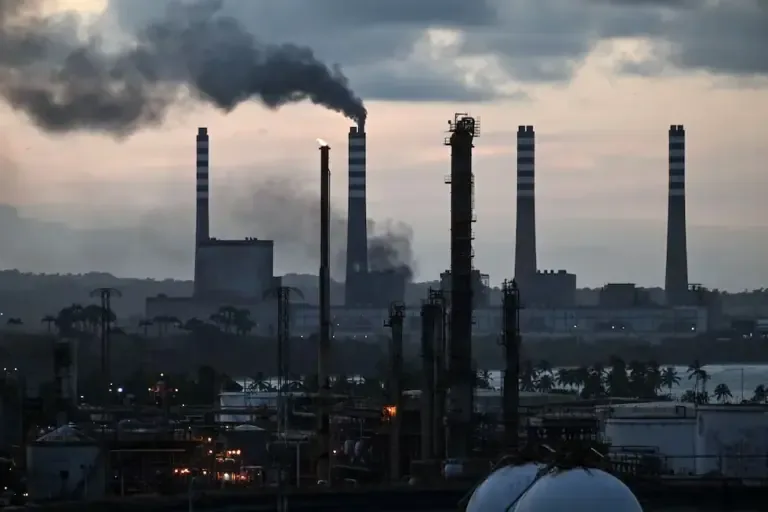
Santana also doubted that the oil agreement is sufficient to guarantee the continuity of the commitments made if a change of government occurs in the future. His main argument is that the full content of the pact has not yet been publicly disclosed.
“No one has published that agreement in its entirety and it is not known if it may contain harmful clauses, it may contain some element that at some point could be grounds for requesting its annulment,” he warned.
He called for caution before drawing definitive conclusions about the political and legal consequences of the pact. “We are starting from premises because we do not fully know the reality. If we had the agreement in front of us, we would speak with much greater authority,” he said.
That said, he considered that the oil agreement and Trump’s recent statements end up politically strengthening Rodríguez. “The agreement, with the great eloquence presented, is screwing [Delcy Rodríguez] into power,” he emphasized.
According to Santana, this responds to Trump’s convenience of maintaining an interlocutor with whom he can advance his economic objectives. “It suits Trump to have a docile person, an obedient person, and a person who validates all his predatory logic,” he said.
A “transactional peace”
Santana extended that interpretation to Trump’s entire foreign policy. He said the U.S. president is not prioritizing a traditional conception of peace based on humanitarian reasons, but a logic of exchange in which the United States obtains concrete benefits.
“What Trump has shown through his foreign policy is a predatory logic,” he said. It is a “transactional peace where he has to get something; if he doesn’t get it, for him the process is not complete,” he added.
In the Venezuelan case, he considered that the central element of that negotiation is economic: “The concrete thing is peace once he has achieved an economic agreement, an agreement where his gains are, I believe, inequitable”, he said, referring to the oil agreement.
The role of María Corina Machado
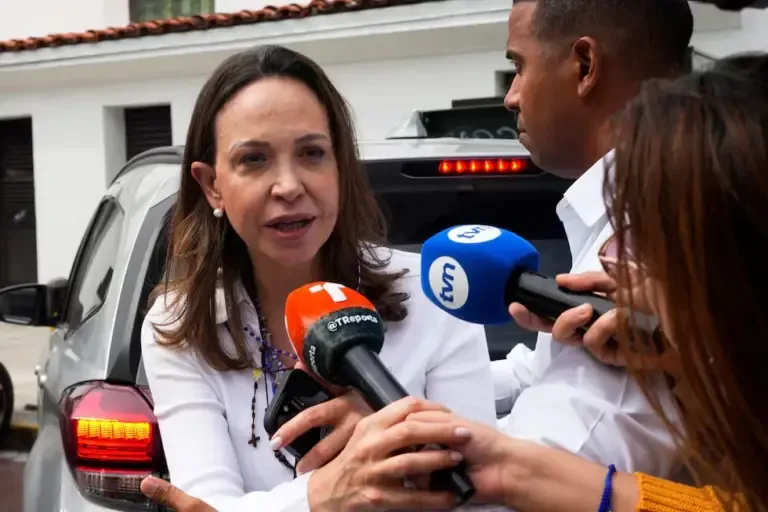
Given this scenario, Santana considered that María Corina Machado and the opposition must maintain as a central objective the holding of free and competitive presidential elections. For the analyst, it is not just about choosing a new government, but about recovering Venezuelan institutionalism.
“Only through free and competitive presidential elections can the rule of law be restored in Venezuela,” he said.
He insisted that any large-scale economic agreement should be backed by legitimate and stable institutions. “Those would be the conditions to be able to negotiate any kind of agreement, but not with an illegitimate government and a government that has institutional fragility,” he said.
He noted that political uncertainty also represents an economic risk. “The risks for any investor will always be much greater” while there is no government with democratic legitimacy and solid institutions, he concluded.
The shooter in Minneapolis had threatened several neighbors before the attack
Read more Watch, Ignacio Buse vs. Benjamin Bonzi LIVE for US Open 2026