




![Alberto Beingolea: “If they insist on not giving [the powers], they are complicating life for Peru”](https://insightermedia.com/wp-content/uploads/2026/09/bb3fa9e11304ea13fe2cd333955007bc-150x150.webp "Alberto Beingolea: “If they insist on not giving [the powers], they are complicating life for Peru”")


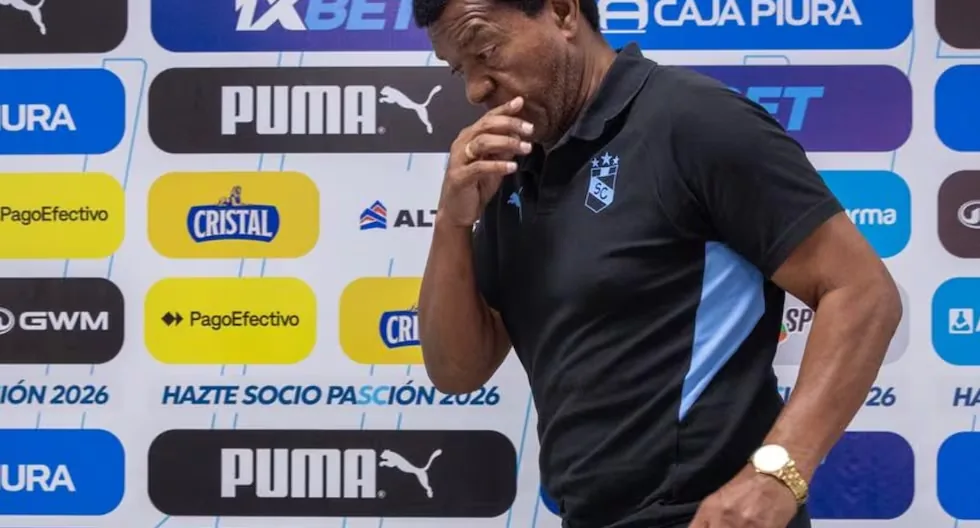
The assault on Julio César Uribe did not cause the Sporting Cristal crisis. It exposed it. Behind the attack is a season of failed decisions, coaching changes, results that do not match the club’s history, and a fanbase that stopped believing. That said, nothing justifies violence, absolutely not. But it is urgent to understand what is happening in Rímac and why the idol ended up paying the price. How it got to this point and what paths there are to recover.
READ: Julio César Uribe’s son revealed his father’s emotional state: “He is very hurt and distressed”
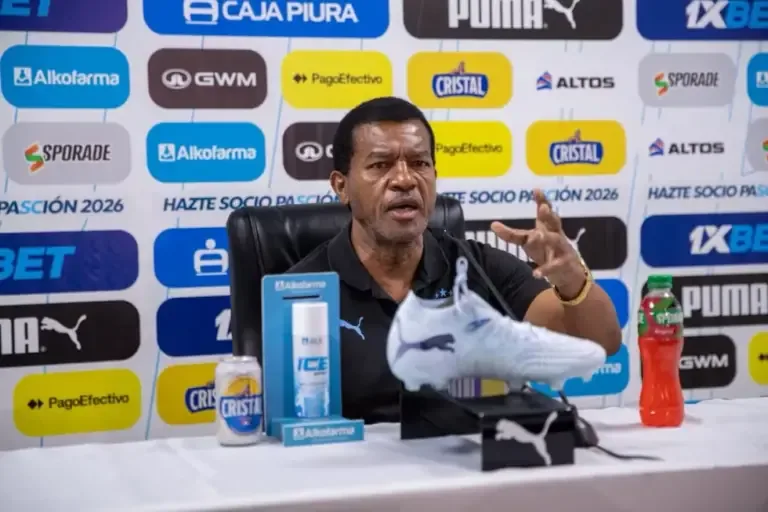
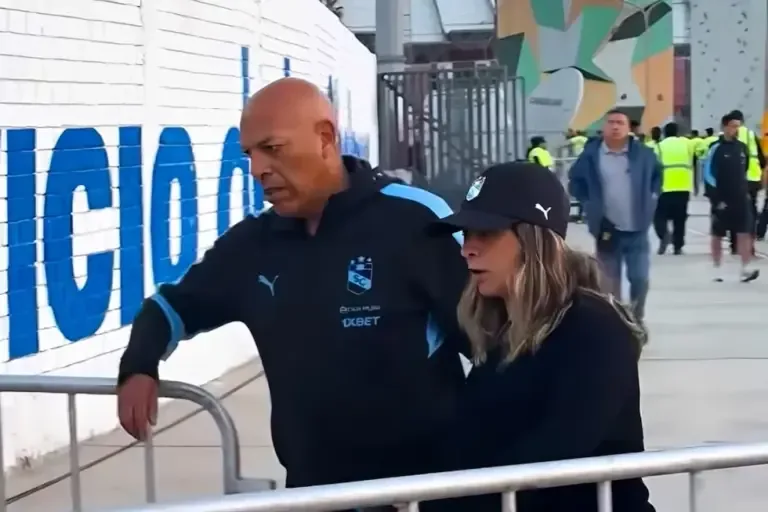
Julio César Uribe, one of the great names in the club’s history and now general director of football, was assaulted by alleged fans after training sessions. The next day, sitting in front of journalists in La Florida, he did not try to hide the problem. Nor did he justify the violence.
“We are a bit far from our history and the fans are right, but I do not accept the aggression”, he said.
The phrase allows separating two things that at this time risk being mixed: the fans’ complaint and the violence. The first exists and has sporting reasons. The second is unacceptable.
Because before the blow to Uribe, there was another accumulation of blows. Sporting Cristal changed coach, changed coach again, was eliminated from the Copa Sudamericana in a disappointing tie against Bragantino, and lost ground in the local tournament. Currently, it is in tenth place in the aggregate with 29 points: eight wins, five draws, and eleven losses.
If we keep digging at the sporting level, it is about to reach the record for most matches without an away win and, as in 2009, it could be left without international competitions.
The question, then, is no longer only what happened with Uribe. It is how a club used to fighting at the top ended up questioning its own identity.
1. When did the crisis really start?
Long before the assault.
The first change came in March, when Sporting Cristal decided to end Paulo Autuori’s tenure, who had coached the team since April 2025. The departure occurred after a series of irregular results and opened the search for a new project for 2026.
The bet was Zé Ricardo. The Brazilian arrived in April with a contract until December 2027 and the mission to recover competitiveness in Liga 1 and the Copa Libertadores. It was, in theory, a medium-term bet.
It lasted little. Very little…
The campaign did not find stability and the club moved the bench again. In June, Zé Ricardo left the institution and Roberto Mosquera returned to La Florida to take charge of the team for the rest of the season.
Here appears the first big problem: Sporting Cristal changed coach three times in the same season (plus an interim) trying to fix a problem that did not seem to be only with the coach.
Autuori’s departure was followed by the hiring of Zé Ricardo. Zé Ricardo’s departure was followed by Mosquera’s return. And Mosquera’s arrival also did not immediately transform the team.
In July came another blow: elimination from the Copa Sudamericana against RB Bragantino. Mosquera himself acknowledged after the match that Cristal had competed but had not gotten the result.
Then came the local tournament.
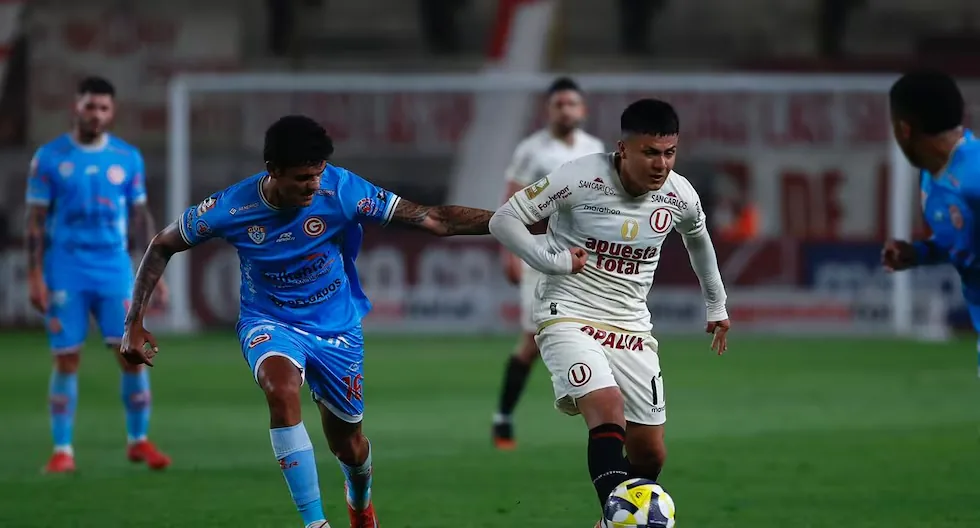
On August 30, Sport Boys defeated Cristal 1-0 at Miguel Grau and ended a 19-year streak without beating the celestes. It was the seventh matchday of the Clausura and left Mosquera’s team with only three wins in seven matches of this second part of the championship.
The defeat was the last result before the assault.
But it was not the cause.
It was the matchstick on a surface that had been accumulating fuel for months.
See this post on InstagramA post shared by DT El Comercio (@dtelcomercio)
2. Is Julio César Uribe responsible for the crisis?
He is responsible for part of it. Not all. That nuance is fundamental.
Uribe has held the position of general director of football for a year. Due to his position, he participates in sports management and is one of the people who must answer for the direction of the area. Therefore, it is logical that he is questioned.
What is not serious is to make him the sole person responsible for a crisis that started before his current stage and involves decisions at different levels.
Uribe himself explained it on Friday:
“From my responsibility, we apologize to the fans, but I have been general director for a year and our problem is much older.”
The phrase has two parts. The first is to assume. The second forces looking back.
Who decided to hire Autuori? Who approved Zé Ricardo’s arrival? Why did a coach hired until 2027 end up leaving months later? Who decided to turn again to Mosquera? Who built the squad? Who defines the reinforcements? Who evaluates the departures?
Answering these questions will allow knowing how much of the crisis corresponds to Uribe and how much corresponds to the structure above and around him.
Because one thing is being responsible for sports management. Another is being responsible for everything that happens in a club.
Uribe, moreover, will not resign.
After the attack, he confirmed he will continue in the position and assured:
“By principles, one should never abandon the ship when things are bad, I will keep fighting, I will keep struggling.”
The decision is made. Now begins the hard part: proving that staying is useful to change things.
3. Where is Sporting Cristal’s real problem?
In the lack of continuity. The case of the coaches is just the most visible expression. In less than a year, Cristal went from Autuori to Zé Ricardo and from Zé Ricardo to Mosquera.
But changing the coach does not automatically change a sports model. The club needs to answer what it wants to be.
A team that bets on youth? One that combines experience and projection? An exporting club that prioritizes developing players? An institution built to win immediately? Can it do both?
These are questions that should be resolved before choosing the coach and signing players. Today the feeling is the opposite: decisions are made to fix problems that appear along the way. That explains much of the uncertainty.
When Zé Ricardo arrived, the message was of a long-term bet. The announced contract went until 2027. Two months later, the club was already looking for another solution.
When Mosquera arrived, the priority became recovering competitiveness during the Clausura. And Uribe himself has now acknowledged that the coach’s future will be evaluated at the end of the year. Then a question appears that Cristal must answer before December: Is it looking for another coach or building a project?
4. Is the fan right to complain?
Yes. And that does not make the aggression justifiable.
The numbers explain part of the discomfort. After 24 matches, Sporting Cristal has 29 points and a record of 8 wins, 5 draws, and 11 losses. It is tenth in the aggregate table.
For a club used to fighting for the top spots, it is not a minor position. There is also an international debt. The elimination against Bragantino again left the team out of a continental competition before reaching a stage that allows talking about a satisfactory campaign.
And there is, above all, a feeling that numbers cannot measure: the loss of confidence. The fan stopped expecting the next match to be the start of a recovery. Now they expect the next problem.
That is what explains the tension. But here too there must be a boundary.
Sporting Cristal itself was clear after the assault: criticism and disagreement are legitimate; violence, intimidation, and offense are not.
Uribe summed it up best from his place as a victim:
“I accept the fans’ complaints, but not the aggression.” A club can and must listen to its fans. What it cannot do is allow violence to become a decision-making mechanism.
See this post on InstagramA post shared by DT El Comercio (@dtelcomercio)
5. What needs to change now?
Winning the next match is not enough. Changing the coach is not enough either. Sporting Cristal needs a much more uncomfortable evaluation: reviewing how it is making its sporting decisions.
The first step is to define who is in charge. If Uribe continues, it must be clear what his authority is, what decisions he can make, and with what support he will execute them. If the board will determine the main decisions, it must also publicly assume that responsibility.
The second step is to define a project. That means evaluating the squad, the technical staff, and the signings, but also determining what style of football Cristal wants to play and what players it needs to do so.
The third is to recover competitiveness. The 29 points in 24 matches are not just a statistic. They are the consequence of a season in which Cristal won eight matches and lost eleven.
And the fourth is to rebuild the bond with the fans. Not from conceding to violence, but from responses. The fan can be wrong in the way and right in the substance. Cristal must be able to listen to that second part without ever accepting the first.
That is why Uribe’s press conference ended up having a greater meaning than a simple response after an assault. The ‘Diamond’ acknowledged that the team is far from its history. He said he knows the decisions that must be made and that they will be made “without sentimentality.” He also confirmed he will stay.
Now he will have to prove it.
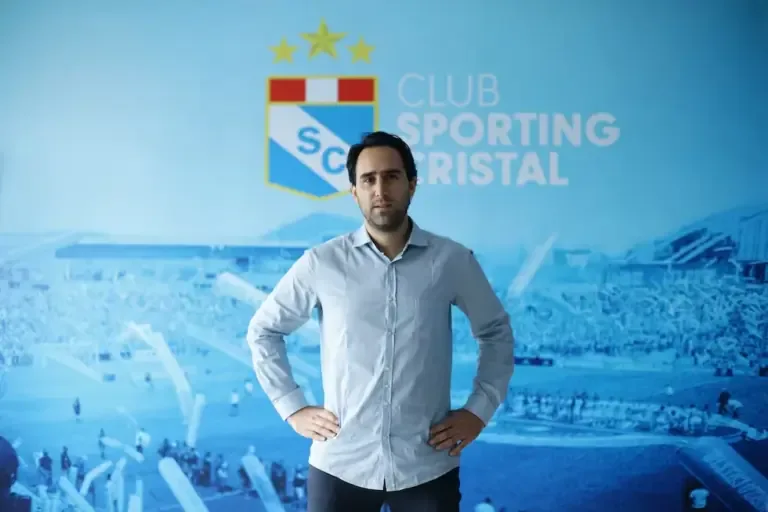
The assault on Uribe was the limit that should not have been crossed. But it was also an alarm. And here comes another problem, perhaps the most crucial: the distance between the fan and the club today is defined by the negative perception of the one who governs them, Joel Raffo.
Perhaps the biggest stone preventing communion between club and fan, a responsibility earned through errors and failed bets that we could list in these seven years. Just remember one: the historic fact of seeing a Sporting Cristal president handcuffed. That scene is not forgotten, nor forgiven by the fan.