





![Alberto Beingolea: “If they insist on not giving [the powers], they are complicating life for Peru”](https://insightermedia.com/wp-content/uploads/2026/09/bb3fa9e11304ea13fe2cd333955007bc-150x150.webp "Alberto Beingolea: “If they insist on not giving [the powers], they are complicating life for Peru”")



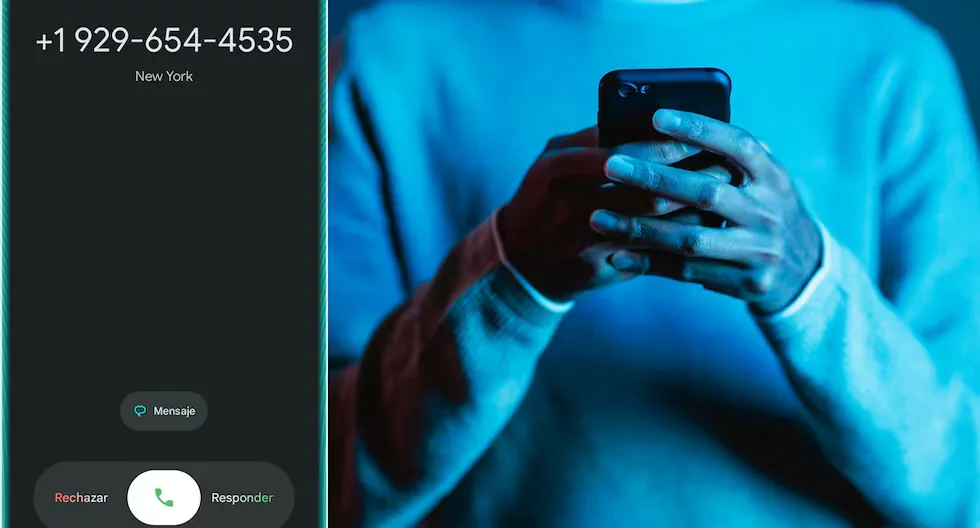
Answering a phone call has become a risky activity for many Peruvians. You can fall into the hands of a criminal, become a victim of extortion or financial fraud. It is increasingly common to receive calls from international numbers, with a long string of digits, with the names of banks or institutions, which are no longer just annoying but rather arouse suspicion.
Read more The world is barely what my eyes see
Behind the scenes are fraud networks. Just a month ago, Interpol carried out operation First Light 2026 in 97 countries, resulting in more than 5,000 arrests. Also, 293 million dollars were blocked, the product of this criminal network that applied numerous social engineering techniques, romance scams, identity theft, business email fraud, fake investments, and sexual extortion.
SEE: Nano Banana arrives on Google Earth to generate images based on the real world with satellite content
One of the channels criminals use, one of the doors to reach their victims, is the phone call.
For this, they use various techniques.
Fabio Assolini, director of the Global Research and Analysis Team for Latin America at Kaspersky, indicates that the most common form is the robocall, which “is a number that automatically rings another, and the challenge is to know if there is someone on the other side who answers.”
That is, they seek to know if the number belongs to a real person. It is a technique used by marketing agencies, sales companies. The result is a database that “sometimes will be bought by criminals because they know the number is active.”

The next technique to know is Voice over IP (VoIP), which is a technology that allows voice calls over the Internet. It does not use traditional telephone lines and usually appears as an international call, or it is also a code so long that it is followed by several dots.
Complementing this technique is spoofing. It is a technique widely used in phone fraud and consists of impersonating a phone number.
“Really, they [the criminals] can put any number, even their own number, that is, the number of the person they are calling, who is receiving the call”, Assolini said in conversation with El Comercio.
Criminal networks usually combine these and other techniques and, according to the specialist, “the way the fraud occurs depends on the criminal’s challenge”. Another detail is that the way to track them becomes more complicated.
And what happens in Peru?
Among unknown international calls, there is a type of scam called “Wangiri,” which is an alleged form of phone fraud. It consists of making very short missed calls, usually from unknown international numbers, with the aim of inducing the user to return the call. This could generate high charges.
According to the National Institute for the Defense of Competition and the Protection of Intellectual Property (Indecopi), to date “it has not registered complaints, claims, or sanctioning administrative procedures specifically related to this type of calls.”

What is being investigated are “cases related to unsolicited commercial communications (spam),” handled by Consumer Protection Commission No. 3. This has been happening since the application of Law No. 32323, which strengthened the prohibition of these practices.
Read more Zodiac Draw 1756: results and prizes of the National Lottery today, Sunday, August 9
SEE: From the OpenAI “incident” to the cybersecurity alert: is AI control being lost?
“Indecopi has been carrying out oversight actions to verify compliance with this regulation, whose results could lead, if appropriate, to the initiation of sanctioning administrative procedures,” the institute told this newspaper. In any case, it urged the public to remain alert to these types of practices and report them to the authorities.
The Peruvian case is within the Latin American context. Assolini points out that if our region stands out in anything, it is financial fraud. “Latin American frauds are, in my opinion, well done because they are in the local language, with local topics, using names of local banks,” he explained.
Other sources from which attacks usually come are Asia and Africa. In these cases, they are related to sexual extortion, romance fraud, and cryptocurrency investment cases.
Some recommendations
Unfortunately, distrust of phone calls from unknown numbers has led more people not to answer.
That is a problem, says the Kaspersky specialist, as it affects users’ trust. In this sense, he warned that it is the responsibility of telecommunications companies to block these Voice over IP call providers.
“Until this happens, the problem remains in people’s hands,” Assolini said, and suggested that it should be “mandatory for telecommunications companies to adopt modern protocols that allow blocking and controlling this type of calls.”
SEE: Would you talk to your book? New AI tools offer readers the chance to chat with chatbots
He indicated that most companies operate with the SS7 protocol, which is very old, and “if they are not adopted, criminals will be free to continue with frauds, fraudulent calls of all kinds”. This implies changes in devices, protocols, and software.
What can the user do? One option is to install applications that identify the origin and security of the phone call, such as Kaspersky’s Who Calls. But there are also some practices that can be followed.
“When realizing it is a call from abroad, from an unknown number, you should hang up immediately. It is the easiest because they will try by social engineering to involve you, or even scare you,” he said, as they will invent some financial problem.
He also recommended that under no circumstances should codes received by SMS, email be confirmed or any application installed. These would open the door to fraud. Until these organizations are dismantled, prevention will be in the hands of users.
Read more Zodiac Draw Results 1756: find out today’s grand prize, Sunday, August 9
- How to clean my PC inside and out without ruining it?
- 5 foods that help take care of our bones (beyond milk)
- From the OpenAI “incident” to the cybersecurity alert: is AI control being lost?