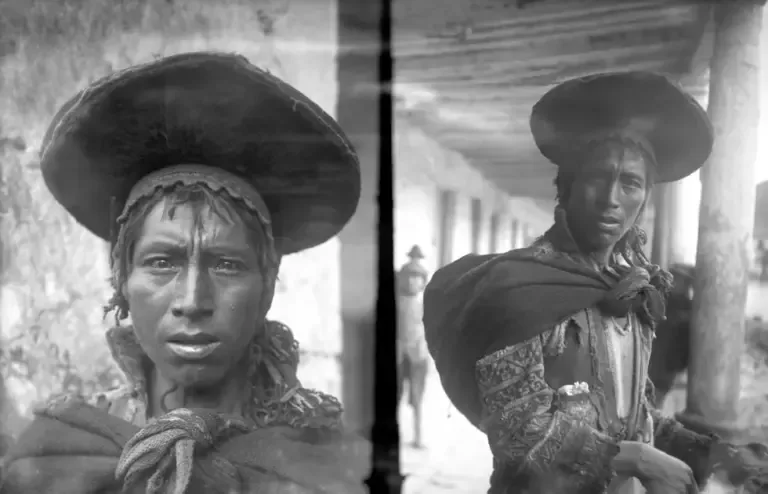
Both he and his contemporary Horacio Ochoa stood out in terms of retouching portraits. Researchers state that both had excellent techniques applied directly to the negative so that the model’s skin appears more youthful and detailed or to remove wrinkles. But Don César’s work was even more meticulous than that of master Ochoa, which was saying a lot.
Indigenous person in a doorway in an undated portrait by César Meza. A divulgative publication will allow the dissemination of part of the photographic material of the Andean Photographic Archive. (Andean Photographic Archive / CBC)
These data and many others will only be confirmed shortly, when the Andean Photographic Archive, an institution of the Bartolomé de las Casas Center of Cusco, begins the great undertaking of preserving, cataloging, and disseminating this visual heritage after receiving funding from the Ambassador’s Fund for Cultural Preservation of the United States Embassy in its 2026 edition, which amounts to US$170,000 for this one-year project.
A historic investment
With 32,697 photographic negatives in its collection, the Andean Photographic Archive is one of the most important photographic collections in Peru, dedicated to the rescue, research, and dissemination of what historian Pablo Macera called “the Cusco School of Photography,” about fifty photographers who worked in the city of Cusco and its surroundings in the first half of the 20th century.
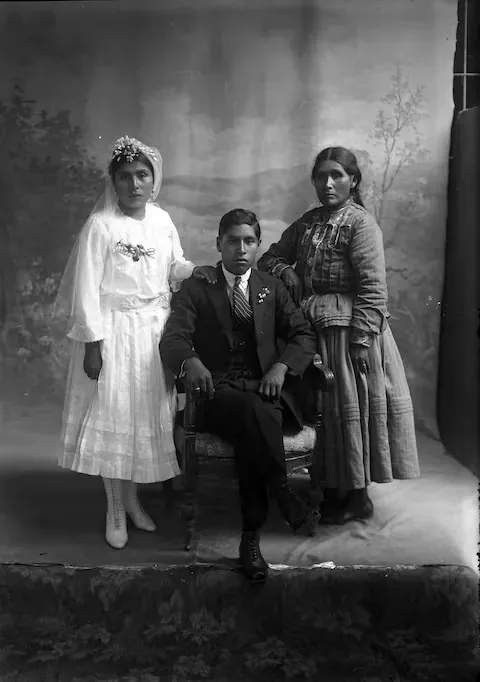
Mestizo couple with the groom’s mother, photographed in 1925 by Pablo Veramendi. (Andean Photographic Archive / CBC)
/ PABLO VERAMENDI
Of this collection, almost two-thirds correspond to the archive of César Meza Salazar (18,992 negative images). Other notable collections are those of the brothers Filiberto and Crisanto Cabrera (1,790 negatives), Pablo Veramendi (519), the Regional Historical Museum (338), José Gabriel Gonzales (214), Mario Manrique (188), Miguel Chani (129), and masters such as Gregorio Licuona, Vidal Gonzales, Fidel Mora, Mariano Choquetito, or Manuel Orihuela, of which fewer than a hundred representative negatives are preserved.
“By having the digitized images online, researchers will be able to join these studies from their professional interest, whether they are photographers, visual artists, anthropologists, or historians.”
Yadira Hermoza | Cultural manager and head of the Andean Photographic Archive
Thus, the project will focus on the conservation and restoration of nearly 11,000 negatives from the Meza collection and another 3,424 from the rest of the visual archives. In total, 14,400 negatives must be preserved, digitized, cataloged, and properly stored in the repositories of the Bartolomé de las Casas Center before continuing with the research. In this way, the institution moves closer to having its entire archive preserved and digitized.
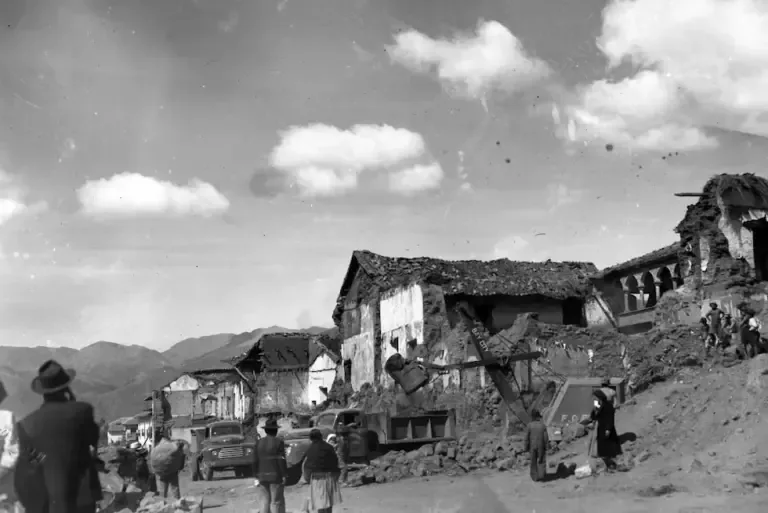
1950 earthquake, recorded by Antonio Mendoza. (Andean Photographic Archive / CBC)
/ ANTONIO MENDOZA
Cultural manager and head of the Andean Photographic Archive, for Yadira Hermoza a very interesting research opportunity opens up, since each photographer is a world, and each access to their work is different. Research that will not only arise from the Andean Photographic Archive but from everywhere. “By having the digitized images online, researchers will be able to join these studies from their professional interest, whether they are photographers, visual artists, anthropologists, or historians,” she points out.
70 years of the Fulbright scholarship
Through this project, the 70th anniversary of the Fulbright scholarship in Peru is also celebrated. Indeed, it was two Fulbright scholars, Americans Fran Antmann and Deborah Poole, who founded the archive of the Andean Photographic Archive in 1988, also with the support of the Ford Foundation.
“In those years, both Deborah and Fran had applied for the scholarship with the endorsement of the Bartolomé de las Casas Center. Fran started with the negative plates of Sebastián Rodríguez which, according to her thesis, she found in a dumpster,” Hermoza recalls. Thus, the researchers added many other images by various authors to Rodríguez’s images.
The funding from the Ambassador’s Fund adds to other funds recently obtained by the Andean Photographic Archive, such as the project from the Gerda Henkel Foundation of Germany to preserve 8,000 plates by Horacio Ochoa or the one financed by the British Library to digitize, in addition to the remaining work of Ochoa, 5,000 negatives by César Meza.
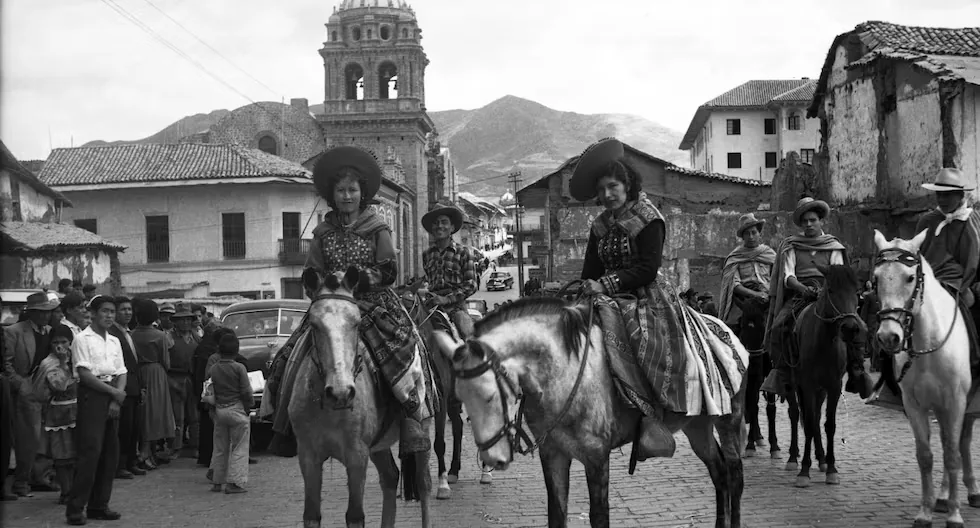
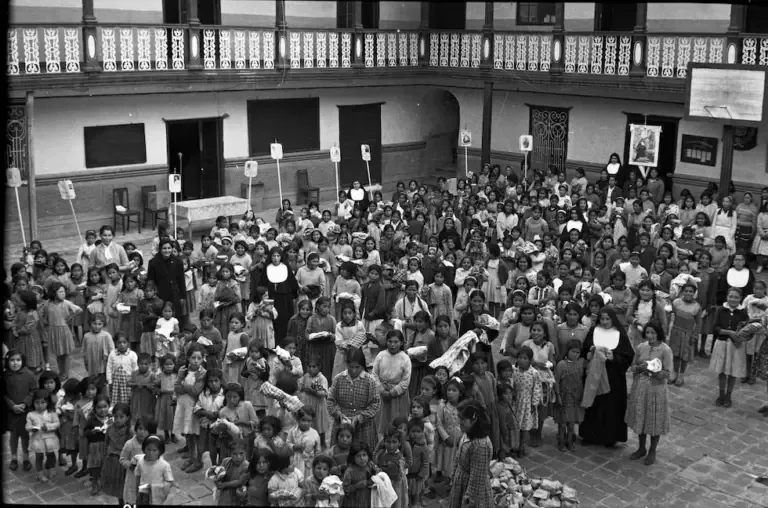
Education at María Auxiliadora school, in 1955. Image by César Meza. The Andean Photographic Archive preserves the oldest photographic collection of Cusco and one of the most important in the country. (Andean Photographic Archive / CBC)
/ CESAR MEZA
All this international aid will allow the hiring of 20 specialists, mostly young people from Cusco, including conservators, photographers, and historians, many of whom were trained in the Chambi project, which received this U.S. funding in 2021.
Time for dissemination
These conservation and digitization efforts are complemented by subsequent research and dissemination. Thus, a conference series is planned in Cusco featuring Peruvian and U.S. experts in conservation and the history of Peruvian photography from the first half of the 20th century, on the occasion of the 70th anniversary of the Fulbright scholarship in Peru. The main guest will be, precisely, photographer Fran Antmann, founder of the Andean Photographic Archive. A publication will compile all the presentations given at this forum.
“I think they did not imagine everything that was to be found,” comments Hermoza, for whom the work of its founders, passing through all those who continued their work, is an effort of rescue, but especially a vision: a testimony of regional history that documents local traditions and customs, historical events, as well as families and individuals portrayed in studios or under the clear sky of Cusco.
Also…
To know
Photographic conservation consists of properly organizing photographic negatives according to their degree of deterioration, sizes, and formats, attending to the specificity of the element, whether glass or acetate. After preventive conservation, they are placed in sleeves handmade by specialists.
Likewise, the material is placed in neutral pH corrugated cardboard boxes which, in the case of the Andean Photographic Archive, will be organized inside a repository monitored 24 hours a day to control air quality, lighting, and temperature, at the Bartolomé de las Casas Center premises.






![Alberto Beingolea: “If they insist on not giving [the powers], they are complicating life for Peru”](https://insightermedia.com/wp-content/uploads/2026/09/bb3fa9e11304ea13fe2cd333955007bc-150x150.webp "Alberto Beingolea: “If they insist on not giving [the powers], they are complicating life for Peru”")