




![Alberto Beingolea: “If they insist on not giving [the powers], they are complicating life for Peru”](https://insightermedia.com/wp-content/uploads/2026/09/bb3fa9e11304ea13fe2cd333955007bc-150x150.webp "Alberto Beingolea: “If they insist on not giving [the powers], they are complicating life for Peru”")


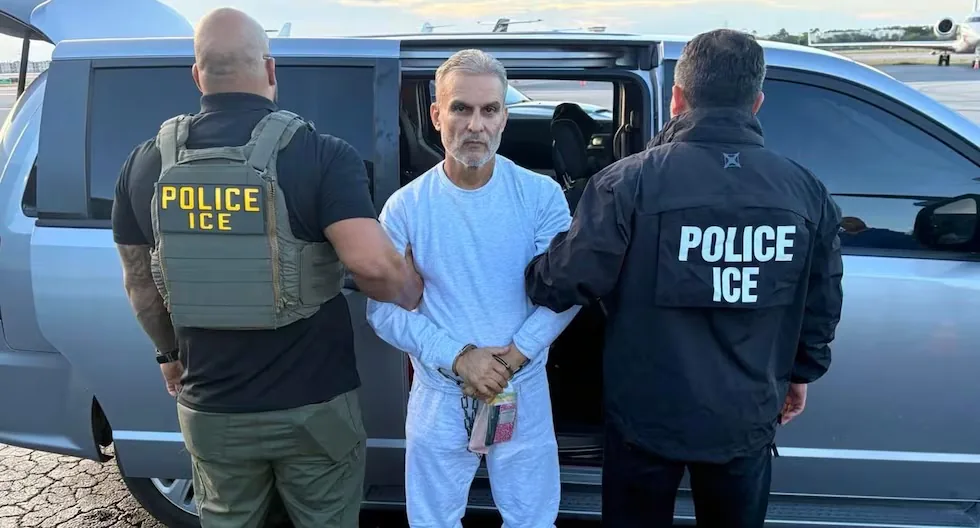
More than a decade ago, Serrano experienced power from its highest places in Ecuador: he was Correa’s Minister of the Interior (between 2011 and 2016) and presided over the National Assembly in 2017. On Saturday, he arrived in his country after being deported by the United States, where he had been detained by immigration services since last year.
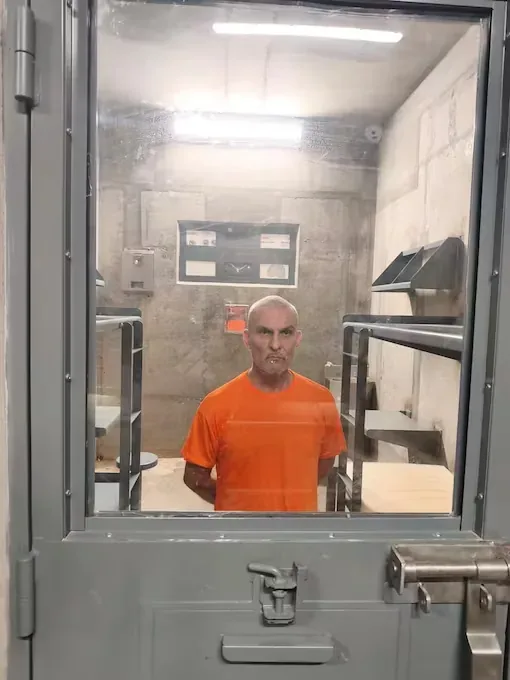
Upon his arrival, Serrano, 55 years old, was immediately placed in the maximum security prison El Encuentro, located in the province of Santa Elena and built by the government of President Daniel Noboa. This prison is inspired by the Terror Confinement Center (CECOT) in El Salvador, the well-known mega-prison of Nayib Bukele that houses gang members.
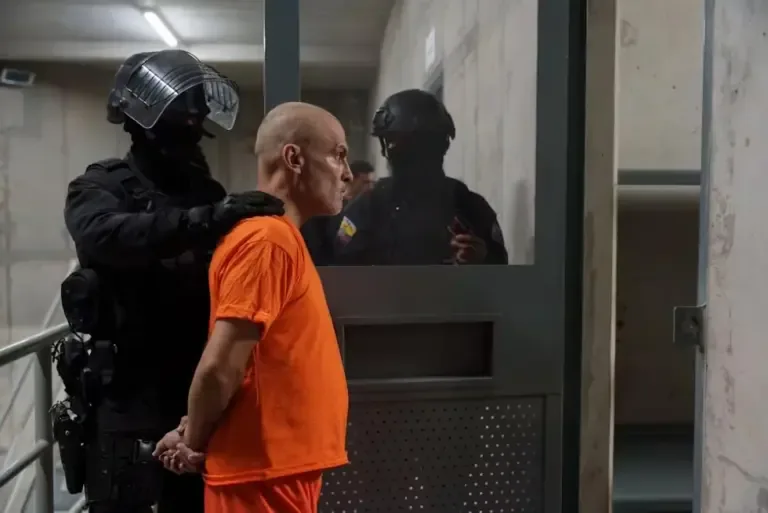
On Friday, Noboa had anticipated that Serrano would be transferred to El Encuentro. He also posted photos of the detainee dressed in an orange suit, handcuffed and shackled, and being grabbed by the neck by a masked police officer.
Serrano had been residing in the United States since 2021. He was detained on August 7, 2025, for allegedly overstaying the legally permitted time in the country. The politician said at that time that he had a political asylum request in process. But he was ultimately deported.
On August 8, the Ecuadorian Prosecutor’s Office accused seven people, including Serrano, a former Correa legislator, a businessman, and several members of the criminal gang Los Lobos, of being the intellectual authors of the assassination of the journalist and candidate Villavicencio, which occurred on August 9, 2023, during the presidential campaign.
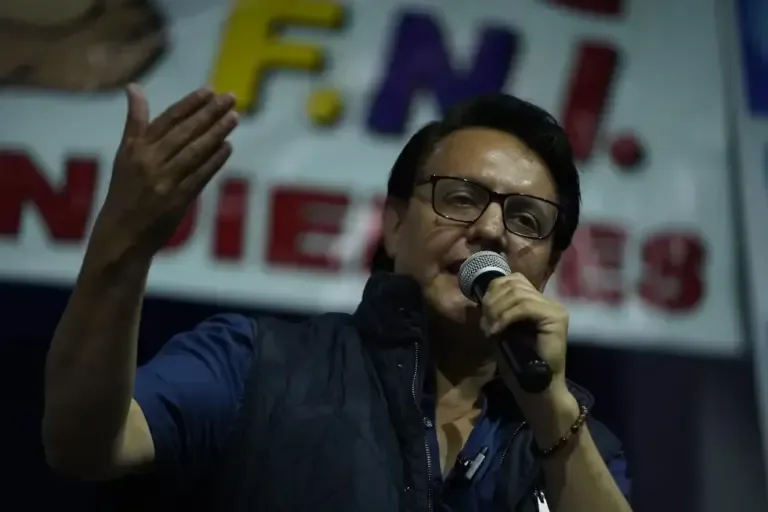
The former Correa minister has always denied being behind Villavicencio’s murder.
Serrano posted a message on X on Tuesday where he denounced that he fears for his life and physical integrity and claimed to suffer conditions he considers inhumane in prison. He assured that he was not extradited for the Villavicencio case, but deported from the U.S. due to an immigration procedure, and questioned that President Noboa had announced his penitentiary destination before his arrival in Ecuador.
Serrano also denounced a lack of drinking water and basic items, restrictions on receiving medical care and medication, mistreatment, and alleged physical assaults. Additionally, he stated that he is forced to kneel for photographs that, according to what he was told, would be sent to President Noboa.
Finally, he indicated that the authorities have already been informed and that if anything happens to him, “no one will be able to say they were not warned.”
Behind the murder of Fernando Villavicencio?
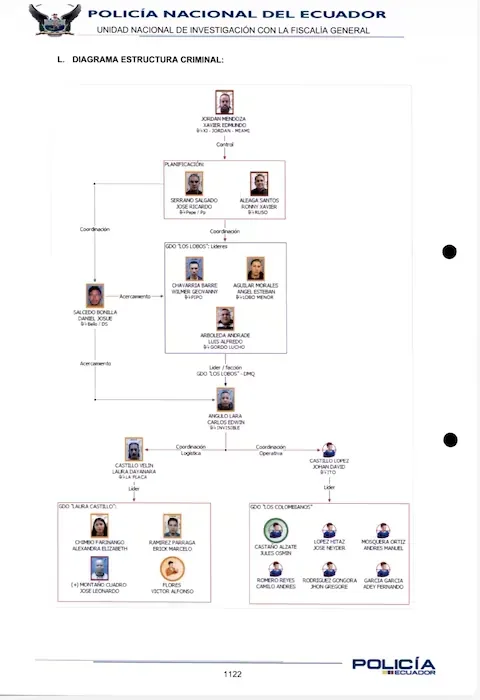
The Ecuadorian Prosecutor’s Office accused Serrano of being a presumed indirect perpetrator in the murder of Fernando Villavicencio and stated that it has testimonies, chats, expert reports, and other elements linking him to the structure that allegedly planned the crime. Additionally, he allegedly provided “sensitive” information to Los Lobos about the candidate’s movements.
The Ecuadorian journalist Paúl Romero, specialized in investigation, security, defense, and politics, told El Comercio that Serrano’s return to Ecuador takes on a more delicate dimension because of the Villavicencio Case.
Romero stated that the fiscal investigation has identified conversations and other elements that would point to an alleged coordination to track the movements of Villavicencio.
According to the journalist, the investigators’ hypothesis is that Serrano would have used contacts within the police and an alleged parallel intelligence system to obtain information about Villavicencio and deliver it to the criminal structure that carried out the assassination.
Furthermore, Romero recalled that, when Serrano was Minister of the Interior, he ordered the raid of Villavicencio’s home, who at that time was investigating the then-official for contracts and alleged espionage activities.
Read more Water outage today, September 1: affected districts and service suspension schedules
“Serrano knows a lot”
For Romero, the political importance of Serrano’s detention goes beyond the Villavicencio Case. He explained that the former minister would have accumulated information over his years of power about different sectors of the State, politics, and organized crime. Therefore, a possible collaboration with the Prosecutor’s Office could have broader repercussions.
“Serrano knows a lot, a great deal about almost all sectors”, said Romero, who emphasized that he was one of the most powerful figures of correísmo and that his influence is largely explained by the long period he remained at the head of the Ministry of the Interior during Correa’s government.
He detailed that he accumulated privileged information due to the control he exercised over intelligence systems and the National Police. Additionally, he was directly involved in the pacification policy that the Correa government promoted with criminal groups. That position made him a man with extensive knowledge of Ecuador’s political, police, and criminal structures, the journalist specified.
The power of Serrano
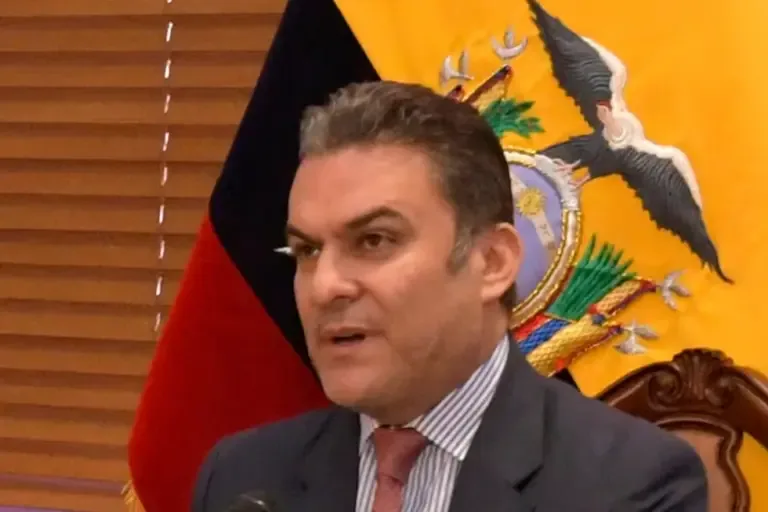
Serrano’s trajectory was also marked by the break between Rafael Correa and his successor, Lenín Moreno. The former minister ended up supporting Moreno and even presided over the National Assembly after having been the most voted assemblyman in the country.
However, Romero said his political career lost strength after internal disputes and, once Moreno’s government ended, he went to the United States.
Despite his public break with Correa, Romero considered that the relationship between the two never completely broke. “They both know a lot: Serrano knows a lot about Correa and Correa knows a lot about Serrano”, he stated.
Romero said that this mutual knowledge would explain the prudent distance both have maintained publicly. Serrano was also one of the main promoters of the presidential candidacy of Luisa González, the correísmo candidate who lost to Daniel Noboa.
Lawyer and political analyst Mauricio Alarcón-Salvador told El Comercio that Serrano’s case is an example that political power can be both immense and fleeting.
He explained that for years he was practically an untouchable figure both within correísmo and during Moreno’s subsequent government.
Alarcón-Salvador questioned the role Serrano played during his years of power and stated that he used intelligence systems and the State structure to persecute opponents.
“He is a dark character in our political history who today has shown, I insist, that power is fleeting”, said the analyst.
Alarcón-Salvador considered that Serrano’s current situation poses a paradox. The former minister has denounced alleged violations of his rights and conditions he considers incompatible with the guarantees any detainee should receive. For the analyst, there is a risk that Serrano ends up becoming a victim of a power system that, according to his detractors, he himself helped build and use when he was at the head of the State.
Regarding the consequences of his imprisonment, Alarcón-Salvador stated that there is a significant political impact and that the Noboa government will seek to capitalize on Serrano’s presence in Ecuador. However, he warned that a clarification must be made: Serrano did not return to the country through an Ecuadorian government arrangement but was deported from the United States due to an immigration procedure.