




![Alberto Beingolea: “If they insist on not giving [the powers], they are complicating life for Peru”](https://insightermedia.com/wp-content/uploads/2026/09/bb3fa9e11304ea13fe2cd333955007bc-150x150.webp "Alberto Beingolea: “If they insist on not giving [the powers], they are complicating life for Peru”")




The roadmap to implement the open finance system in Peru, which is expected to be operational by early 2028, was published by the Superintendence of Banking, Insurance and AFP (SBS) last February. Since then, the agency has carried out various actions to meet the timeline outlined in that document, with the aim that the first exchanges of information between entities in the financial industry arrive on the agreed date and progress with regulation that allows putting into practice different experiences in the field.
Read more LIVE | Cristal visits Cerro Porteño for the final matchday of Group F of the Copa Libertadores
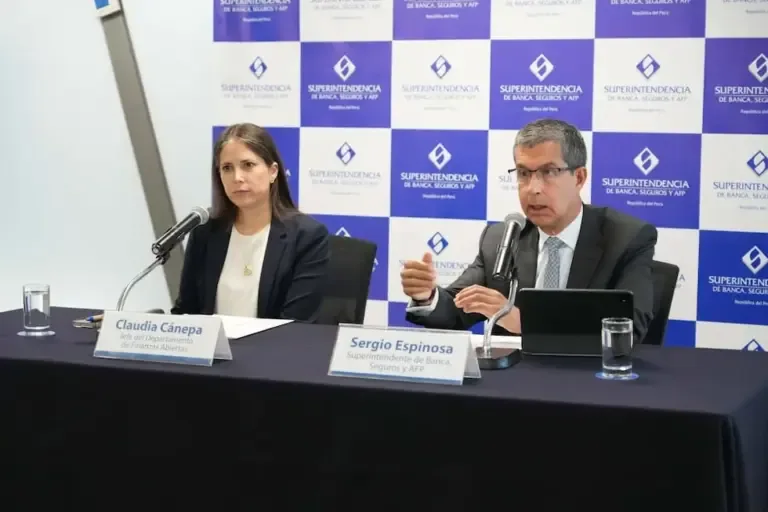
“Open finance is an institutional priority,” said Claudia Cánepa, head of the Open Finance Department of the SBS, at an event held as part of the 95th anniversary of the state entity, which focused on ‘Open Finance’.
She was joined by Sergio Espinosa, head of the SBS, who stated that the creation of the open finance system is “a flagship project.”
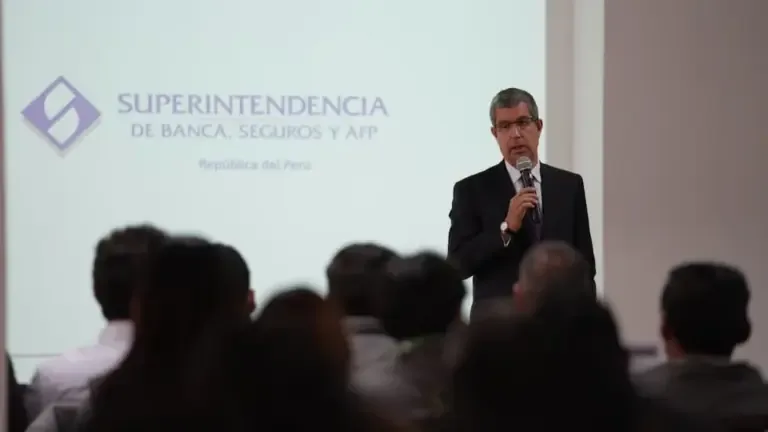
“Open finance is a global phenomenon. The main economies are already applying it. The vision of the Peruvian private sector should be, knowing this will happen, how to prepare and participate better [in the process]. And the best way is to participate from the beginning, as happened with digital wallets and interoperability,” Espinosa told El Comercio.
For the superintendent, the development opportunity for open finance in the country is enormous: he pointed out that despite the huge advances in financial inclusion in recent years, 28% of adults in Peru do not have any savings product (neither a digital wallet nor a personal account). If this is translated to the field of access to credit, the figure is, according to Espinosa, “even more telling”: only 36% of adults have credit in the formal financial system.

During her presentation, Cánepa detailed that the ‘Open Finance’ model seeks to put the user at the center, “so that they can share the financial information they currently hold in some institutions with other entities or other financial service providers, in a standardized, secure, and above all, voluntary and consented manner.”
In that sense, the official added that the purpose of this system is for users to access a greater variety of products and services.
As the model is known, the SBS aims for ‘Open Banking’ to allow local financial industry companies to offer personalized products and services; something that would be possible to achieve if entities can share their users’ information with authorized third parties, always under the data owner’s consent.
Why is it a mistake for the BCR to assume more economic management functions? These are the reasonsCánepa recalled that the implementation of the open finance model began in October 2025, with the creation of the committee and the ‘Open Banking’ department of the superintendence. With the issuance of the roadmap this 2026, the diagnostic phase of the model began, which has served to enable discussion spaces among industry actors.
“The main aspects we have discussed in the working groups refer to considerations that must be taken into account regarding the governance scheme; the system’s operational model; and, of course, concerns related to security. Security standards have also been a topic that has been deeply explored,” said Cánepa.
With nearly five working groups convened by the SBS, the executive emphasized that the diagnostic phase is close to completion to move on to the regulation and technical standards definition phase; a stage that has practically already begun after the prepublication of the ‘Banking as a Service’ (BaaS) regulation.
“The information we have already gathered in the diagnostic phase is quite abundant and rich, and has allowed us to begin outlining what the design of the Peruvian open finance model would be,” the official said.
Findings and progress points
Cánepa emphasized that, after the information identified in this diagnostic stage, the SBS has recognized that companies in the sector already have “an interesting track record” in the development and implementation of application programming interfaces (APIs), a core area for the open finance model to work.
It is through these APIs, in fact, that data exchange between industry actors can be realized; always under users’ consent.
Read more Romeo Santos and Prince Royce prepare to offer two concerts at the National Stadium of Lima
During the working groups, the SBS noticed that the experience among industry actors and use cases vary. “It was identified that developments focused on credit evaluation and helping financial management —whether personal or business— are those that would have the most positive impact and would be most valued by users,” she added.
According to Cánepa, companies identified that to build use cases, various data would be required, such as historical transactional information, income information, balance information, and information that could provide insights into people’s credit behavior.
“Aspects that generate concern among different actors have also been discussed. Security is a constant, so the recommendation is that the model has security standards robust enough to ensure that information transmission is secure,” the official added.
Regarding security, Espinosa highlighted the importance of emphasizing that the user owns their information and, therefore, is the center of everything. “In a country like Peru, where we know that if something characterizes us it is the level of distrust in everything and everyone, we cannot fail. If a misstep occurs in this regard, the possibility of correcting and getting back on track becomes very complicated,” he concluded.
SMV reprimands Petro—Peru for not reporting the situation of its audited financial statements for 2025Espinosa explained to El Comercio that, however, this does not imply complicating processes for the actors who will participate in open finance: the SBS aims for regulation that takes into account the particularities of each business and model; but, if it is about cybersecurity, the agency does foresee a standard that avoids substantial differences in data handling between a fintech and a bank, which will provide certainty to users.
“Both have to guarantee that the information is secure and not vulnerable to third parties. That is non-negotiable. Then, that the authorization process is different for a bank than for an electronic money issuing company, that is what we are working on,” he pointed out.
‘Banking as a Service’
On May 11, the SBS prepublished the regulation on the ‘Banking as a Service’ (BaaS) model, a particular use case in open finance. “We identified that there were companies already developing this model and it seemed important to define regulation to guide those efforts,” Cánepa explained.

‘Banking as a Service’, as Cánepa explained, is the scheme through which a company that is not authorized to offer a certain financial product or service offers it to its target audience, leveraging the infrastructure of a financial entity. Cánepa indicated that in the local market, several companies offering digital wallets use these schemes, since, to be able to use them and facilitate transactions through them, it is often necessary for the person to have an electronic money account or a savings account.
“A third party without a license or authorization cannot offer the possibility for its clients to open savings accounts or electronic money accounts. So, what it does is form an alliance with the authorized financial entity, and the product or service is offered that way,” Cánepa clarified.
This scheme, the official pointed out, ends up being ‘win-win’: the third party, which does not necessarily offer a savings account —like a fintech—, can incorporate a greater variety of financial products in its portfolio, while the financial entity providing that support generates income from renting its technological and operational infrastructure, and from its license or authorization.
“Users can access more and better financial products and there may even be users who become banked through this process, because the fintech’s target market might not be within the financial entity’s target market,” Cánepa interpreted.
The SBS is receiving comments on the prepublication of the BaaS regulation and will do so until June 1, with the aim of processing them in the following weeks and publishing the regulation by July 2026 (as indicated in the roadmap).
- Powerpay seeks to consolidate the ‘Buy Now Pay Later’ model in Peru: “We were born to meet a need that the bank did not cover”
- Commitments we require
- Rolando Arellano Bahamonde: “We must stop understanding the provinces as an extension of the Lima market”