




![Alberto Beingolea: “If they insist on not giving [the powers], they are complicating life for Peru”](https://insightermedia.com/wp-content/uploads/2026/09/bb3fa9e11304ea13fe2cd333955007bc-150x150.webp "Alberto Beingolea: “If they insist on not giving [the powers], they are complicating life for Peru”")




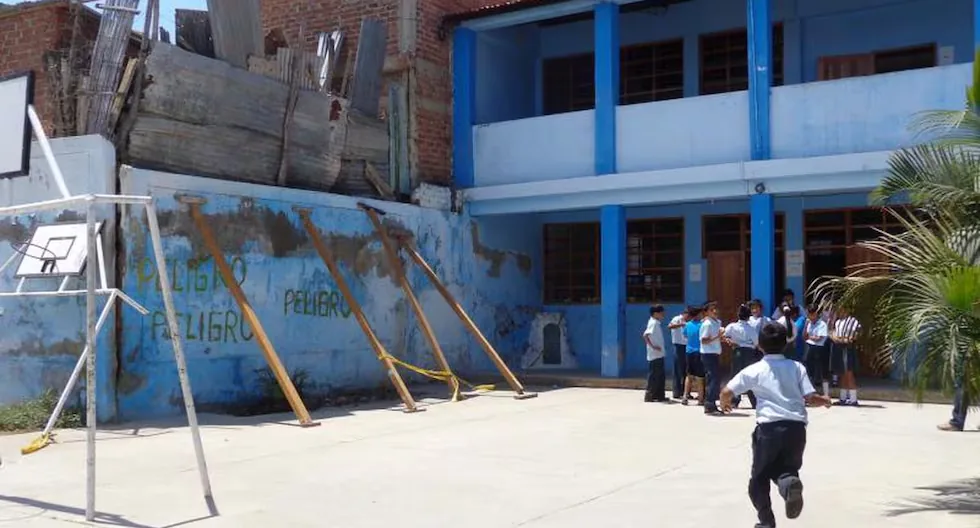
Peru does not start to lose when the disaster arrives. It starts to lose much earlier, when a public work is thought of only to be inaugurated and not to continue functioning when it is most needed. The disaster does not create that vulnerability; it only reveals it.
Read more “More than 90% of the world’s population will be affected in some way by cancer,” warns the WHO
Natural phenomena will continue to occur, with greater frequency and intensity. The magnitude of the damage will depend less on nature than on the quality of the infrastructure we build to face it. The eventual return of El Niño, which would extend until next summer, should be the occasion to seriously raise that question, not the excuse to postpone it again.
The problem is not only in how much we invest; it is also in how we invest. Latin America allocates, on average, less than 2% of its Gross Domestic Product (GDP) to public infrastructure, when it should invest almost double to close its gaps. But even that limited investment is often used to rebuild what has already failed, instead of preventing it from happening again.
Incorporating resilience criteria from the formulation or design stage does not mean unreasonably increasing the cost of projects. Raising design standards and anticipating extreme climate scenarios can represent between 1% and 6% additional over the initial investment, depending on the sector. In return, that investment can generate returns of between four and seven times its cost, by avoiding future reconstructions, reducing interruptions of essential services, and better protecting the population.
Peru has tools to start changing that logic. Public-private partnerships (PPP) and Works for Taxes (OxI) already allow mobilizing private investment to develop public infrastructure. The challenge is to better leverage these mechanisms and incorporate resilience from the very structuring of projects, instead of treating it as an accessory requirement or an optional improvement.
Latin American experience shows that having a legal framework to develop PPPs does not guarantee, by itself, more resilient infrastructure. When projects are designed without properly incorporating the climate, environmental, and operational risks they will face during their useful life, they end up reproducing the same vulnerabilities that later force the State to allocate new resources to repair, rebuild, or restore infrastructure and essential services.
Read more Quini 6 LIVE: Results of TODAY’s draw, July 12 and winning numbers
That is why resilience should not be discussed when the work is already underway. It must be incorporated from the stage or phase in which studies, terms of reference, and risk allocation of the contract are defined.
If the contract does not specify who assumes the additional cost of building to higher standards, and how they are compensated over time, that cost ends up falling on those least able to pay: the user, when the service is interrupted, or the State, when it must rebuild. It is there where it is really decided whether a road, a water system, or energy infrastructure will be able to continue providing services in the face of an extreme event or will fail again when it is most needed.
The same happens with projects executed under OxI. The mechanism facilitates the development of public infrastructure, but it will only generate truly resilient projects if that criterion is part of its planning and design from the start.
Changing that logic does not require an extraordinary legal reform. It requires incorporating resilience as a mandatory criterion in the planning, structuring, and contracting of infrastructure projects. A technical file that does not consider climate risk can hardly be considered complete.
The debate that Peru needs is no longer about how much it costs to build to resist. It is about how much it continues to cost the country not to do so. Natural phenomena cannot always be avoided. The consequences of poor planning can.
Read more Released José Nenil Medina will be the regional candidate for Juntos por el Perú in Cajamarca