





![Alberto Beingolea: “If they insist on not giving [the powers], they are complicating life for Peru”](https://insightermedia.com/wp-content/uploads/2026/09/bb3fa9e11304ea13fe2cd333955007bc-150x150.webp "Alberto Beingolea: “If they insist on not giving [the powers], they are complicating life for Peru”")




What is valued a priori is the recklessness and audacity of undertaking the adaptation of an enormous, classic, and foundational story like Homer’s. A priori, I say, because it was also inevitable to raise an eyebrow at an announcement of such magnitude, especially in times when the number of cinematic re-readings and re-versions gives the deceptive impression that original stories have been completely exhausted. Fortunately, the verdict for “The Odyssey” by Christopher Nolanis positive because it finds a director seasoned in narrative art, skilled in large scales, and perhaps going through the most mature moment of his career.
Read more The heist room at the Louvre reopens to the public, but with nothing to steal
LOOK: Family Silences: our review of the film “Valor sentimental”
Perhaps the main value of the film is that Nolan manages to capture the essence of the epic poem – respecting its fundamental roots, leaving its most distinctive features unaltered – but making his personal mark felt. The author’s stamp is noticeable throughout the entire film: in matters of substance and form, in core aspects and also in more superficial details. But it is the balance between reverence for the original story and the ability to mold it to his own style that turns this “Odyssey” into a new classic.
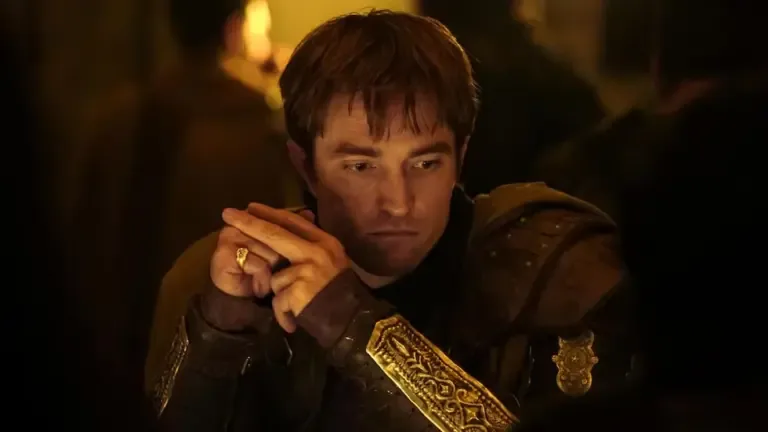
Let’s take the narrative structure as an example, which leverages the British filmmaker’s well-known ability to weave temporal jumps and tricks that are by no means gratuitous. Nolan hides details, doses information, alters perspectives, and carefully chooses his ellipses so that the story is built, deconstructed, and reconstructed in the viewer’s mind. Here, however, an objection may arise: there are certain sections of the film that can feel almost inevitably rushed when condensing such a large story. And one wonders if a series would not have been better suited to his ambitions (despite it being a format he has never explored nor seems interested in exploring).
“Nolan captures the essence of the epic poem, but making his personal mark felt.”
Another aspect to take into account is his obsession with the idea of a man overwhelmed by the idea of destruction. In “Oppenheimer” he already presented the protagonist as an individual irreversibly marked by guilt in the face of the catastrophe caused by his creation. In the new film, Odysseus is defined as a hero conflicted by the war feat that leads to chaos and death. In contrast, it is interesting that a figure like Agamemnon – in this case secondary, enigmatic – appears with his face covered, like a dark and malignant entity (it is not the first time Nolan uses this resource; think of the masked Bane in “The Dark Knight Rises” or the pilot in “Dunkirk”. A detail that seems minor, but is significant).
Much can be said about the film, but I will stop at just one more issue: the questions that arose from certain casting choices – absurd concerns about gender or skin pigmentation. The best answer may be that the characters do not respond to forced opportunism nor do they distort a work that is, moreover, extremely entertaining, full of captivating images, and finds its best form on the big screen, the format in which Nolan presents himself as determined to restore our faith.
Read more 1926: Super production of United Artists
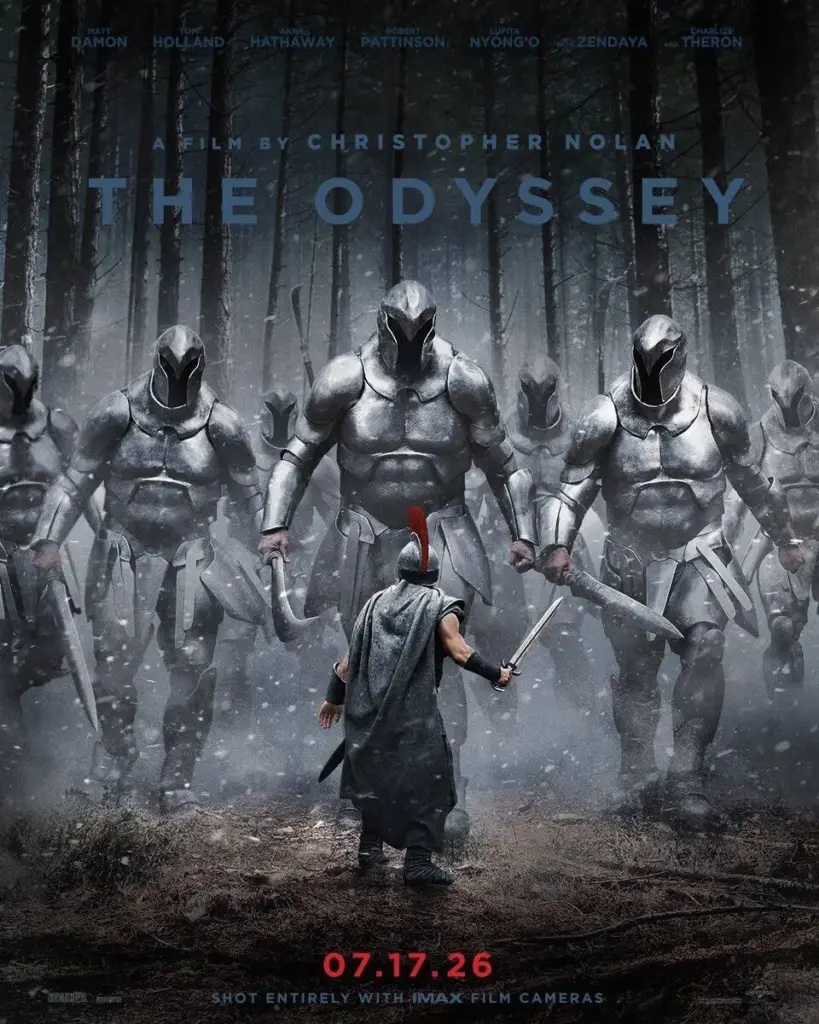
“The Odyssey”
Cast: Matt Damon, Tom Holland, Anne Hathaway, Robert Pattinson, Zendaya.
Director: Christopher Nolan. Country and year: United Kingdom/United States, 2026.
Where to watch: in movie theaters.
Rating: 4 stars.
- Guillermo del Toro’s “Frankenstein” on Netflix: what an adorable creature
- “Project End of the World”: Ryan Gosling, lost in the unfathomable
- “Man on the Run” on Prime Video: our review of Paul McCartney’s ‘resurrection’
- “The Piano Accident”: Juan Carlos Fangacio’s review of Quentin Dupieux’s new film