




![Alberto Beingolea: “If they insist on not giving [the powers], they are complicating life for Peru”](https://insightermedia.com/wp-content/uploads/2026/09/bb3fa9e11304ea13fe2cd333955007bc-150x150.webp "Alberto Beingolea: “If they insist on not giving [the powers], they are complicating life for Peru”")


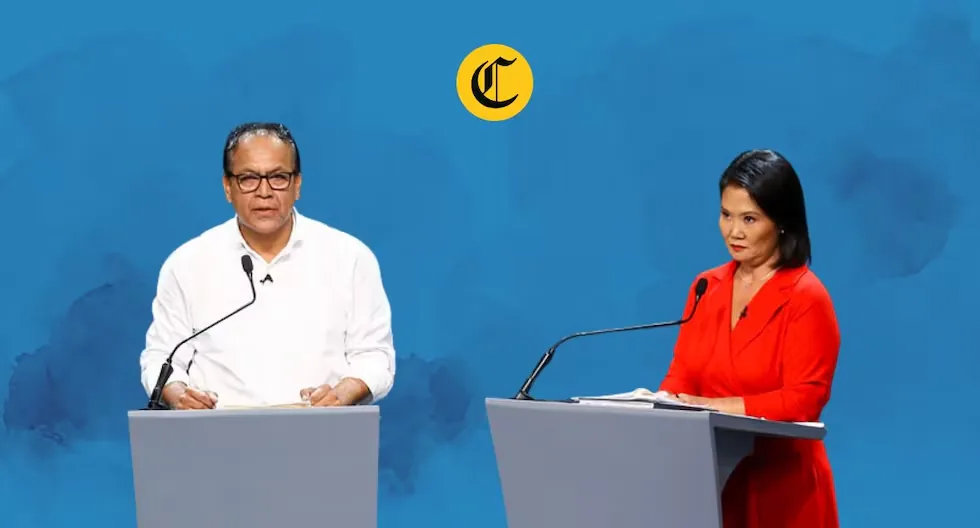
WATCH: Presidential debate JNE 2026: Keiko Fujimori and Roberto Sánchez confront proposals this Sunday ahead of the second round
First of all, history has trained Keiko to win some debates and lose the big election. PPK, with all his technical background and intellectual demeanor, won the first debate but lost the second. A single reply – Keiko had told him, quoting the vigor of Nicomedes Santa Cruz, how you have changed, bald! and PPK, rubbing the blow, waited a week to retort, you haven’t changed at all, bald! – threw him off balance. Because of that traumatic experience in 2016, take note, Keiko will be more prepared to reply than to attack. She may attack less than her followers would like; but she will defend herself with an arsenal she already has at hand. Also note that PPK recovered thanks to training similar to what she had. I have no doubt that Sánchez is also in full training, otherwise it would be over. If you want to win a debate, you have to train.
Read more Nicolás Baena advances to the second round of Roland Garros Junior after a tough comeback
“Keiko will probably develop the following narrative: ‘while I propose order and FP embodies it in its discipline and program coherence; you are disorder, you change ideas, your people do not agree.”
Castillo tried to run away from Keiko but she challenged him to debate in Chota, one of her best moves. A single phrase, ‘I have come all the way here’, contradictory to his challenge, was poorly received by the people of Chota and tarnished his effort. He lost the election by so little that the difference could have been in a second debate that did not happen or in the one that did with the opponent playing at home. The technical debate has been secondary, but we have to address it to project what is coming today.
Juntos Por el Perú (JP) had to show that it has technicians. That was their main goal and they largely achieved it. A technical tie, for them, was a small political victory. In 2021, Pedro Castillo and Perú Libre had done very badly in the technical debate. They put a fledgling Dina Boluarte versus Patricia Juárez on ‘State Reform’, a naive Celeste Rojas versus ‘Nano’ Guerra García on ‘Environment’. In the main topic, ‘Economy and Poverty Reduction’, they launched a confused former congressman Juan Pari versus Luis Carranza, the former minister of the growth boom with Alan García. This time, JP avoided repeating the Perú Libre embarrassment. They launched a Pedro Francke who was technical but above all political against the same Carranza, who maintained an even defense of the economic model, rebutted the interpretation Francke gave of his figures, but left his political attacks unanswered.
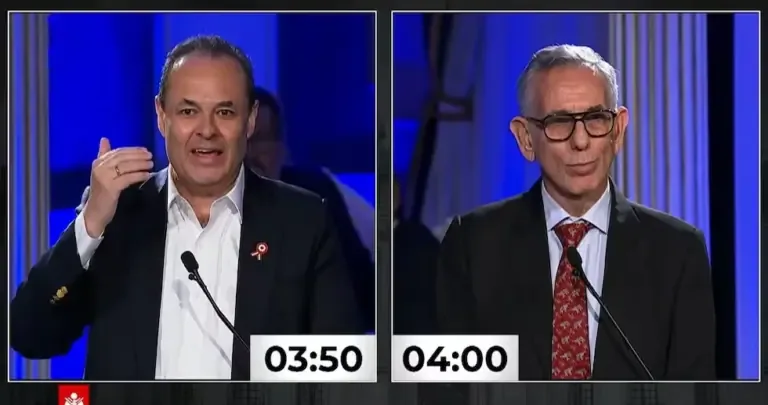
Fuerza Popular (FP) took the big risk of tying the debate in order to show that it is not alone, that it has a range of allies who can assume its technical discourse. That is why we saw Carranza himself repeating his 2021 role, the pepecista Carlos Neuhaus in Infrastructure and the centrist Vladimiro Huaroc in State Reform. The risk I mentioned is that outside technicians do not have the vocation to reply to anti-Fujimorist attacks. It is not in their DNA.
The most tension and one-on-one political duel was seen in the Youth and Sports chapter between Rosángela Barbarán, who is indeed a political figure of FP, and Ernesto Zunini, JP’s revelation and direct spokesperson for Sánchez. The controversy continued even behind the scenes. Except for that encounter, FP did not put on the political chip that would allow it to anticipate a battery of counterattacks against what was going to be JP’s main aggressive narrative: ‘you have been governing since you allied with Dina on December 7, 2022’.
Having said all this, let’s make a preliminary realistic assessment: FP risked a lot and endured too many political jabs without replying, but knowing that the technical debate has little weight and impact. JP won more, showing that it has technicians, although external and discrepant with its other allies (note, JP let the allies set its line, that will have consequences even if they do not win the election). FP showed that there is technocratic temperance beyond the ideologized orange hard core. They saved what will very likely be their main response narrative to the one already exposed by JP. We outlined it in the chronicle “Keiko and the disorder” (5/11/2026). I’ll tell you about it.
You are the disorder
As we saw, Roberto Sánchez already anticipated, through his political allies in the technical debate, a new attack narrative, which adds to the traditional anti-Fujimorism: ‘you are the government, you are ‘pro-crime laws’ and insecurity, you are lack of health, drinking water, education, housing, etc.” The Fujimorism did not develop its main attack narratives in that debate, it will have to do so now anyway, with greater possibility of surprising its opponent.
Read more Earthquake in Chile today, Sunday, May 31: epicenter of the latest earthquake reported by CSN
In the scattered discourse of the orange leaders, something frequently stands out that Sánchez’s campaign notably shows: the contradictions among his allies are of high caliber. Sánchez was managing the discomfort caused by Antauro Humala in the progressive wing of JP’s allies – not very distant from the scandal he causes on the right – thanks to Antauro’s silence. But Pedro Francke put the discrepancy on the table and took it, along with his fellow party member Guerra García, to the debate. Both are part of Nuevo Perú (NP). The progressive wing of the alliance, as we have seen, set JP’s line in the technical debate and Roberto will have to respect it at the expense of his other allies. And Antauro could not stand that Pedro, loose-limbed, called him ‘nefarious’; and he minimized him. It is very likely that Keiko will seek to exploit those cracks, not only exposing them but placing them as a central problem of JP. Let me explain.
“Roberto Sánchez already anticipated a new attack narrative, which adds to the traditional anti-Fujimorism: ‘you are the government, you are ‘pro-crime laws’ and insecurity, you are lack of health”
For Keiko, the ‘fear’ is not in the ‘content’ of her rival, who no longer sounds as anti-system as he did in the first round. It is in the disorder among proposals and allies that Roberto carries. Those inconsistencies that the technicians did not reply to their JP counterparts last Sunday; Keiko will be able to recount them: ‘you are a congressman, you voted for José María Balcázar, you voted for much of what you now criticize, you did not support early elections when we proposed it’, etc. But above all that, she will very likely develop the following narrative: ‘while I propose order and FP embodies it in its discipline and program coherence; you are disorder because you broke away from Castillo and now vindicate him, because you change ideas between the first and second round, because your people do not agree; so you do not guarantee that you can carry out anything you propose’. And she will make a special effort, we can imagine, to show that the disorder started with Castillo and that what has followed with Boluarte, Jerí and Balcázar is a consequence of castillismo that exempts greater responsibilities from her orange bench. Quite a challenge.
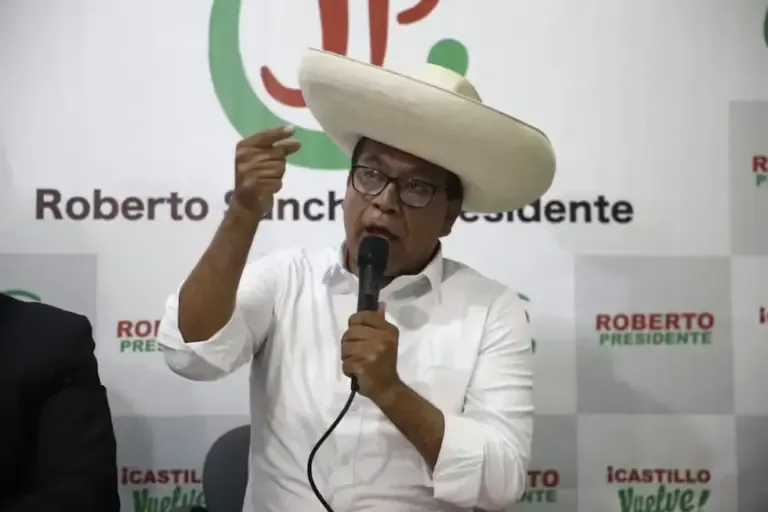
Of course, Sánchez has arguments to reply to those narratives. First, he will have already cleared everything he voted for along with Keiko and those controversial causes from a fiscal point of view (tax exemptions) and scandalous from the point of view of citizen insecurity (some of the laws dubbed ‘pro-crime’), which he did not vote for. Roberto favors informal mining, but Keiko will hardly step on the toes of that electoral pocket. On the contrary, he will also not step on the toes of the social sectors and regions favored by Keiko. Many truths are silenced in debates in the name of the undecided voter. Foreign policy is also usually not – prudence requires – a main attack topic. The purchase of the US F-16s, for example, I doubt either of them will bring it up, unless to demystify the clichés of Roberto being excessively pro-China or Keiko excessively pro-Trump.
‘Miki’ Torres will be, despite himself, present in the debate. Without a doubt, the account he gave of the confluence of actors and institutions against corruption and the authoritarian outburst of castillismo sounded terrible if heard with conspiratorial ears. It contributed to the narrative that Castillo was sabotaged and fell victim to a plot. Keiko will have to respond to the jabs of the case. Anyone outside Fujimorism could say that what Torres described was very similar to the democratic confluence that caused Alberto Fujimori’s fall in 2000. For Keiko, making that comparison would be very complicated although, in fact, it would have a great impact. I don’t know if she has that reach.
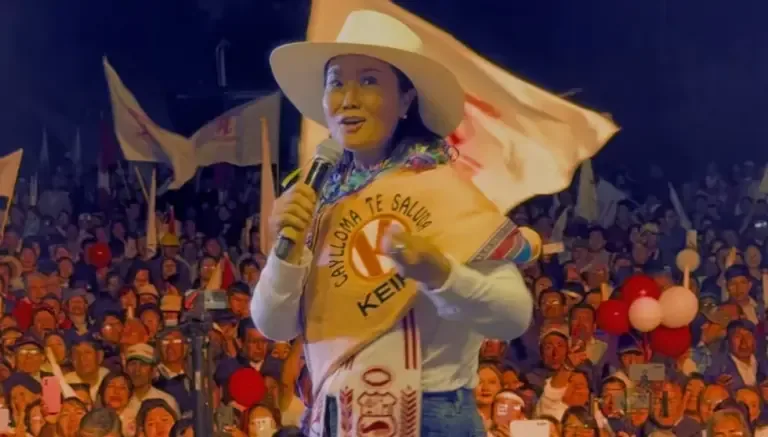
It will hardly be a pure debate between anti-Fujimorism and anti-communism, since those hyper-politicized and ideological categories have changed a lot since 2021. Other polarizing items promise more tension: ‘my order versus your disorder’, who governs today, Congress with an orange presidency or a red president like Balcázar?, ‘your pro-crime laws’, ‘you wear the hat but you are not Castillo’ and a long etcetera in which we hope, so as not to get bored, the brutality of surprises.
Read more La Tinka TODAY, Sunday, May 31: follow the winning numbers of the Million Jackpot here
- The Luz revolt, a chronicle by Fernando Vivas about Pacheco’s resignation from the presidency of the TC
- The many voices of Roberto, a chronicle by Fernando Vivas about the spokespeople of JPP
- Pedro without pardon, a chronicle by Fernando Vivas about the government, Roberto Sánchez and the coupist former president imprisoned in Barbadillo
- Keiko and the disorder, a chronicle by Fernando Vivas about the Fuerza Popular candidate and the anti-vote ahead of the general elections
- Renzo, what did he say he said?, a chronicle by Fernando Vivas about the mayor of Lima and his stance on the presidential elections