







We have reached the end of this long journey. I want to thank the audience of El Comercio who has been connected these hours and Maro, Ariana, Karem and Juan Pablo. Thank you and until the next opportunity!
Read more The European Union accuses TikTok of exposing minors to online risks
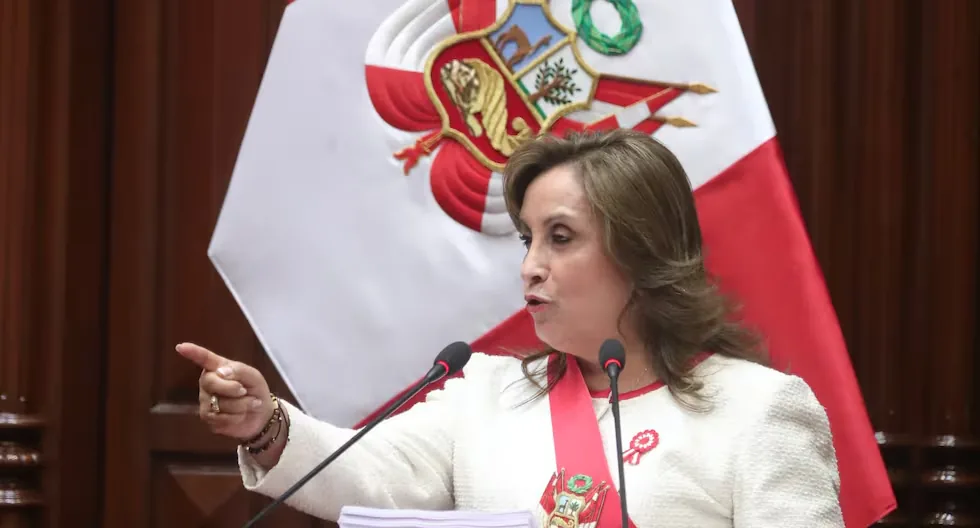
Boluarte is currently leaving the legislative headquarters.
It has been approximately 4 hours and 10 minutes of speech. It has not been as extensive as last year.
José Jerí, president of Congress, looks bored.

The president concludes her message, skipping about 15 pages that had been planned.
Now Boluarte jumps from page 80 to 96. The speech is about to end.
Boluarte now speaks about international relations, especially with countries like the United States, France, and China.
Boluarte has mentioned some actions to prevent sexual violence against women. What she does not point out is that, according to a report published a few days ago in El Comercio, in the first half of the year, 6,677 sexual assaults and 78 femicides have been reported.
Fugitive Vladimir Cerrón has also used his “X” social network to criticize President Dina Boluarte. He accuses her of “disloyalty” and being “incapable of understanding the needs of the people”.
President Boluarte announces a new social program aimed at reinforcing school nutrition. We had failed programs like Qali Warma, which was later renamed Wasi Mikuna.
The president has already exceeded 3 hours of reading and is on page 65. It is estimated that she could finish in two more hours.

We are on page 65 of the speech.
Boluarte speaks of zero tolerance against illegal mining. However, the Government extended the Reinfo deadline twice and will now re-evaluate the departure of 50,000 miners whose registrations had expired.
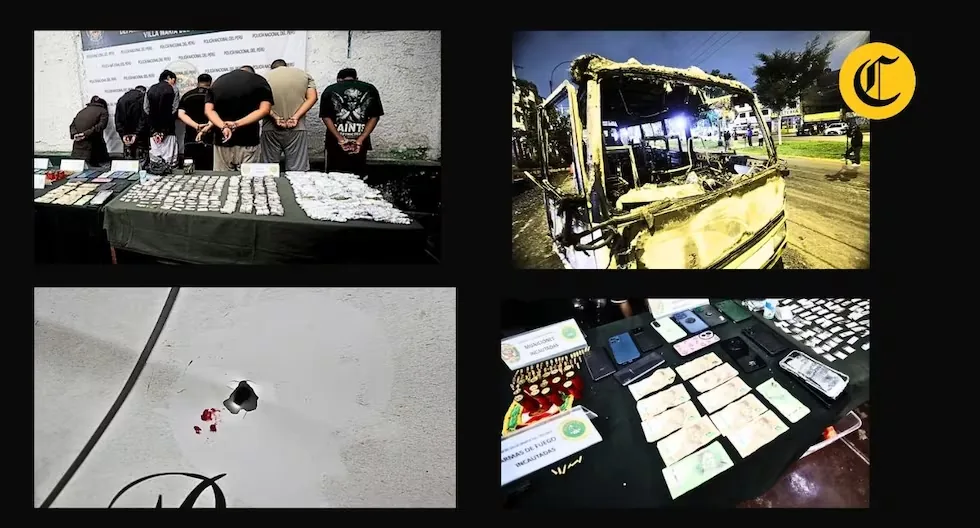
She talks about arrests, but hides that most are for minor offenses. She talks about states of emergency, but in the intervened areas, crimes continue to occur as if nothing happened. That is the most dangerous disconnection: a State that believes controlling crime is posing in uniform, while gangs professionalize and expand. Mafias cannot be fought without knowing them, without mapping them, without anticipating them. And not a word about that is heard in the presidential speech.
There is an enormous gap between what the government says and what happens on the streets. While Dina Boluarte assures that she is confronting crime, mafias advance with total impunity, merchants pay protection money, transporters are murdered in broad daylight, and neighborhoods live in fear. The government talks about patrols, but does not mention concrete intelligence plans.

• In 2016, PPK’s speech was just over an hour long.
• Martín Vizcarra’s speeches lasted between one and one and a half hours.
• Pedro Castillo, for his part, spoke in 2022 for just under two hours.
According to the length of Dina Boluarte’s current message, which has 97 pages, it could once again last around five hours, ending after 4 PM. We shall see.
We are almost three hours into the speech. Last year, Boluarte broke a record with her July 28th speech, which lasted more than five hours, the longest of the 21st century. That day we listened to her from 11:30 AM until 4:30 PM. Previous speeches have been much shorter. In 2012, for example, Alejandro Toledo spoke for less than an hour, the shortest in recent decades.
Despite this, funds to combat crime have been reduced. The IPE showed that the Ministry of Interior’s budget in real terms decreased by more than 18% between 2019 and 2025.
Let’s not forget that, according to a report by the Peruvian Institute of Economy published in El Comercio, since 2019, extortion complaints per 100,000 inhabitants have increased in all regions of the country, multiplying by six nationwide, and the population victim of a criminal act increased from 18.3% to 27.7% between 2021 and 2024.
There is no strategy. There is no leadership. And there is no minimum gesture of self-criticism. Insecurity is not confronted with harsh speeches, but with sustained plans, technology, operational intelligence, and a State that does not fear true criminal powers. None of that was in the message.
In her July 28th message, the void is eloquent: there is not a single serious proposal on police intelligence, nor a line on how the mafias operating from prisons will be dismantled, nor on the money laundering of organized crime.
Furthermore, the Government has used the old reliable as its flagship measure: the state of emergency. This measure has been enacted or extended at least 6 times in districts of Lima and Callao since the Boluarte administration began, 30% of her total term. Results? None.
Dina Boluarte makes no mea culpa for her government’s failure to address citizen insecurity. She has offered showy announcements, states of emergency that are renewed without results, and measures that never materialized: such as restricting two people on a motorcycle or deploying military personnel to the streets. Everything remained in headlines. Meanwhile, crimes have not decreased. On the contrary: contract killings, extortion, and multiple murders have skyrocketed.
The Executive celebrated that 45,000 arrests have been made, but when one reviews the details, 98% correspond to minor offenses or infractions such as driving under the influence. Only 2% are linked to contract killings, homicide, or extortion. Confronting crime is not about inflating figures, it’s about facing reality.
“The government has had to confront crime,” says Dina Boluarte. But she says it at the head of a State that has manipulated figures to give the impression that we are winning the battle against crime.
Not a single mention of the Mape Law or the setback her government has experienced, when a few days ago it announced that a subgroup would be created to evaluate the exclusion of more than 50,000 miners who had inactive registrations in Reinfo.
This space has been criticized for its limited focus. Prosecutor Delia Espinoza expressed concern about the initial exclusion of the Public Ministry, pointing out risks to the legitimacy and transparency of public policies.
Boluarte now mentions the technical table on mining formalization that she installed on July 14.
Announcement from the gas sector: Minem and the concessionaire Cálidda already have an agreement to expand the supply of natural gas in 15 localities across 7 regions of the country. 4 distribution substations, 12 regasification plants, and 3,711 km of distribution networks will be built.
Promising horizon for Petro-Perú, says the president. The state-owned company’s market share is currently 30% and it exports products to Brazil, Ecuador, and Bolivia. There is an agreement with PetroEcuador for the direct purchase of oil.
The president reads page 47 of the speech, which has a total of 97 pages. We are almost halfway through the speech.
In a message that the impeached former president, Pedro Castillo, made public through his “X” account, he asserts that this government [of Dina Boluarte] is “a usurper government” and that it is sustained by “Fujicerronism”.
The balance of the agriculture sector begins on page 37 of the speech.
By 2026, the profile study for the Lima-Barranca railway will be completed. The government-to-government contact for the Lima-Ica railway will be signed, says the president.
While Boluarte delivers her speech in Congress, from prison, Pedro Castillo has shared his own message to the Nation on X.
As is customary, the great absentee from the presidential speech was urban transport. In a country where informality dominates the streets and is about to be legalized in Lima —the seventh city in the world with the worst traffic—, the silence is scandalous. Here, more than 3,500 people die annually in road accidents, and millions spend up to 4 hours daily on a bus. Decent mobility is not a luxury, it is a right. But it remains off the agenda of power.
There has been no mention in the speech of the Lima-Chosica train promoted by the mayor of Lima, Rafael López Aliaga.
The president said that during this last year of government she will work on the entry and exit routes of the recently inaugurated Jorge Chávez Airport.
The president highlights the launch of the Tourist Route related to Pope Robert Francis Prevost (Leo XIV).
Read more Earthquake in Colombia: magnitude, time, and location reported today, Friday, July 24
3 scientific research vessels for Imarpe (Peruvian Sea Institute) will be built. Good news, as this investment has been requested for several years.
The president indicates that the fishing and agriculture sector registered a 12.7% drop in its GDP and a minimum contribution of 0.8%. Today, the sector has grown by 5.4%. Let’s remember that the fishing sector had a terrible 2024, due to a fishing season not being opened. This situation has not been repeated, and therefore the sector shows significant progress.
With a half-empty chamber, the president continues to read her long National Holidays message. The few parliamentarians still in their seats chat among themselves or entertain themselves with their cell phones. Meanwhile, the only ones who cannot move are Mrs. Boluarte’s ministers.
The president begins page 25 of her speech, talking about micro and small enterprises.
134 investment authorizations for exploration and export in the mining sector are being evaluated, which will mean immediate investments estimated at more than US$6 billion, says the president.
Regarding the mining sector, Boluarte indicates that Zafranal and Pampa del Pongo, among other mining projects, are expected to start with an investment exceeding US$4.7 billion.
Furthermore, she indicates that to date, 254 deregulatory measures have been approved, with 257 more in process. Let’s remember that the former head of the MEF, José Salardi, published more than 400 deregulatory measures during his brief period in this ministry.
Boluarte highlights the progress of public investment. This is true, as this indicator has indeed shown an increase. However, it is important to mention that public investment accounts for 20% of total investment. The remaining 80% corresponds to private investment.
Boluarte announces the signing of 4 strategic addenda to contracts already signed in the transport, natural gas, and health sectors for a total of US$2.5 billion.
The president highlights the PPPs and Asset Projects that her Government has promoted. This year, more than 30 projects worth US$8 billion will be awarded, says the president.
That the fiscal rule is not changed is good news and the least we can expect; that government spending is not increased excessively without ensuring better public services for citizens.
The president mentions that her government’s forecast is for the fiscal deficit to be in the range of 2.6%-2.8% by the end of 2025. Let’s remember that the MEF announced a few days ago that it would no longer seek to change the fiscal rule this year.
Guests and attendees at Congress to hear the National Holidays message are starting to show boredom or tiredness. An hour into the speech, even presidential spokesperson Feedy Hinojosa is starting to yawn.
Low inflation is always highlighted, which, strictly speaking, is the Central Bank’s responsibility to control. Furthermore, the growth range provided by the president (3.1% to 3.5%) was already known; specialists indicate that we could grow even more.
The president reviews her government’s macroeconomic indicators. By the end of this year, she says, growth is estimated to be in the range of 3.1% and 3.5%. “This will position us as one of the economies that will lead growth in Latin America,” says the president. She also highlights the strength of the sol as a currency and the low inflation recorded in our country.
At this moment, we are on page 15 of 97.
More than 500 million soles have been allocated for communal kitchens and soup kitchens, 145 million more than in 2023.
The president mentions the inauguration of Chancay and the new Jorge Chávez airport. She says that her government found 57 paralyzed works and today, she indicates, all of them are unblocked.
The president highlights as an achievement of her administration the financing of more than 550,000 households with the Bonogás program. Furthermore, she indicates that more than 3,800 micro and small enterprises throughout the country have benefited, generating more than 84,000 jobs.
Those who criticize her government are “pessimists, nihilists, skeptics, and bitter people”.
A speech with fictional overtones delivered by President Dina Boluarte, turning her back on reality. And now she uses the message to the Nation to victimize herself over the various investigations opened against her and her brother Nicanor Boluarte.
The first minutes of Boluarte’s speech have a messianic connotation. She is the savior who found a country in crisis and rescued democracy. And a confrontational tone with her critics. It’s difficult for there to be any kind of mea culpa.
It is contradictory for the president to speak of economic growth figures and poverty reduction. The president, who has raised her own salary, may see prosperity, but she asks the population to cook breakfast, lunch, dinner, and dessert with 10 soles.
Dina Boluarte must speak not only to Lima, but also to the Andean south, the post-El Niño north, and the forgotten Amazonian peoples. Citizens do not expect a technical speech, but one that translates social urgencies into measurable actions. Beyond the narrative, the country demands a government that stops improvising and begins to execute with responsibility. This message to the Nation is one of Dina Boluarte’s last opportunities to reconcile with a country she has failed to listen to.
Ruth Luque protests upon hearing President Dina Boluarte speak about the protests of late 2022 and early 2023. It seems the congresswoman left the chamber.
For the third consecutive year, President Dina Boluarte reiterates this speech, repeating it and portraying herself as a “savior” of Pedro Castillo’s coup government. But she forgets that she is only the continuity of that government and that she came to power with Castillo.
Last year, the message to the Nation lasted five hours with 79 pages. From what we see on the podium today, there are more than 100 pages. Let’s hope there is a substantial version of the message; Peruvians deserve announcements that can be translated into reality, not promises that even the current president will not be able to implement in what remains of her term.
According to the New Narratives team, if the speech is read at the same pace as last year, it would last approximately 2 and a half hours.
The sentiment on the streets and social media is one: the country does not need promises, but clear signs of governability and empathy with real problems. Dina Boluarte’s message must cease to be a personal defense and become a national commitment. It is not enough to mention health and education: clarity in goals, budgets, and priorities is expected. In transport and housing, inaction is as notorious as the absence of long-term projects. In a country where social conflicts do not cease, silence or commonplaces in the speech will only deepen the Government’s disconnection from the territory. The message must acknowledge that the State is overwhelmed in many areas of the country and explain how it plans to recover it.
This year’s speech has 97 pages, more than last year. Last year there were 79.
Hello everyone! From ECData, we will be live fact-checking the speech. I’ll be sharing any other important information here.
Good morning everyone. We now see President Dina Boluarte, on her way to the Congress of the Republic to deliver her last message to the Nation for National Holidays. By the way, she does so aboard one of these luxury vehicles that make up the fleet of official vehicles transporting the president.
Joining us today are María Rosa Villalobos (Economy and Day 1 editor), Karem Barboza (journalist specializing in judicial issues), Ariana Lira (head of the Data Journalism Unit), and Juan Pablo León (National editor). In the coming minutes, we will share our comments and analysis of the presidential message.
Many expected this year’s speech, unlike last year’s, to be brief. But from the images we saw a while ago, it seems that will not be the case.
Happy National Holidays! In this live coverage, El Comercio journalists will comment in real-time on all the details of what will be President Dina Boluarte’s last July 28th message to the Nation before the Congress of the Republic.
Read more Pep Guardiola rejects coaching Italy: why did he say no to the ‘Azzurri’ national team?