




![Alberto Beingolea: “If they insist on not giving [the powers], they are complicating life for Peru”](https://insightermedia.com/wp-content/uploads/2026/09/bb3fa9e11304ea13fe2cd333955007bc-150x150.webp "Alberto Beingolea: “If they insist on not giving [the powers], they are complicating life for Peru”")



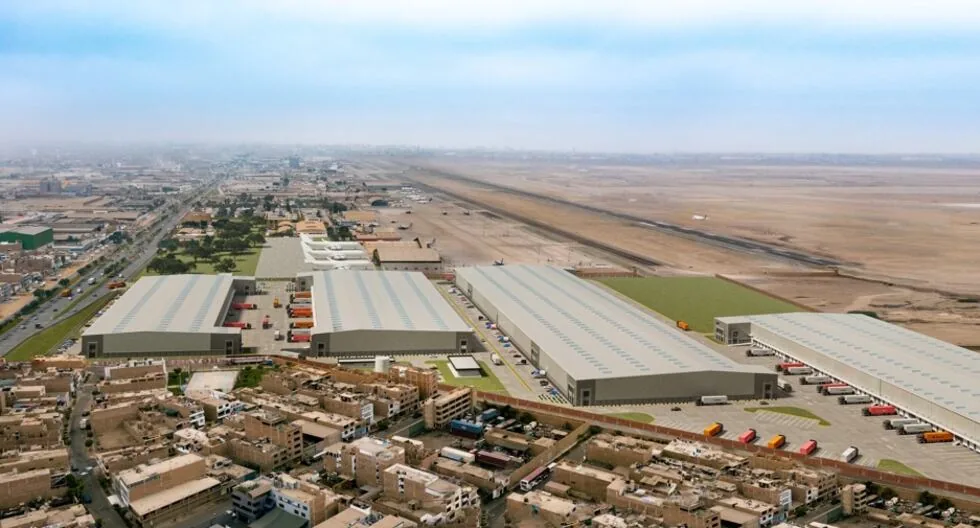
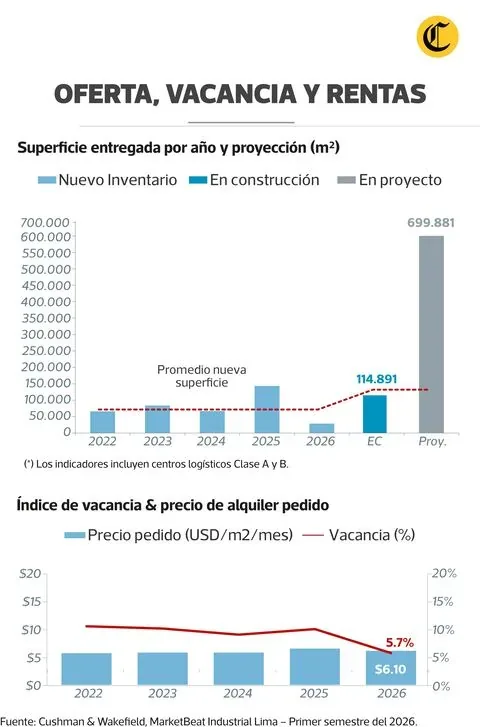
The logistics center market in Lima is preparing to incorporate a wide portfolio of new projects in a context of increased demand for modern warehouses and high-standard distribution centers. During the first half of 2026, net absorption reaches 110,235 m2, an increase of 61% compared to the 68,486 m2 recorded in the second half of last year, while vacancy drops to 5.7%.
Read more National Lottery LIVE: check results and today’s draw, Thursday, August 6
According to Cushman & Wakefield’s MarketBeat Industrial, inventory amounts to 1,972,298 m2 after the addition of 28,700 m2 of new space during the semester. Added to this are 114,891 m2 currently under construction and another 699,881 m2 in the project stage, which would be delivered from the second half of 2027 or still do not have a defined date.
The entry of this portfolio tests the market’s absorption capacity. However, consultants and operators consider that demand maintains fundamentals to support its growth, provided that new developments are incorporated gradually, with suitable locations and, preferably, with pre-committed spaces.
Demand gains momentum
Absorption growth accelerates towards the end of the semester. While in the first three months of the year it reaches 36,810 m2, in the second quarter it reaches 73,425 m2, practically double, according to the report.
The South Zone leads demand with an absorption of 68,053 m2, more than four times the 16,700 m2 recorded in the previous semester. It is followed by Callao, with 28,830 m2, and the East Zone, with 12,000 m2. The latter occupies the entire surface it had available.
Denise Vargas, Market Research Coordinator at Cushman & Wakefield, explains that demand mainly comes from logistics operators and companies linked to mass consumption, food, cold chain, packaging, auto parts, and retail. The new occupations correspond both to companies expanding their operations and those seeking to relocate to improve distribution efficiency.
The increased activity is also reflected in the performance of developers. Guillermo Arce, commercial manager of Megacentro, points out that the company delivers 45,000 m2 at the beginning of the year corresponding to the last stage of Megacentro Industrial del Sur, in Lurín. About 25% of that space was already pre-leased and the rest is rented during the following months.
The placement is mainly driven by mass consumption companies, logistics operators, and companies serving the industrial and mining sectors. Megacentro currently has about 250,000 m2 rentable in Lima, Chiclayo, and Arequipa, of which about 200,000 m2 are concentrated in the capital.
The company plans to continue expanding its portfolio at a rate close to 50,000 m2 annually, similar to that achieved during the last two years, although it has not yet announced the new projects that will sustain that expansion.
Fabrizio Paredes, Commercial Head of Simetrica Almacenes, states that demand maintains a favorable evolution and specifies that currently more than 80% of its project is already placed. The company expects to reach 100% occupancy by September this year, with the rented square meters being the main indicator of the business’s dynamism.
Higher standard spaces
Demand is not only driven by the need for more space. Companies seek warehouses with greater height, maneuvering yards, wide access, fire protection systems, security, and locations that facilitate distribution.
Vargas indicates there is a preference for Class A properties, especially among companies requiring larger scale and efficiency operations. However, she specifies that Class B warehouses continue to be considered by companies prioritizing functional solutions and more competitive costs.
Arce adds that logistics operators and mass consumption companies especially value the storage volume offered by a warehouse, so height becomes as relevant as the available area. In contrast, companies linked to industrial or mining activities also require larger doors, access for heavy vehicles, and sufficient electrical power to carry out assembly, manufacturing, or maintenance work.
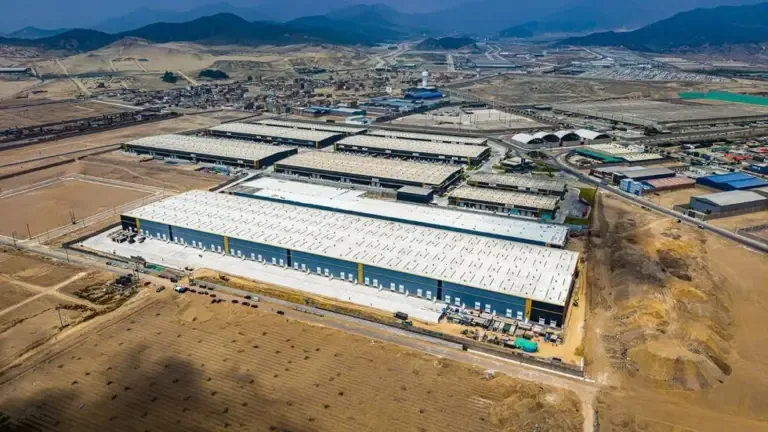
He adds that part of this demand comes from companies leaving old warehouses or facilities located in areas of Lima that are increasingly becoming commercial. Restrictions on truck entry and exit, the inability to operate 24 hours, and the lack of modern security systems accelerate migration to specialized logistics parks.
Added to this is a change in companies’ investment strategy. Arce explains that companies, both international and Peruvian, allocate less capital to acquiring their own land and prefer to rent infrastructure. This way, they can concentrate their investment resources on their core activity.
Luis Lituma, general manager of DP World Logistics, observes that client needs also evolve towards services integrating storage, national and international transport, and distribution, along with tools offering real-time information on inventories and cargo location.
“Today, having storage capacity is no longer enough; companies seek facilities that allow them to optimize inventory management, speed up distribution, and improve control of their operations,” he says.
Can the new supply be absorbed?
Class A logistics centers concentrate 1,743,310 m2 of the total inventory and register a vacancy of 5.3%. The South Zone gathers the largest surface, with 1,482,249 m2, but maintains a limited vacancy of 5.4%. In Callao, this indicator reaches 10.8%, while in the East Zone there is no available surface.
Read more “The fight with Lula responds to a political strategy of Milei, not just ideological differences”
The supply under construction is mainly concentrated in Callao, with 86,191 m2, followed by the South Zone, with 28,700 m2. In the case of projects not yet started, southern Lima gathers 453,750 m2 and Callao another 186,831 m2. Together, both zones represent about 91% of the planned portfolio.
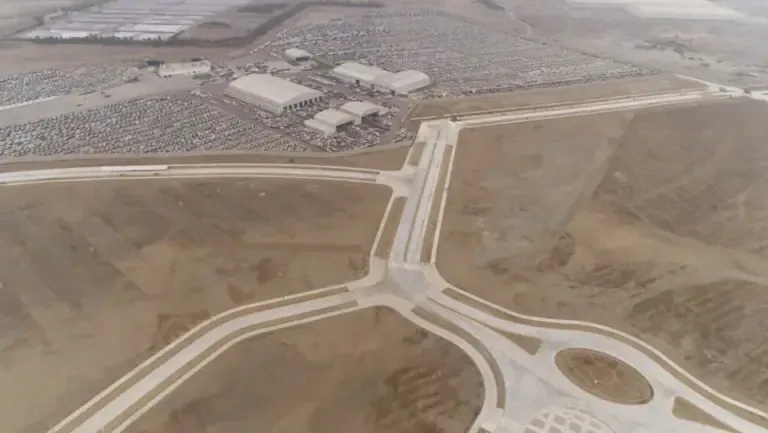
Vargas considers that the market has the capacity to receive the new surface, but warns that not all projects will be placed at the same pace. Well-located Class A assets, with flexible infrastructure and developed under ‘built-to-suit’ schemes (built according to the needs of an occupant) will have better conditions to find demand.
“The new supply will be positive if it enters gradually and with committed occupancy. The market has shown absorption capacity, but not all the ‘pipeline’ will be absorbed at the same pace,” she states.
Paredes agrees that the market has demand to absorb a good part of the new supply. He points out that during 2026 Simetrica has received requests for more than 400 thousand m2, reflecting the market’s sustained interest in logistics infrastructure, he notes. However, he considers that absorption will mainly favor well-located, flexible projects with Class A infrastructure.
The greatest risk appears if several speculative projects enter simultaneously in areas with less connectivity or without previously identified users. In that scenario, placement time could be extended, temporarily increase vacancy, and generate greater competition through prices or commercial conditions.
Market behavior in the coming months will also depend on the continuity of demand from sectors such as agro-export, retail, mass consumption, mining, and manufacturing industry. Lituma maintains that these activities require increasingly agile and specialized operations, with the capacity to move products within more demanding deadlines.
Rents reflect the composition of the supply
The average asking price for Class A logistics centers is US$6.1 per m2 per month at the close of the first half, below the US$6.5 recorded at the end of 2025. However, Cushman & Wakefield points out that this reduction is not due to a generalized drop in rents, but to a change in the composition of the spaces that remain available.
Absorption is concentrated during the semester in higher-priced areas. Callao reduces its available Class A surface from 28,870 m2 to 12,385 m2 and the East Zone occupies its entire offer. As a result, approximately 87% of the vacancy in this category is concentrated in the South Zone, where the asking price is more competitive.
Class A rents range between US$5.8 per m2 per month in the South Zone and US$7.5 in Callao. In Class B, they fluctuate between US$5.9 in southern Lima and US$8 in the East Zone.
Going forward, Vargas foresees price stability, although with specific adjustments in locations with less availability or better connectivity, mainly in Callao and certain Class A assets.
Land and connectivity limit growth
The availability of large and well-connected land appears as one of the main restrictions for the development of new logistics parks. Arce explains that this type of project achieves greater efficiency when developed on extensions greater than 10 or 15 hectares, but it is increasingly difficult to find plots of that scale with adequate access in Lima.
Supply growth also needs to be accompanied by better roads, port access, and connections between the main storage, distribution, and transport centers. Lituma maintains that the expansion of ports and airports must extend to the rest of the logistics ecosystem, including warehouses, roads, and truck fleets.
According to studies conducted by DP World Logistics, the volume of cargo moved by Callao could double over the next ten years, which would increase infrastructure and service needs to move that cargo from terminals to distribution centers.
The port of Chancay can also drive new corridors, although specialists consider that its effect on the logistics real estate market will be gradual. For now, companies jointly evaluate Callao, South Lima, East Lima, and the corridor towards Chancay, instead of immediately moving their operations north.
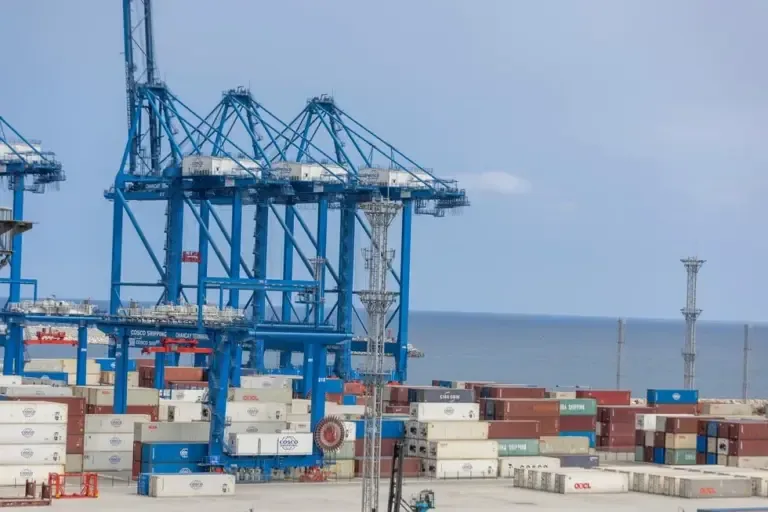
“The Chancay effect must still be read with caution. More than an immediate migration of companies northward, what is observed is a greater evaluation of integrated logistics networks,” explains Vargas.
The interest of importers, exporters, logistics operators, and consumer companies could increase as terminal cargo volumes consolidate, road connections improve, and there is greater availability of enabled land.
Thus, the market begins a new expansion cycle with growing demand and still controlled vacancy. The capacity to absorb the nearly 700,000 m2 in projects will depend, however, on the new supply not entering simultaneously and on its location, infrastructure, and connectivity meeting the concrete needs of companies.
Read more Earthquake in Mexico today: where was the epicenter of the latest quake on August 5?