




![Alberto Beingolea: “If they insist on not giving [the powers], they are complicating life for Peru”](https://insightermedia.com/wp-content/uploads/2026/09/bb3fa9e11304ea13fe2cd333955007bc-150x150.webp "Alberto Beingolea: “If they insist on not giving [the powers], they are complicating life for Peru”")



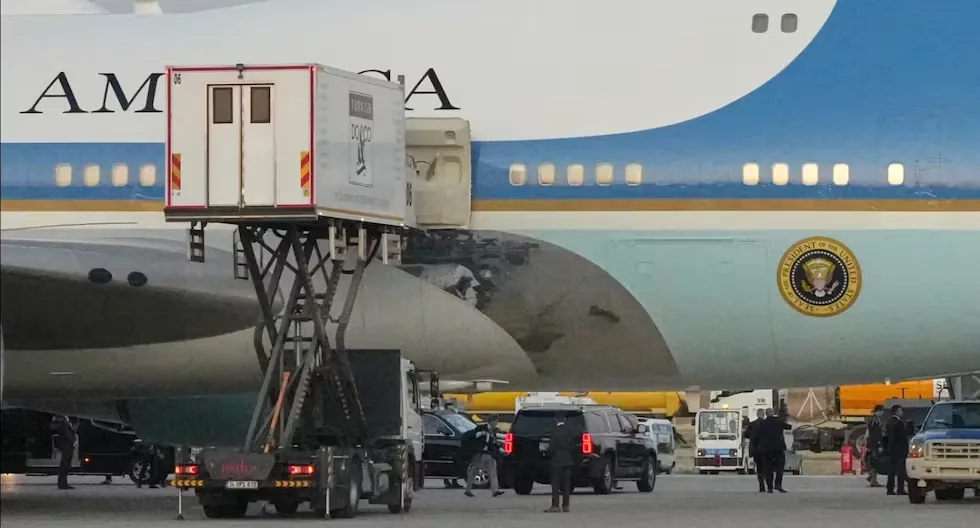
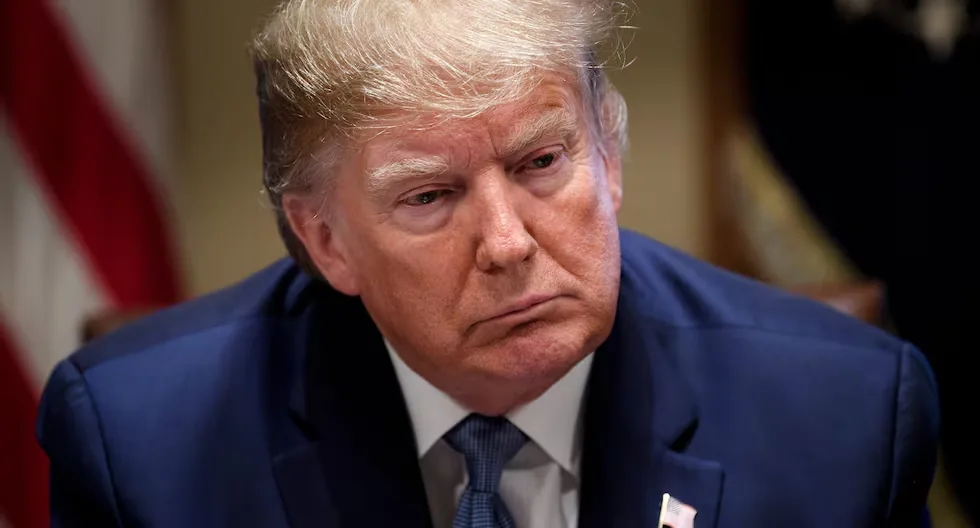
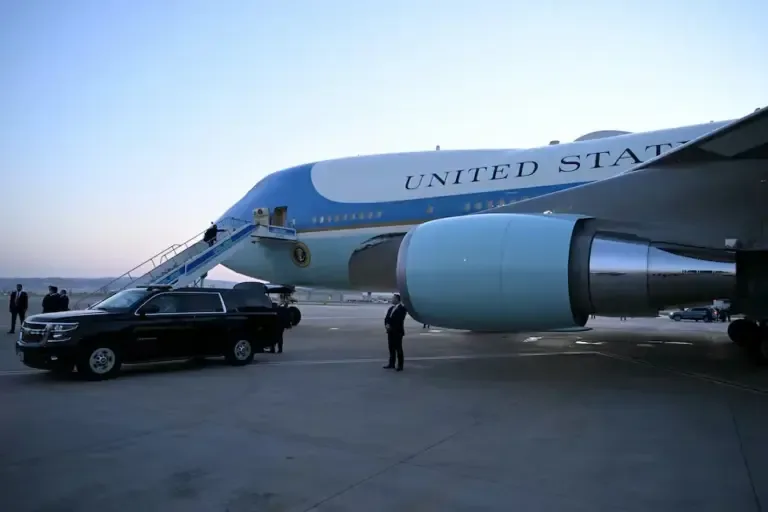
Last July 8, upon leaving Ankara after the NATO summit, Trump made a secret exit. According to The Washington Post, the president initially boarded the old Air Force One light blue in front of the cameras, but once out of sight of journalists and staff, he was discreetly taken off the aircraft and transferred to a C-32A military plane through a catering container.
SEE: Netanyahu rejects Trump’s plan for Gaza: these are the reasons and what may happen now
That catering container was raised to a door located on the opposite side of the place where Trump had entered the Air Force One.
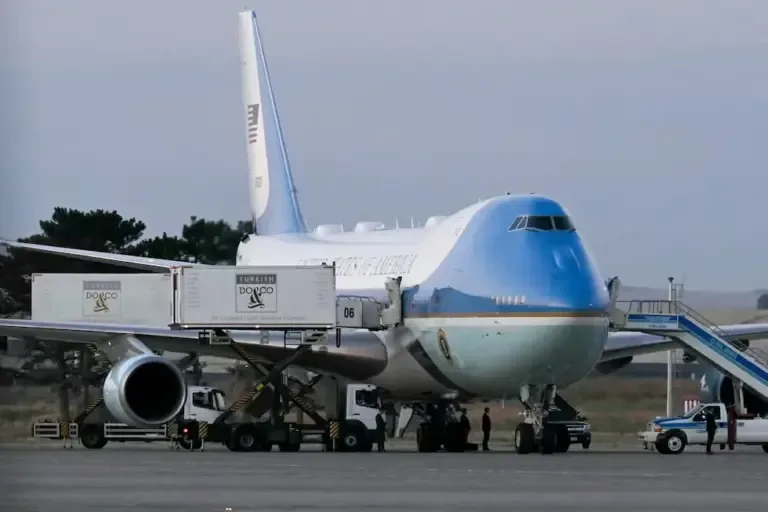
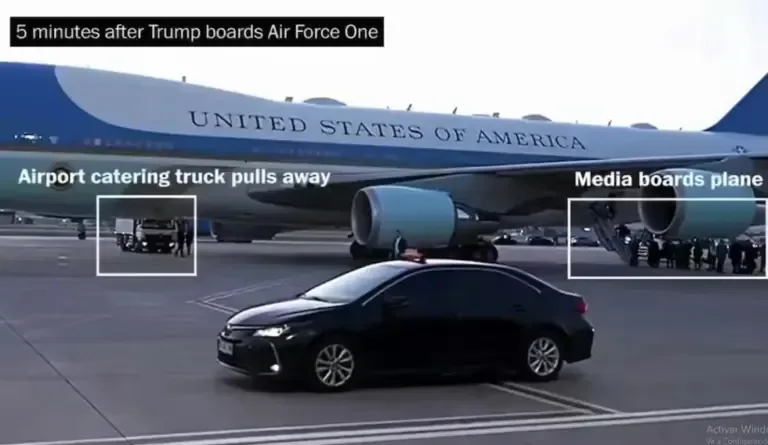
Neither the journalists nor some members of the White House staff traveling on the Air Force One, which became a decoy, knew that the president had been switched to another plane to fly to the United Kingdom.
They were asked to lower their window blinds, apparently so that no one would notice the operation to remove the president from the blue Air Force One.
A photographer said he opened his window and was immediately told to close it, and was explained that it was a request from the Secret Service.
Trump confirmed the operation on Tuesday and explained that the Secret Service and the Army told him he had to travel on another aircraft: “I just have to do what they tell me.”
“They wanted me to travel on another flight, on another plane,” Trump told reporters. “I guess there was a threat out there. The truth is I didn’t ask much about it. I get a lot of threats,” he said.
A portable missile
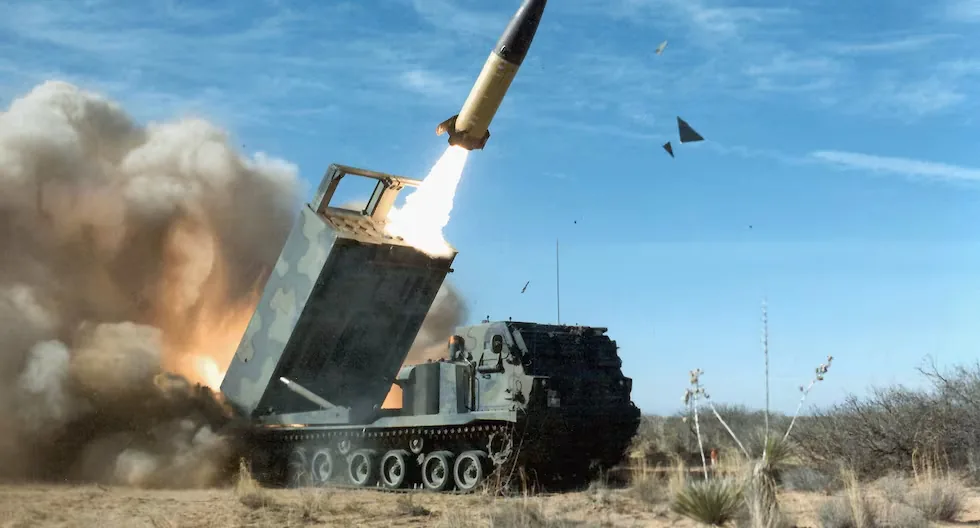
According to the Wall Street Journal, Israeli intelligence alerted the United States about an Iranian threat involving a possible attack on the presidential plane using missiles launched from the ground. The report describes the threat as related to portable missiles.
The outlet attributes the version to a U.S. official, who also confirmed that senior advisers to Trump remained on the presidential plane despite the threat.
Meanwhile, an anonymous source told CNN that the information about the portable missile was specific enough for the agents protecting the president to consider Trump’s life at “enormous risk” if he departed on the old Air Force One or the new presidential plane donated by Qatar.
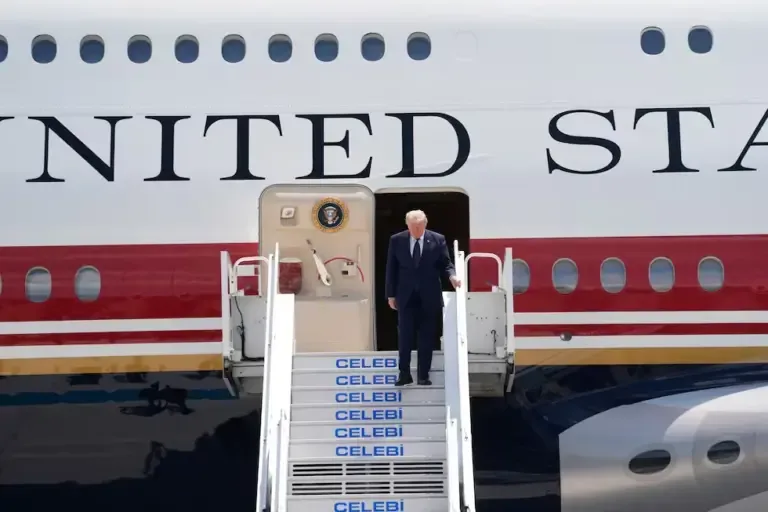
Trump traveled to the NATO summit in Ankara aboard the plane donated by Qatar which is white, red, and dark blue. But to leave Turkey, he first boarded the old light blue Air Force One, from which he discreetly exited to finally board a C-32A, a military version of the Boeing 757.
Exclusive: An Iranian assassination threat against President Trump prompted an extraordinary operation in July in which he flew secretly from Turkey on an alternate military aircraft while the White House said he was aboard Air Force One. https://t.co/pDhy28YEmK pic.twitter.com/AcOOidQlfm
— The Washington Post (@washingtonpost) August 11, 2026
When he arrived at his destination, the Mildenhall air base in the United Kingdom, photographers captured Trump getting off the presidential plane, suggesting he reboarded the old Air Force One without being seen.
Afterwards, the president continued the trip to Washington on the new Qatar Air Force One.
The secret maneuver took place a day after the United States resumed attacks against Iran following the failure of negotiations to end the war.
Regarding threats to Trump, it should be noted that after the assassination of Ayatollah Ali Khamenei on February 28, at the start of the war in Iran initiated by the United States and Israel, calls for revenge were made in the Islamic Republic.
For example, during the ayatollah’s funeral, public calls for Trump’s death were heard, while the new supreme leader, Mojtaba Khamenei, promised to avenge his father.
Read more Quini 6: follow the estimated jackpot results for Wednesday, August 12, 2026
Rubio on the decoy plane and Hegseth accompanied Trump
According to CBS, Secretary of State Marco Rubio and Treasury Secretary Scott Bessent traveled on the decoy plane; while Defense Secretary Pete Hegseth flew with Trump on the secret flight.
Rubio and Bessent knew about the secret plan for Trump to switch planes, according to CBS sources.
White House advisers were also on the decoy flight, including Stephen Miller, Will Scharf, Steven Cheung, Mike Needham, Ross Worthington, and Monica Crowley.
On the military plane, besides Hegseth, White House advisers Natalie Harp, Walt Nauta, and Dan Scavino also accompanied Trump.
Did Israel exaggerate the threat?
For international analyst Francisco Belaunde Matossian, one thing is beyond dispute: the operation to secretly remove Trump from Air Force One and transfer him to another aircraft really happened, although it is still unclear to what extent the threat that motivated it was concrete and credible.
“Whether the threat was credible or not is another matter,” he told El Comercio.
Belaunde believes there is extensive cooperation between Israeli and U.S. intelligence services, especially when U.S. security and that of its president are at stake. However, he raises a question about the information that triggered the operation.
He says Israel, being interested in maintaining U.S. pressure on Iran, may have incentives to transmit information that provokes a Washington reaction against Tehran. But he asks a fundamental question: “To what extent was the Israeli information really true or somewhat exaggerated?” We don’t know.”
“The objective is that theinformation was transmitted and provoked a reaction from U.S. authorities; what remains to be established is how reliable that information was and whether the threat was presented in an exaggerated way or not,” he insists.
Regarding the possibility that Iran considered attacking the presidential plane with a portable missile, Belaunde indicates that the scenario is not implausible, as it would be revenge for the annihilation of the Iranian leadership at the start of the war. “Since the U.S. and Israel have killed the Iranian leadership, it is completely logical to think they also intend to do the same,” he states.
He explains that this is compounded by the history of confrontation between Trump and Iran, particularly the decision he made during his first term to order the assassination of Iranian commander Qasem Soleimani. “They have it in for Trump,” he points out.
Belaunde states that U.S. presidents always face threats, but he believes the level of risk for Trump is now higher, and that after this episode there will be measures to enhance his security both during international trips and within the United States, where he has also been the target of assassination attempts. “Every trip Trump makes will be risky,” he warns.
The risk for those who flew on the decoy plane
Journalists, officials, and others who flew on the decoy plane, the old Air Force One, unaware that there was a threat of attack, were exposed if the threat had materialized.
On this point, Belaunde indicates that those who accompany the U.S. president know the risks involved in traveling with him.
He even mentions the case of a former official who accompanied George W. Bush and told the New York Times that he would have made the same decision because the priority was to protect the president.
However, Belaunde admits that the situation opens a debate about how far the obligation to protect the president goes and what the authorities’ responsibility is towards those who accompany him.