








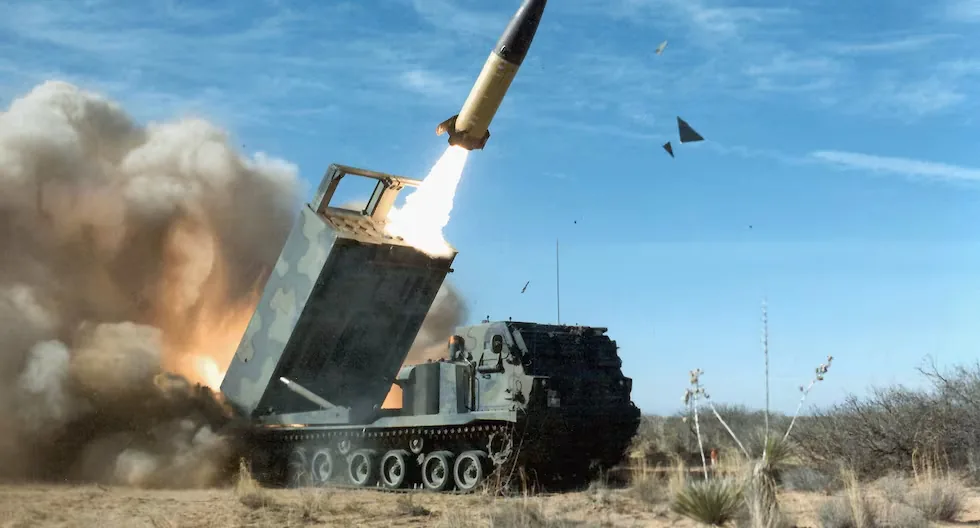
The Pentagon’s Inspector General published his first report on the conflict with Iran, stating that the war has caused a shortage of strategic munitions and “bottlenecks” in the replenishment chains of advanced weaponry, reported NBC News.
In June, the United States press had warned that missile use was being rationed in Iran, particularly interceptors like the Patriot, but President Donald Trump himself categorically denied it.
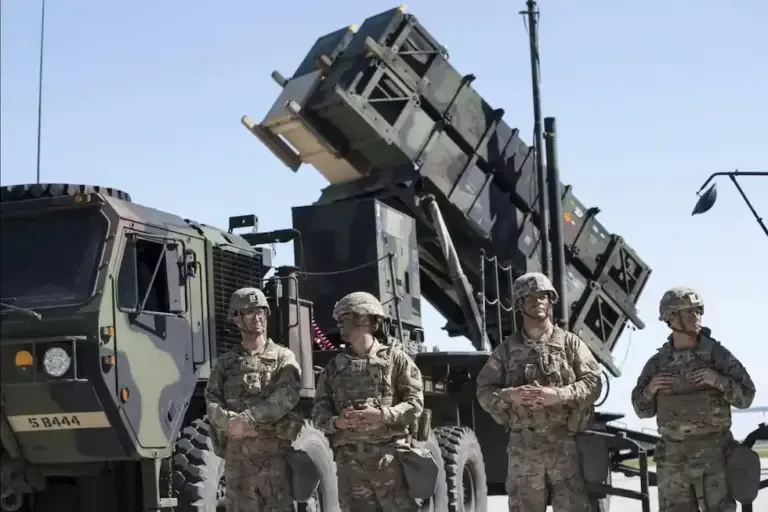
The president denied that the U.S. was running out of munitions, called the reports worrying, and stated that his country had enormous amounts of weaponry. He even described the supply as “practically unlimited”.
But the Pentagon Inspector General’s report concludes that the United States consumed large quantities of munitions during the campaign against Iran, which began on February 28. And that the U.S. defense industry cannot replenish some of those weapons at the same rate they were used, creating a future availability problem.
The Pentagon estimated that by June 29, Operation Epic Fury was costing about US$33.4 billion. Of that amount, approximately US$22.3 billion corresponded to munitions used. That is, nearly two-thirds of the operation’s cost was tied to consumed weaponry.
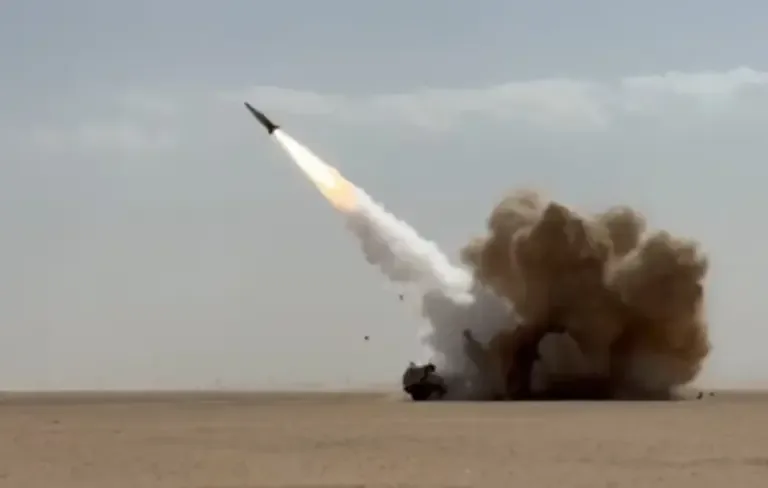
In August, Reuters reported that the military had used “practically all” its global inventories of certain long-range missiles, including ATACMS and PrSM, while also consuming a significant part of the Tomahawk inventory.
Additionally, that same month the Pentagon had pressured military companies to accelerate weapon production due to the deterioration of its reserves.
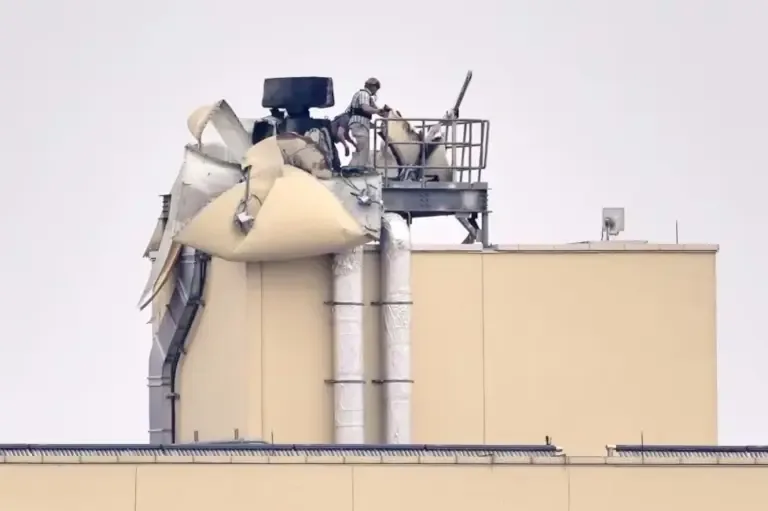
The Pentagon oversight agency’s report, covering April 1 to June 30, also acknowledged that Iranian attacks damaged and destroyed hundreds of buildings and other structures at U.S. military bases in Kuwait, Bahrain, Qatar, United Arab Emirates, Saudi Arabia, Iraq, Oman, and Jordan.
The report notes that the U.S. naval base in Bahrain, a logistical hub for the Navy in the Middle East region, was targeted by Iranian drone and ballistic missile attacks. As a result, the U.S. Central Command had to relocate those functions to much more distant locations, such as Diego Garcia Island in the Indian Ocean.
According to the report, after that decision, logistical cycles of between 14 and 18 days were required to support military operations in the Middle East.
According to the report, Iran also destroyed or damaged dozens of U.S. aircraft and drones, including 30 MQ-9 Reaper drones, each costing around 30 million dollars.
Also, seven KC-135 tanker aircraft were damaged or destroyed, five of them hit by Iranian munitions while on the ground in Saudi Arabia.
A logistical vulnerability, not a loss of superiority
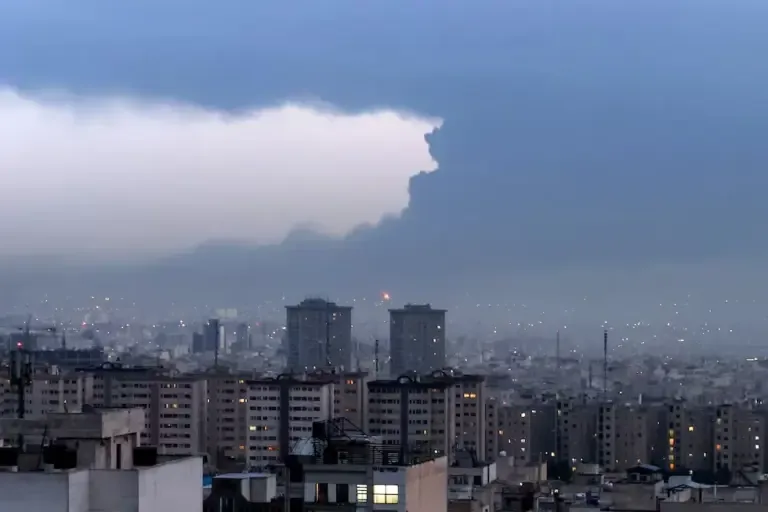
The Pentagon’s acknowledgment of “strategic shortages” of advanced munitions reveals a serious military situation for the United States, although it does not mean it has lost its strategic superiority over Iran, emphasizes to El Comercio Óscar Mogollón Sandoval, retired colonel of the Peruvian army and researcher and specialist in military doctrine.
He indicates that the problem reflects increasing tension between the volume of precision munitions demanded by a prolonged high-intensity war and the capacity of inventories, supply chains, and the U.S. defense industry to replenish them quickly.
“The situation is militarily serious, although it does not by itself imply that the United States has lost its strategic superiority”, Mogollón notes.
The expert warns that having previously deployed or stored reserves allows reducing response times but does not solve the underlying problem: “a prolonged war can consume munitions at a rate that the industry is not prepared to immediately compensate for.
The impact of shortages is not limited to the size of the U.S. arsenal. It can also reduce the decision-making margin of its military and political leaders.
According to Mogollón, when critical reserves fall below expected levels, the United States must begin prioritizing “theaters, targets, and types of objectives.” Each missile or interceptor used thus acquires a greater strategic cost because it may be needed to face another contingency.
“The problem is not only how many munitions exist, but for how long operations can be sustained without degrading readiness for other contingencies”, he explains.
For his part, international relations expert Francisco Belaunde Matossian states that the Pentagon’s acknowledgment confirms a situation already warned by the press and denied by the Trump administration. He considers the main concern is that the United States may have less capacity to respond quickly to a new military action.
Belaunde explains that the fundamental reason for the high consumption of munitions is related to the characteristics of modern warfare and the strategies used by Iran to overcome defenses.
“The idea is to saturate systems through massive missile and drone launches so that some manage to reach their targets,” he says.
Read more Russia denounces «aggressive plans» of the United States in space following Washington’s revelations
Belaunde compares this practice by Iran with strategies currently employed by Russia and Ukraine, where large quantities of drones and missiles are used to try to overcome defense systems. “If one or two reach their target, that is enough within what they are seeking,” he explains.
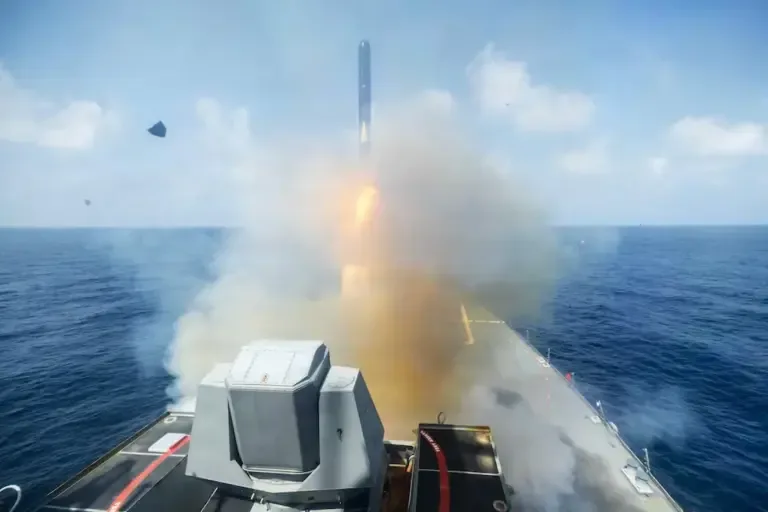
Mogollón highlights that in the war with Iran, four major categories of weaponry are especially critical: air and missile defense interceptors like Patriot, THAAD, and Standard Missile aboard ships; land-attack cruise missiles like Tomahawk; precision and long-range air-to-surface weapons; and anti-ship munitions or those intended to deny maritime access.
Added to this are less visible but indispensable components to manufacture these weapons: rocket engines, sensors, guidance systems, electronic components, explosives, and other specialized elements.
Mogollón warns that using high-end weaponry against any target would be inefficient. The key is to reserve the most expensive weapons for targets that generate strategic effects and combine their use with electronic warfare, cyber operations, decoys, unmanned systems, and other lower-cost alternatives.
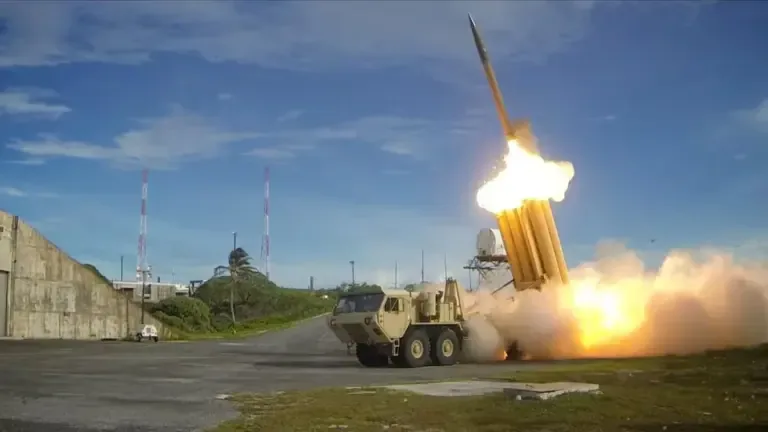
Why is it so difficult to replenish them? Mogollón specifies that manufacturing a modern missile is not simply increasing the number of units produced in a factory.
Its manufacture depends on specialized suppliers, energetic materials, microelectronics, sensors, engines, test benches, specialized personnel, and certification processes. Also, some supply chains have few suppliers and limited capacity to quickly increase production.
Therefore, expanding industrial capacity may require investments, new machinery, permits, hiring personnel, and long-term contracts that guarantee stable demand.
“The limitation is not solved simply by allocating more budget: the money must become physical capacity, suppliers, labor, and certified production,” Mogollón explains.
The specialist considers that the United States faces simultaneously an inventory problem and an industrial capacity problem.
“Inventory is the reserve available to absorb a crisis; industry determines the capacity to regenerate it,” he summarizes.
An arsenal may be sufficient for a short war but cease to be so if consumption exceeds production for months. Likewise, a powerful industry cannot immediately solve a reduced inventory because expanding production takes time, he emphasizes.
“In a prolonged war, the factory, the supply chain, and the multi-year contract are as strategic as the platform that fires,” he states.
The lesson for a potential war with China
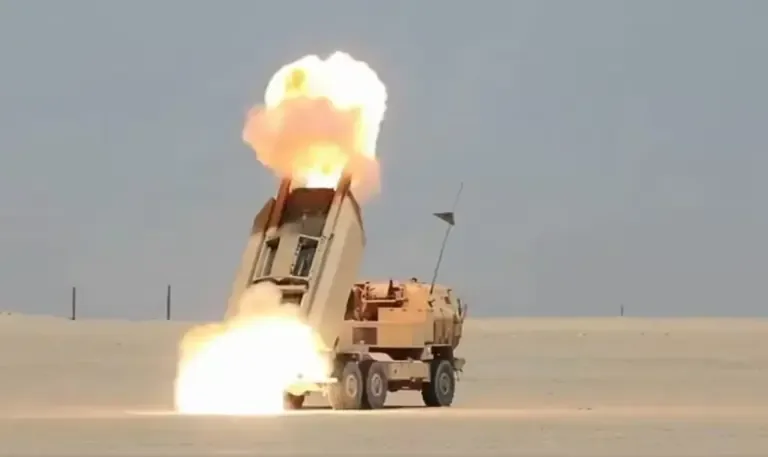
Mogollón warns that this situation forces the United States to rethink its preparedness for future high-intensity conflicts. Technological superiority alone does not guarantee that a power can sustain the pace of a war for months.
He states that the country needs larger reserves, more resilient supply chains, repair and production capacity, dispersed depots, interoperability with its allies, and munitions pre-positioned in possible theaters of operations.
It would also have to decide how to distribute its resources if it faces different crises simultaneously.
He emphasizes that the problem exposes a vulnerability that could become more important if Washington had to face another large-scale war shortly after the campaign against Iran.
“The capacity to sustain high-intensity operations depends on managing munitions as finite strategic resources and mobilizing industry before a crisis becomes a prolonged war,” Mogollón asserts.
Belaunde also believes the problem goes beyond the reduction of reserves. He indicates that the central concern is what would happen if the United States had to respond to another high-intensity conflict while still facing difficulties replenishing its munitions.
“It is very serious. If an emergency occurs now, say China attacks Taiwan, and if the Trump administration wanted to help Taiwan, it would not be able to do anything,” he warns.
Belaunde considers that weapon limitations may also be influencing the current U.S. strategy toward Iran. He explains that Washington may have reduced the intensity of its attacks partly because continuing a large-scale campaign would imply even greater consumption of missiles and other munitions.
He expresses that the problem could have repercussions for U.S. allies, especially Europeans. Even if Trump wanted to fulfill commitments made by his country within NATO in the event of a Russian attack, “it would be very difficult because it does not have the means at this moment,” he says.
Read more ODESUR Santa Fe 2026 Games Medal Table: Team Peru Medals