




![Alberto Beingolea: “If they insist on not giving [the powers], they are complicating life for Peru”](https://insightermedia.com/wp-content/uploads/2026/09/bb3fa9e11304ea13fe2cd333955007bc-150x150.webp "Alberto Beingolea: “If they insist on not giving [the powers], they are complicating life for Peru”")



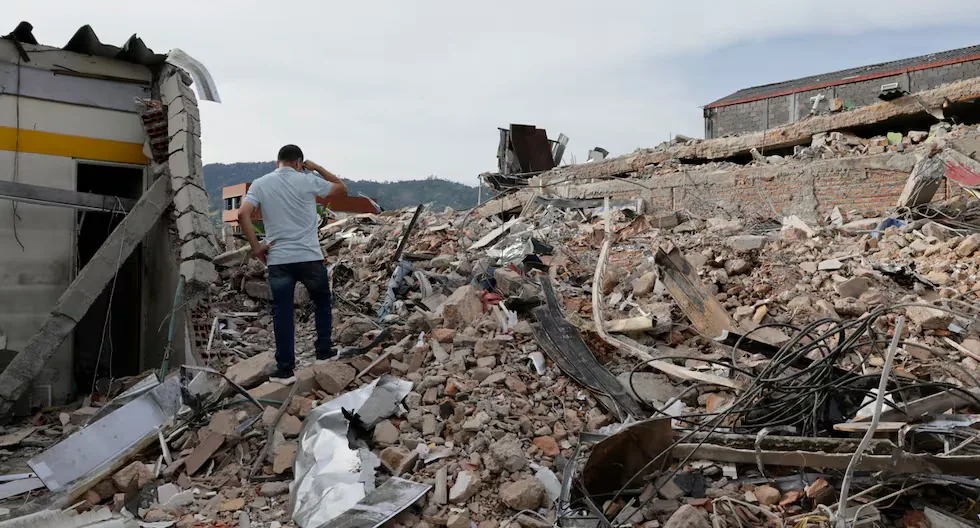
The earth shook again near our country. This time it was our Colombian brothers’ turn and it is inevitable to ask ourselves the question we always avoid in our capital with some resignation: are we truly prepared for the great earthquake we have been expecting? As an architect and urban planner, the objective answer is forceful and painful: no, we are not. And the problem does not lie solely in the instability of some soils or the quality of our constructions, but in a much deeper and silent vulnerability: the lack of seismic memory and the cultural disconnection with prevention.
Our capital has not experienced major earthquakes since 1970 and 1974. This span of almost five decades has generated a dangerous generational bias. Those citizens who lived through the harshness of a great earthquake are now elderly; while generations aged 50 and under — the active productive and social force of the country — have never faced the true scale of a catastrophe of that magnitude. And there is a basic law that applies perfectly to risk management: you cannot be prepared for an experience you do not know. If to this lack of experience we add a social context where scientific dissemination and critical thinking are massively displaced by the ephemeral entertainment of social networks and low-content media consumption, the result is a population anesthetized and indifferent to technical knowledge that could save their lives.
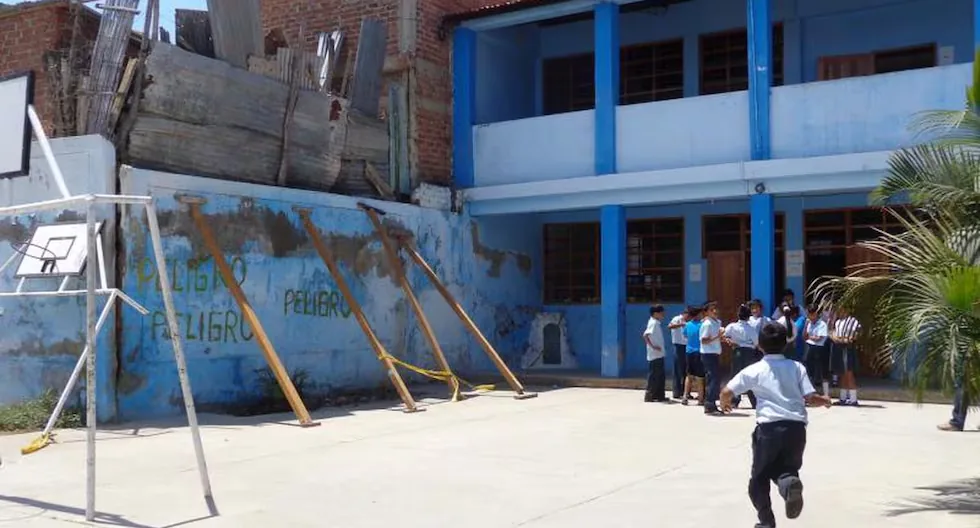
This collective disinterest in science materializes directly in our territory. Faced with the arrival of the magnitude 8 megathrust earthquake that the scientific community estimates will occur on the central coast, the devastation we would suffer in Lima would far exceed the scenarios seen in Colombia, Venezuela, Chile, or Mexico. The reasons go beyond geology: they are strictly socio-structural. Let me explain: the combination of poverty and corruption has allowed chaotic urban growth, self-built and without technical oversight for decades. More than a million Limeños today live on the slopes of hills, in extremely precarious constructions. Added to this is that large populations live overcrowded on very vulnerable sandy soils such as Villa El Salvador or Ventanilla, among others.
Faced with this reality, the Peruvian State — regardless of ideological bias or the government in power, whether right or left — is not capable of adequately responding to a scenario of such magnitude. Vulnerability is not a matter of political doctrine, but of development. Stable countries with strong institutions, like Japan, or even nations in our region with a well-studied and recently tested seismic culture like Chile, manage to mitigate the impact of nature through engineering, oversight, and civic education. Poor countries, on the other hand, pay for earthquakes not only with collapsed infrastructure but with lives that precariousness could not protect.
The final reflection cannot be simple resignation to fatality. If we accept that we are not prepared, the immediate question is: what should we do if we truly value the lives of our families and our heritage?
The solution will not come from a miracle nor a change of government; it requires refounding the relationship between the citizen, the city, and science. It requires demanding that disaster risk management be a priority and non-negotiable urban policy, where civil engineering, architecture, and urbanism once again lead the city’s growth. But above all, it demands building a culture of active prevention before nature reminds us, in the worst way, of all that we should have done in time.
Read more Kabbalah Draw: discover today’s Buenazo Well, Thursday, August 13, and how to play