




![Alberto Beingolea: “If they insist on not giving [the powers], they are complicating life for Peru”](https://insightermedia.com/wp-content/uploads/2026/09/bb3fa9e11304ea13fe2cd333955007bc-150x150.webp "Alberto Beingolea: “If they insist on not giving [the powers], they are complicating life for Peru”")



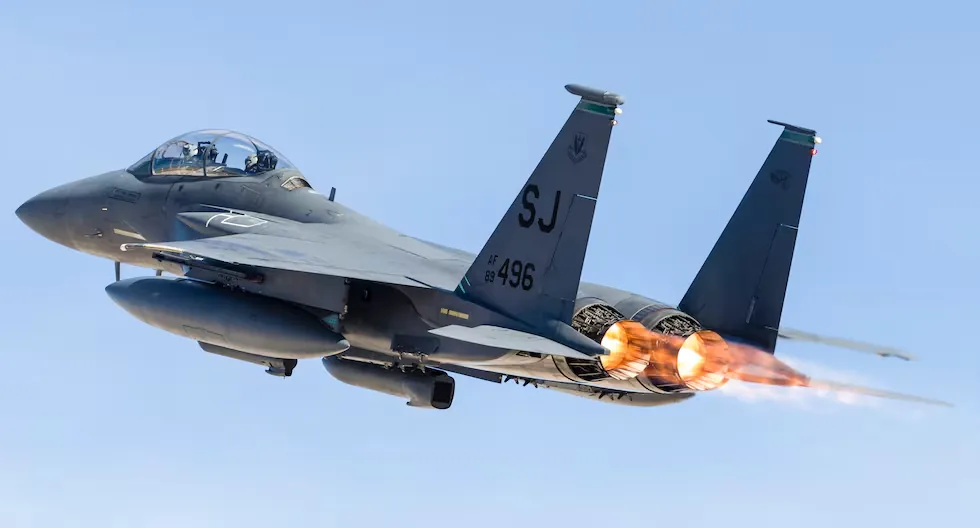
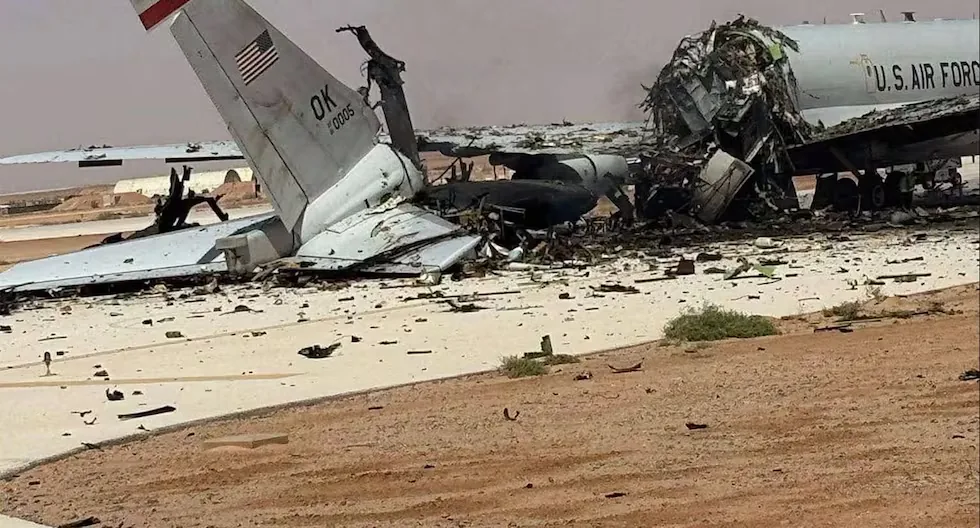
After the fighter jet was shot down in Iranian territory, the two crew members managed to eject and hid to avoid being captured by enemy forces, who offered rewards for their location.
SEE: Netanyahu rejects Trump’s plan for Gaza: these are the reasons and what may happen now
The pilot was located and rescued first, approximately seven hours after the shootdown. U.S. forces managed to determine his position and sent helicopters to pick him up.
During that operation, one of the Black Hawk helicopters reportedly came under fire from the ground and some crew members were injured.
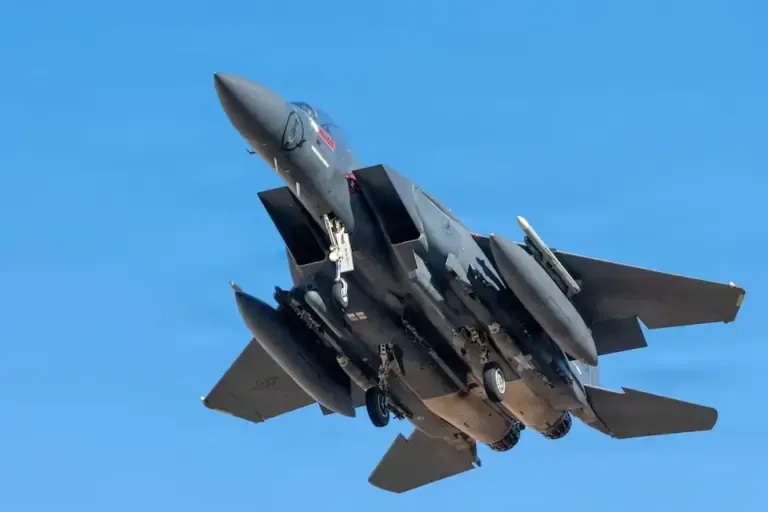
The second crew member was isolated and hid in a mountain crevice near Isfahan. He limited the use of his emergency signal to avoid being located by Iranian forces.
While Iran tried to locate him, the United States organized a second rescue operation, which was later described as one of the boldest missions in the country’s recent military history. This was coordinated by elite forces and the CIA. For this purpose, an aggressive campaign of media disinformation was employed to divert the attention of the Iranian army.
With the support of dozens of aircraft and after intense armed confrontations, the search teams successfully extracted the serviceman. He was injured but survived.
A swarm of drones for the fighter jet shootdown
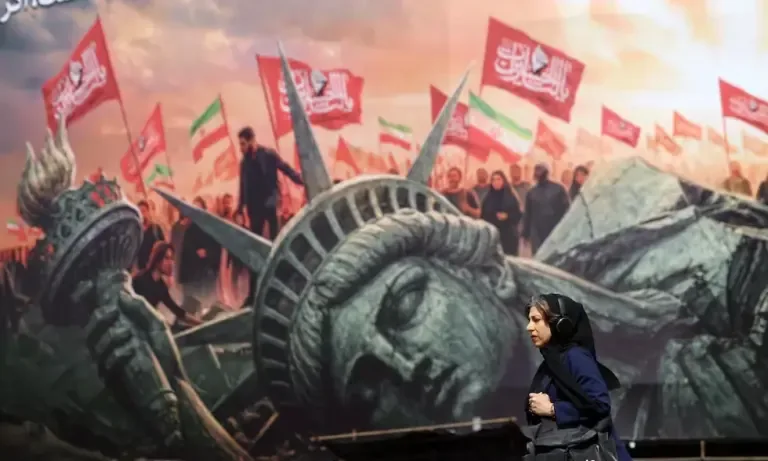
But how did Iran manage to shoot down the fighter jet? According to a senior U.S. military official who spoke to The New York Times, Tehran deployed a swarm of drones in an area previously entered by U.S. fighter jets. These devices were not only used as weapons, but also served a surveillance function and transmitted key information about the GPS location, speed, and trajectory of the U.S. plane to Iranian commanders.
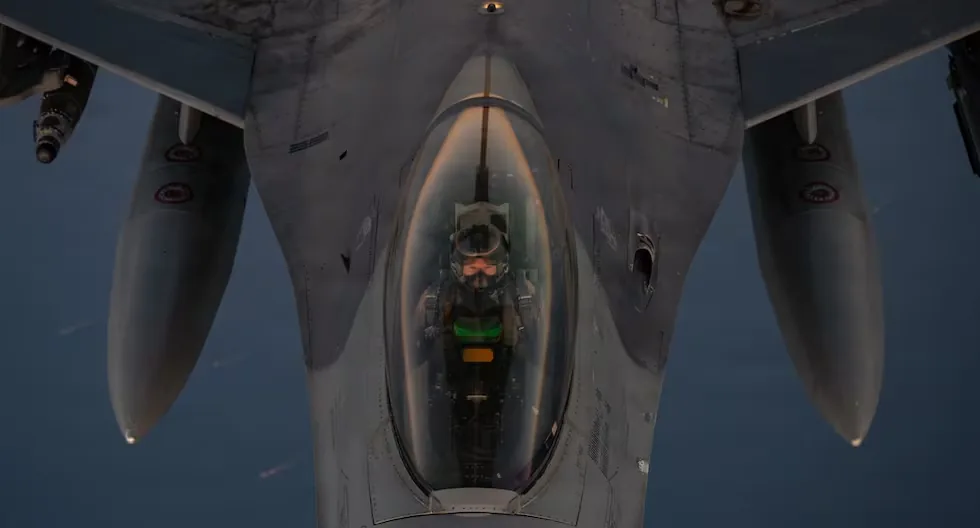
With that data, Iranian forces were able to direct a portable air defense system, known as MANPADS, against the F-15E and shoot it down.
In this case, the Iranian drones acted as sensors to allow other weapon systems to find the target and attack it with greater precision.
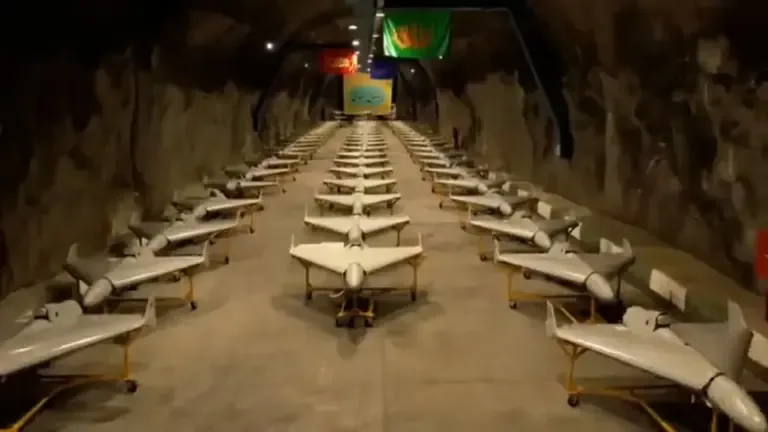
The account published by the NYT matches the testimony of the U.S. pilot, who claimed to have observed several Iranian drones nearby before the plane was hit.
At the time, CNN reported that the pilot described a striking scene before ejecting, saying he saw multiple Iranian drones floating in the air, moving in unison, in a formation resembling a jellyfish.
“He saw several interconnected drones moving as one, with smaller drones beneath the larger ones like legs. A real alien madness,” a source with access to the pilot’s testimony told CNN.
The New York Times report explains that the tactic used by Iran was likely taken from the experience gained during the war between Russia and Ukraine, where drones have become a fundamental tool for locating targets, transmitting information, and coordinating attacks.
It adds that after the Russian invasion of Ukraine in February 2022, Iran sought to study and incorporate lessons about the functioning of the modern battlefield. In that process, Russia reportedly contributed directly to Iranian operations against U.S. forces and bases during the current Middle East conflict, providing knowledge and advanced tactics related to the use of drones.
The report indicates that the Iranian adaptation would not be limited to the use of drones, as in recent weeks U.S. officials have warned about the launch of more advanced and maneuverable missiles against U.S. bases.
With this learning and adaptation, Iran is managing to increase the precision and effectiveness of its attacks.
Read more Kabbalah Draw: discover today’s Buenazo Well, Thursday, August 13, and how to play
Iran seeks to compensate for the wear of its air defense
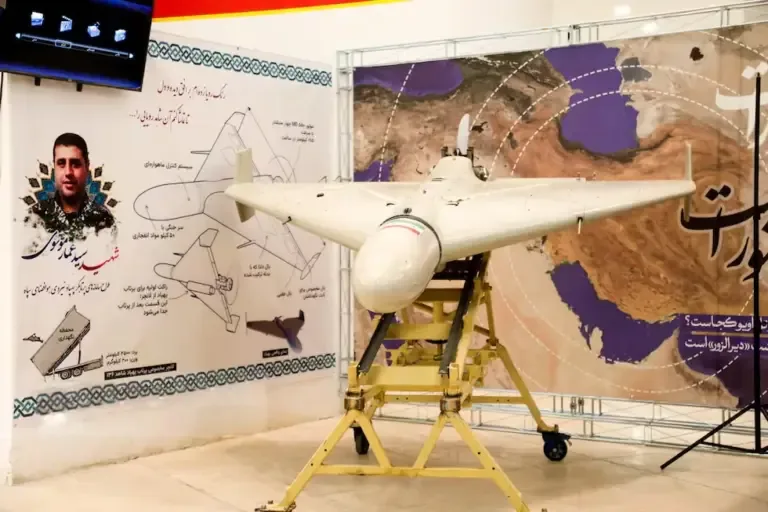
Andrés Gómez de la Torre, a specialist in defense and intelligence issues, tells El Comercio that the evolution of Iran’s military capabilities shows an adaptation towards more asymmetric forms of combat, in which drones play an increasingly important role. He highlights that Tehran is incorporating new tactics to respond to the conditions of current theaters of operations.
He adds that drones are revolutionizing contemporary conflicts and “are already part of the military capabilities of practically all relevant actors.”
“Russia, Ukraine, Israel, Iran, China, and Turkey, among other countries, have developed or expanded their capabilities in this field. All countries are improving their military industry capabilities regarding unmanned vehicle technology”, he explains.
In this context, Gómez de la Torre argues that the shootdown of the F-15E is a demonstration of this transformation. He points out that this fighter jet is a high-tech and costly aircraft, which “was probably hit by a short-range air defense system, possibly an infrared missile, with passive characteristics and difficult to detect.”
Beyond the weapon that shot down the plane, Gómez de la Torre focuses on the role played by drones. He says that Iran is developing a strategy based on what is beginning to be called “aerial minefields”, where swarms of drones function as sensors distributed in space and can detect and track enemy movements.
“They are like flying sensors. This type of technology can replace more expensive and vulnerable infrastructure, such as ground radars,” he explains.
He adds that drones can act as early warning systems against aerial or ground targets, detect enemy activities, conduct reconnaissance, track targets, and even contribute to fire support.
This change implies moving from relying exclusively on large surveillance infrastructures to building small distributed reconnaissance networks, Gómez de la Torre notes. In the Iranian case, he points out that this transformation is especially relevant because its traditional defense and surveillance systems have suffered significant damage during the war.
“What it shows is that Iran is adapting to the realities of a conflict in which it has been heavily hit in terms of its classic and large radar and early warning system infrastructures,” he states.
The main conclusion, according to the analyst, is that Iran is adapting its military doctrine to its own limitations.
A deeper Russia-Iran cooperation
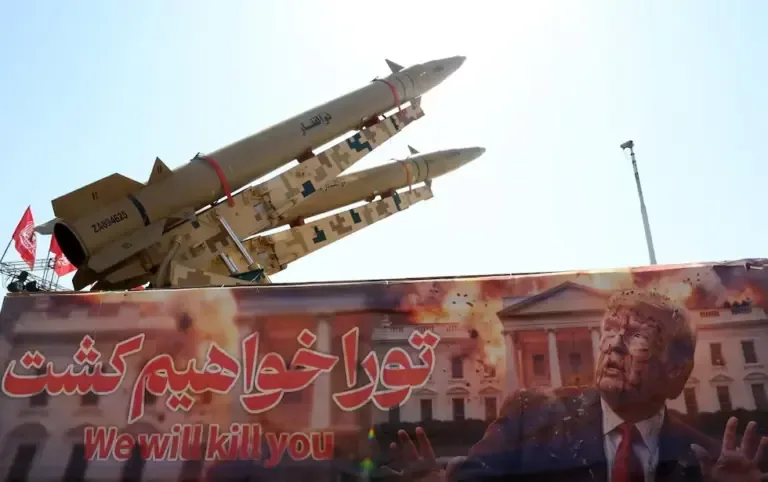
Although much of the attention has focused on the lessons learned from the war between Russia and Ukraine, Gómez de la Torre warns that the evolution of these tactics cannot be attributed exclusively to the study of the Ukrainian experience and how it counters Moscow’s power.
He argues that Russia is also using these technologies and other countries are rapidly developing their own unmanned vehicle capabilities.
He asserts that military cooperation between Moscow and Tehran is deeper than both governments publicly acknowledge.
He recalls that Russia has historically maintained a military cooperation relationship with Iran and claims that Moscow has also contributed to the development of Iranian ballistic capabilities.
“It should be remembered that Russia, under certain circumstances, just as it supported North Korea, has supported Iran in its rocket ballistic technology,” he states.