




![Alberto Beingolea: “If they insist on not giving [the powers], they are complicating life for Peru”](https://insightermedia.com/wp-content/uploads/2026/09/bb3fa9e11304ea13fe2cd333955007bc-150x150.webp "Alberto Beingolea: “If they insist on not giving [the powers], they are complicating life for Peru”")



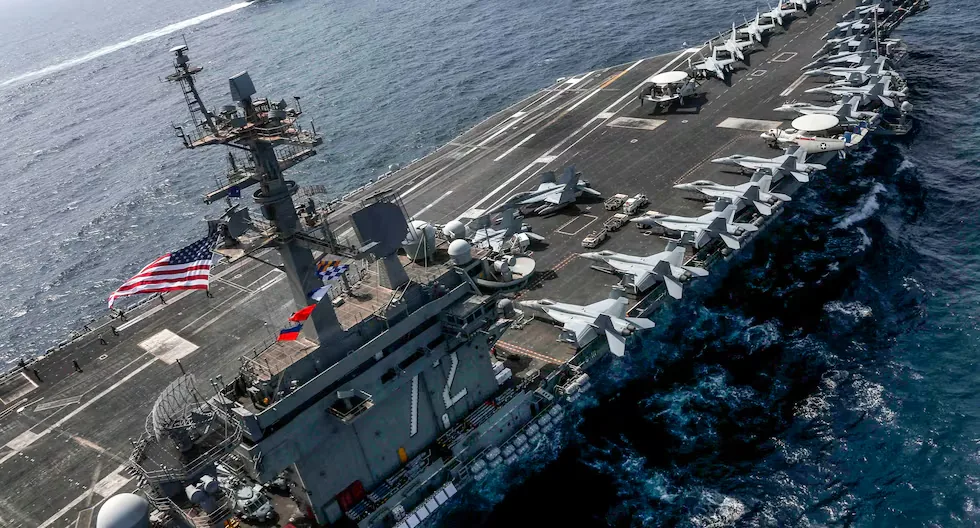
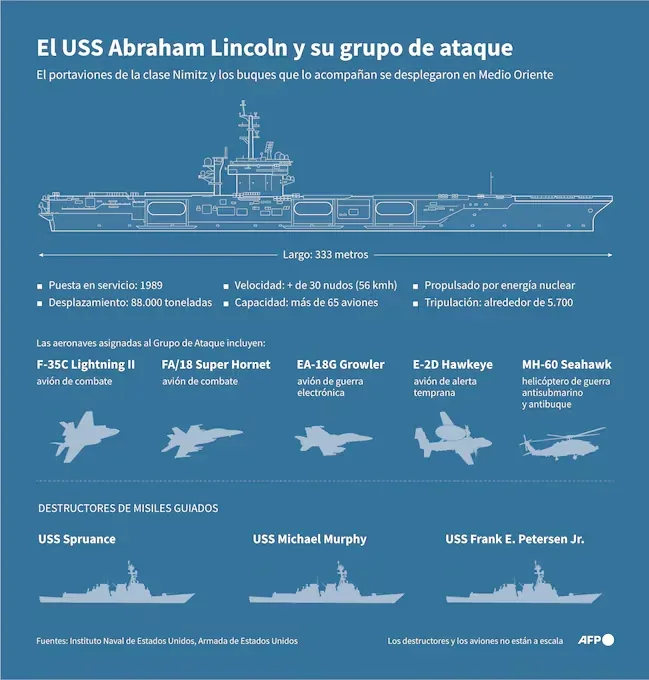
The USS Abraham Lincoln, a symbol of the military power of the United States, is enduring an exceptionally prolonged deployment that is pushing it to the limit. Supply, water, and maintenance issues, long working hours, uncertainty about when they can return home, and growing concerns about the mental health of some sailors have increased the pressure on the 5,000 military personnel and crew on board. The aircraft carrier has already been deployed for more than 250 days, in one of the longest missions for a ship of this type.
Read more Dollar price today in Peru: exchange rate closing on Tuesday, August 18
The mission began on November 21, 2025, when the USS Abraham Lincoln departed from San Diego, California, along with its strike group. Initially, the deployment was planned to last about seven months and was headed to the Indo-Pacific, but the evolving situation in the Middle East changed the plans and the aircraft carrier was redirected to the region and ended up involved in the war initiated by the United States against Iran on February 28.
Under normal conditions, the U.S. Navy recommends maximum deployments of seven months or 210 days, according to CNN.
During all this time, the aircraft carrier only made two very brief stops for resupply in Guam (December 2025) and Oman (July 2026).
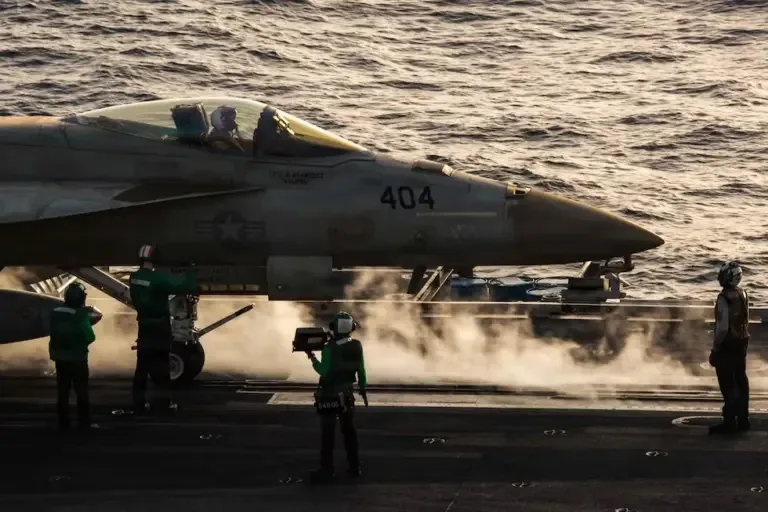
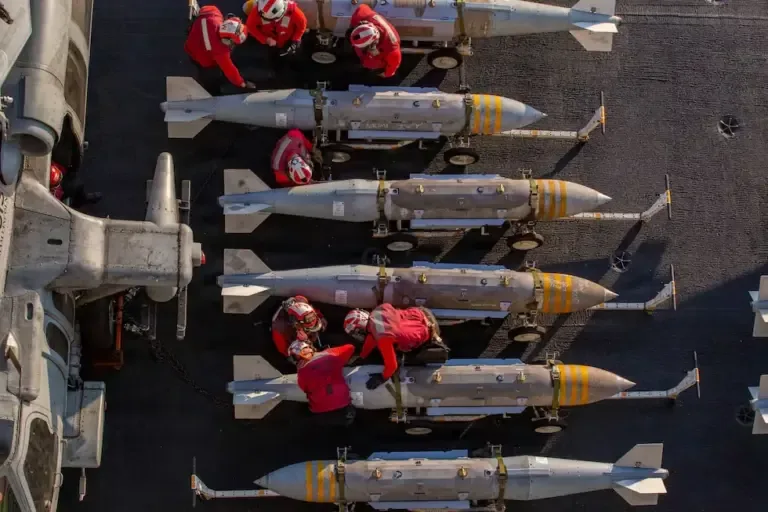
On August 12, following complaints of poor conditions from crew members’ families, Democrats in the U.S. Congress demanded answers from the government.
Some family members even reported serious mental health problems and suicide attempts on board.
Senator Rubén Gallego then called for “an official oversight visit with the Senate bipartisan delegation to the USS Lincoln to investigate the alarming conditions reported”.
“Stories of crew members threatening to jump off the ship are a terrifying warning sign of how serious the situation has become: moldy showers, intermittent hot water, rationed meals and soap, broken bathrooms, and exhausting 12 to 16-hour shifts without days off,” Gallego wrote on X.

In response, on Friday the President of the United States, Donald Trump, confirmed that the USS Abraham Lincoln will soon be relieved by another aircraft carrier. The replacement is the USS George Washington, which is being moved from the Indo-Pacific.
At the same time, the president denied that there are concerns about the crew’s living conditions.
When asked if the deployment had been too long, Trump replied: “No, no, no. It is far from being too long.”
The problems of the USS Abraham Lincoln
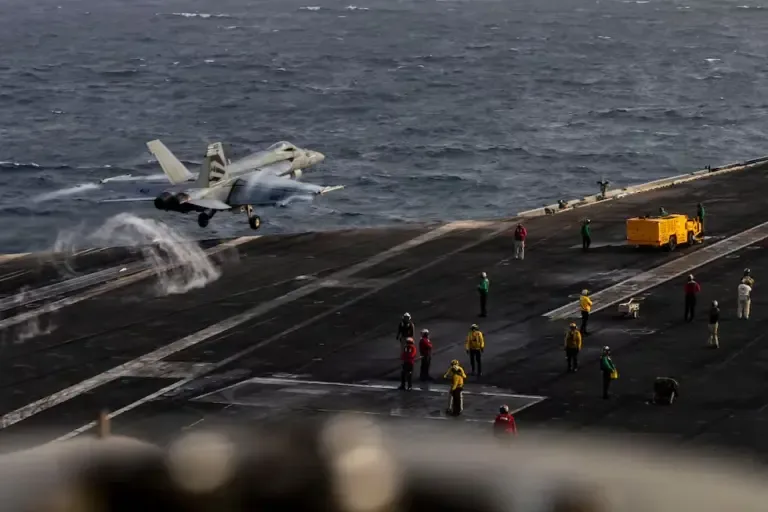
According to a CNN report, what is happening with the USS Abraham Lincoln is part of a growing problem for the U.S. Navy, which must face increasingly longer deployments, something that is creating tension among sailors, their families, and affecting the operational capability of the aircraft carriers themselves.
After speaking with crew members and their families, CNN listed specific problems on the USS Abraham Lincoln: intermittent food shortages, restrictions on purchasing hygiene products, water system problems, out-of-service or overflowing bathrooms, difficulties with hot water, family packages arriving months late or lost, long working hours and exhaustion, absence of port stops, among others.
The report highlights that port stops are especially important because ports allow resupply, repairs on the aircraft carrier, and rest for the crews.
One of the most sensitive aspects concerns the mental health of the crew. CNN collected testimonies from sailors describing very low morale and frequent conversations about suicidal thoughts.
The report states that two sailors linked to the USS Abraham Lincoln strike group jumped overboard in recent months and were rescued alive.
For its part, the Navy denied that there is an increase in suicidal thoughts or attempts on board and stated that it has medical, religious, and mental health professionals.
Regarding the aircraft carrier itself, experts consulted by CNN warned that prolonged deployments cause cumulative wear on the systems of these ships. They mentioned deteriorating arresting cables, saltwater leaks in systems, components requiring repairs, etc.
Read more Earthquake in Mexico today, Tuesday, August 18: recent tremors reported by the SSN
The specialists stated that the main concern is that small technical problems can end up increasing the risk of major incidents.
Changing objectives taking their toll
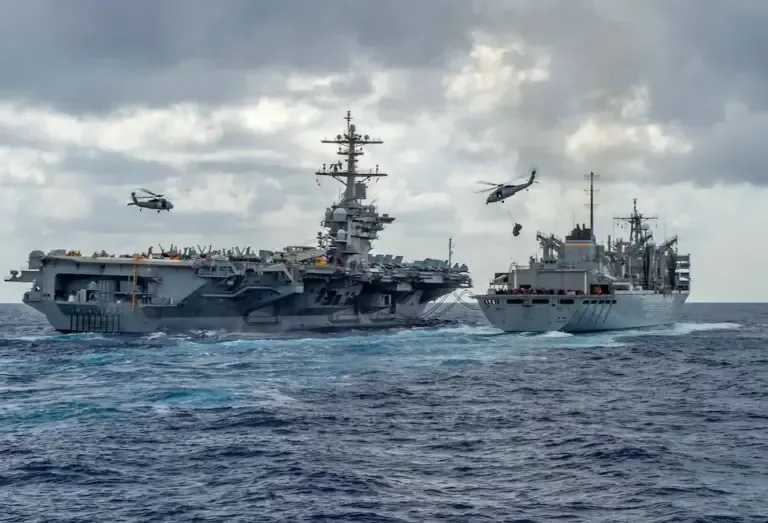
For defense and intelligence specialist Andrés Gómez de la Torre, the situation of the USS Abraham Lincoln must be understood within the evolution of U.S. operations against Iran and the changes the aircraft carrier’s mission has undergone in recent months.
He recalls that this aircraft carrier has had a long operational history. It participated in the Gulf War of 1991 and later in humanitarian and support operations in Somalia, as well as intervening in the 2003 invasion of Iraq.
One of the main problems, according to Gómez de la Torre, is related to the evolution of the political objectives of the war in Iran. The specialist argues that the use of military force responds to political objectives and that, when these change, the role assigned to the deployed forces can also change.
In the case of the USS Abraham Lincoln, he indicates that the mission has not been completely stable. “Initially, the presence of the U.S. force was related to the support they planned to provide to Iranian opposition protesters seeking regime change. Later, the focus shifted to denuclearization and neutralizing Iran’s nuclear technological capacity for military purposes”
Recently, he says, the aircraft carrier and the rest of the strike group have taken on a role of supporting the naval blockade that the United States is enforcing against Iran.
For the analyst, this evolution of objectives can have consequences for those who remain at sea for months. The crew faces uncertainty about how long the mission will last and what its final purpose will be, he emphasizes.
“There is pressure from the crew due to this uncertainty about the conflict, the role, the objectives. This generates stress”, he states.
Are there not enough aircraft carriers?
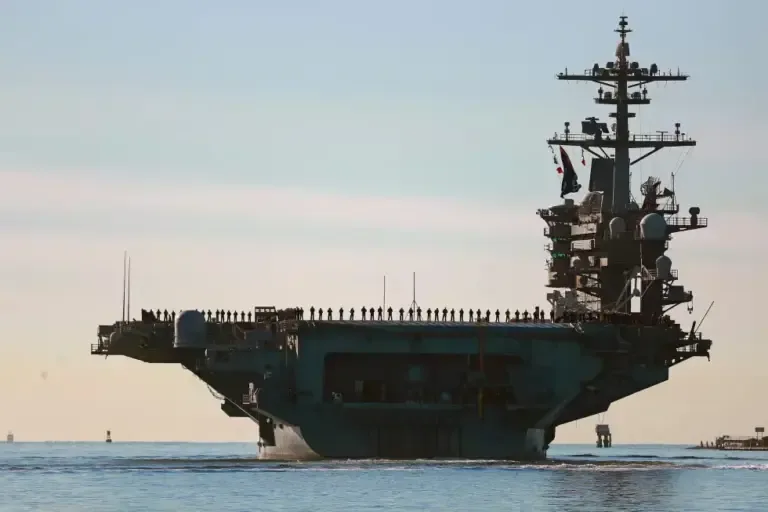
The situation of the Lincoln also coincides with a broader discussion in the United States about how the Navy deploys its aircraft carrier groups, he explains.
Gómez de la Torre points out that there is currently a debate to review the so-called “predictable cycles”, a model that seeks to establish more predictable periods of deployment, maintenance, and rest for ships and their crews.
The case of the USS Abraham Lincoln, according to the specialist, highlights the difficulties of that model when military needs are prolonged and the objectives of an operation change.
“The consequence is increasing pressure on the U.S. military structure, which must keep its aircraft carriers operational for longer periods to meet its strategic commitments,” he states.
Although President Trump has denied that there is a problem with the deployment, Gómez de la Torre insists that the situation of the Lincoln reveals an operational difficulty that cannot be ignored and must be resolved quickly.
Finally, Gómez de la Torre considers that the situation of the USS Abraham Lincoln cannot be explained simply by an alleged lack of aircraft carriers in the U.S. fleet. He emphasizes that the United States has 11 aircraft carriers, a force that, in principle, allows it to maintain a military presence in different regions of the world.
“The problem is not so much the quantity, but precisely the use given to each of them and the rotation, which is complicated,” he notes.
For the specialist, the challenge is how to distribute and rotate those ships when U.S. military needs increase simultaneously in different scenarios.
Read more Are you always in the groups but never comment? This is what psychology says about you