




![Alberto Beingolea: “If they insist on not giving [the powers], they are complicating life for Peru”](https://insightermedia.com/wp-content/uploads/2026/09/bb3fa9e11304ea13fe2cd333955007bc-150x150.webp "Alberto Beingolea: “If they insist on not giving [the powers], they are complicating life for Peru”")

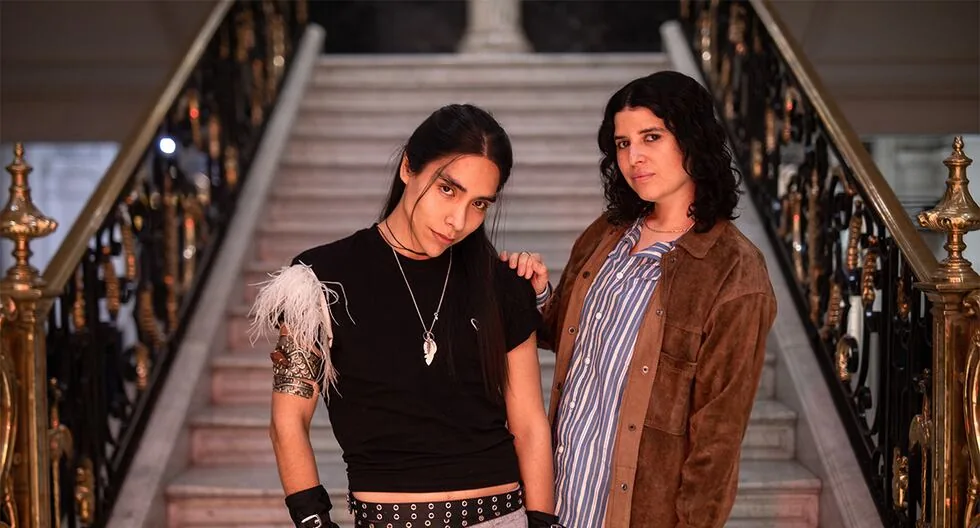
Lenin Tamayo arrived in Lima in the womb of Yolanda Pinares when she was 16 years old. In his first days at home, music lulled the baby’s ears, due to his mother being a singer and the always musical environment. Then, his adolescence was difficult, but time taught him a lot and reinforced his identity with something that had also been part of his home: Quechua.
Read more Minimum wage would increase to S/ 1300 in Peru: current amount and how the payment will be in scales
Before becoming the first Peruvian artist signed by BTS’s production company, HYBE, he studied Psychology at San Marcos, but time put him in his place, the stages. He was in his eighth semester when he gathered the courage to tell his mother that he wanted to dedicate himself to art. Today, his story is deepened in the documentary short film “Q-pop,” directed by Peruvian Adri Murguia.
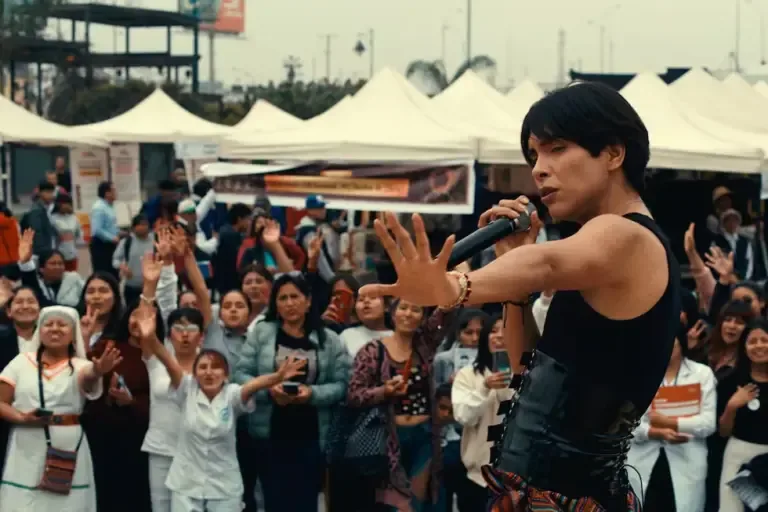
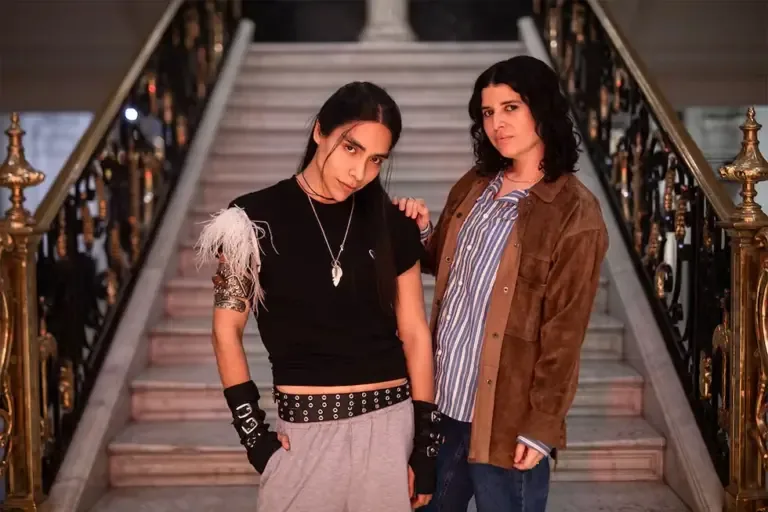
“Q-pop, a 27-and-a-half-minute documentary, is born from Murguia’s personal search to tell stories with Peruvian roots. Daughter of a diplomat, she always lived with a suitcase in hand before settling in Los Angeles. She worked as a documentarian at Quibi, an audiovisual studio of Jeffrey Katzenberg — also known for his alliance with Steven Spielberg — and later, Adri became independent as a filmmaker. At that stage of her life, she met Lenin and Yolanda, the characters of what would be a two-year follow-up.
“Our last filming was with Lenin’s fan club (URPI), who follow Lenin in Peru. When we said goodbye, we promised to return to film in Korea; it was my dream and I felt that would end the journey I wanted to capture in the film. And so it was,” the director tells El Comercio.
Adri Murguia began her career at VICE Media, where she directed documentaries on social issues, including “Umoja: Land of No Men,” “Young, Black and Positive,” “Gully Queens,” and “Inside the Black Bloc.” She also directed the first season of “Slutever,” an eight-episode documentary series for Viceland, recognized for its perspective on sex, relationships, and intimacy. Later, she held executive positions in documentary development at Quibi and The Walt Disney Company, and was vice president of Films and Documentary Series at All Facts, producer of the series “Telemarketers.” Her most recent film is “Q-Pop.”
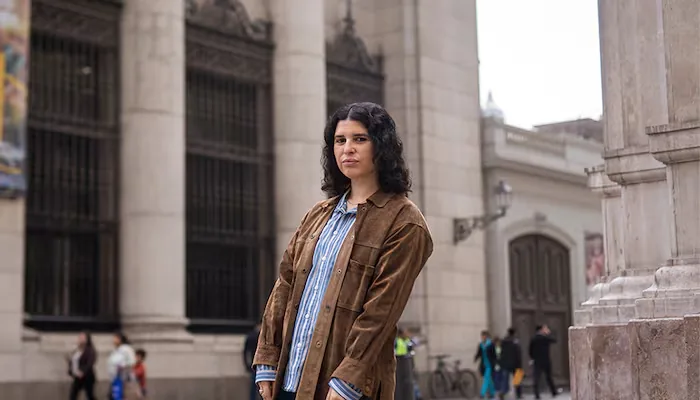
“I have always had an interest in telling stories from where I am, because I have never lived in Peru, and one way to connect to my roots has always been to tell Peruvian stories,” adds Murguia.
The trip to Korea was part of Lenin’s first international tour in Asia, which also included India, Thailand, and Vietnam. While Murguia traveled from Los Angeles, Lenin did so from Lima to continue the recording of “Q-pop.” The documentary features Jamie Rogers Caballero and Alpita Patel as producers, and Peter Bratt, Benjamin Bratt, and Murguia as executive producers.
“We came to 5 Stick, Benjamin Bratt’s production company, because we saw his documentary work ‘Wings of Dust,’ filmed in Peru,” Murguia comments about the actor of Peruvian roots, also remembered for his roles in “Miss Congeniality” and the dubbing of “Coco.” “He has a very strong connection with a Quechua community, through his Peruvian mother and Quechua ancestry. He loved the relationship between Lenin and his mom, and that family and cultural dimension of the story,” adds the filmmaker.
“Q-pop,” a new genre
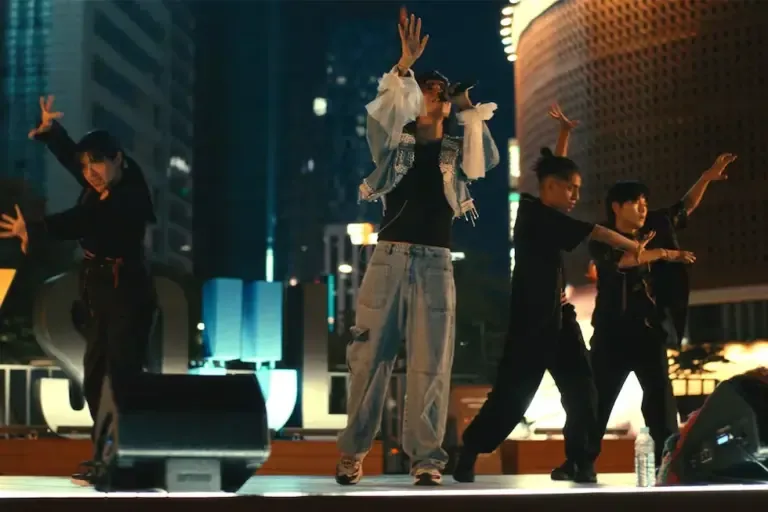
Lenin’s mother tongue has always been linked to daily life. That is why Quechua is another character in Adri’s documentary. At one point in the film, his mother appears in close-up talking about her roots. “Quechua is a culture spread like a river, watering the vast culture that is Peru,” Lenin tells this newspaper.
“I made the decision to do an international tour, to do that act, because of what it could mean for me and anyone from an indigenous culture that symbolism of belonging to the system. Because sometimes, people from indigenous cultures are treated as if they were in a glass box, either marginally or seen as very delicate. I don’t want to be treated differently for speaking Quechua, because I am just as valuable as a person and artist,” Lenin says.
Lenin’s life philosophy consists of “learning to move” within that “glass box.” In music videos like “Cuando Estoy Aquí (Tusurikusun),” “¿Imaynata?” and “La Llaqta,” he combines K-pop codes with elements of Andean culture and Quechua, while bringing that identity to spaces where it can still be unexpected.
“Q-Pop” had its world premiere at the Inside Out 2SLGBTQ+ Film Festival in Toronto and then went through San Francisco DocFest, Filmed in Peru, and the Lima Film Festival, where it had its Latin American premiere. Its journey continues with a presentation at the AFI Latin American Film Festival in Washington.
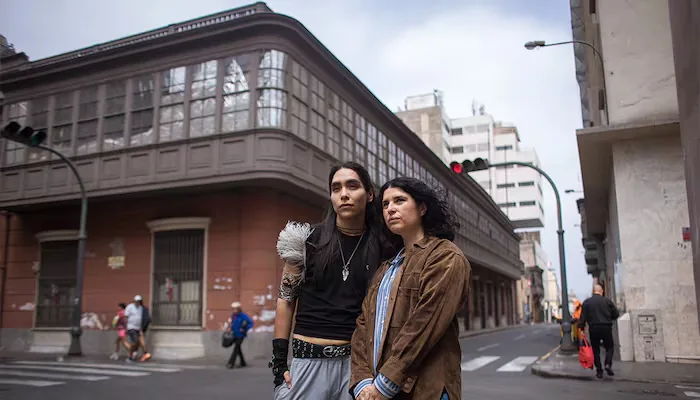
The rebirth of Lenin Tamayo
Before the “Q-pop” label, there was the teenager who arrived in Lima wanting to start over. Lenin recalls episodes of bullying related to his face and the way he spoke. For him, however, reducing that experience to a specific scene would be simplifying his biography. Behind the pain were thoughts about his mother’s migration to the capital, an identity under construction, and the need to build himself as an artist. The episode of aggression ended up becoming “the last straw that broke the back of that pre-adolescent,” he says.
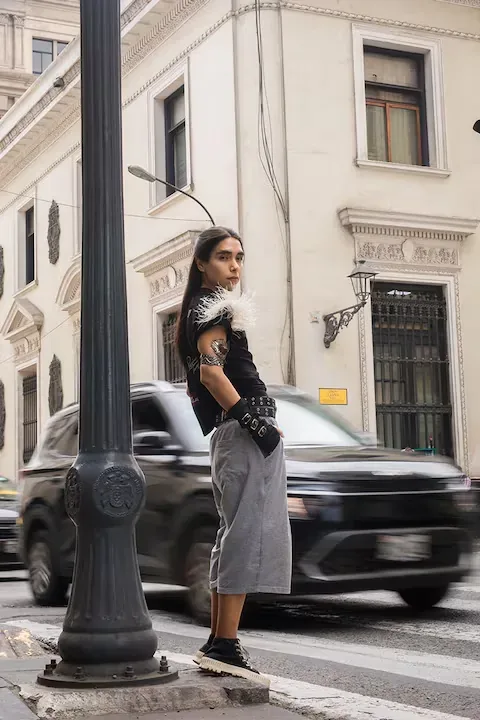
“It sounds nice when we talk about an event that marks you in the narration of a film, but life is more complex. Now that I am grown, an event like bullying, so impactful, like being pushed to a place and mocked, I analyze it well and see that it is also because of everything that was already behind it: my family history. (…) Instead of locking myself in something negative or destructive, I tried to transform it into art for my mother. That’s where K-pop appeared. Through her and the music, I thought I would live freely,” Lenin explains.
As an artist and single mother, Yolanda occupies an essential part of that process. “I always tried to give him all the tools within my reach, because music opened doors for me and made me meet people, artists like poets, writers, and musicians. And Lenin was always close, in the gathering. Listening. Watching,” Yolanda comments.
From Lima to the world. Or the other way around?
Lenin tells his story as if he had always been sure he would be international in the future. HYBE, for example, is his way of fitting into an industry obsessed with prestige. The Korean record label led by Bang Si-hyuk initially took off in sales with the BTS phenomenon in 2013, but today, with the success of K-pop, it observes the industry calmly. And if a derivative of the Korean musical genre arises, like pop songs in Quechua, they want to be there to see it grow.
“I was the first person in America to give a grounded label to music coming from K-pop,” Lenin says. “Culturally, saying ‘K-pop’ sounds impactful because it is Korean pop and the collective imagination of the Korean industry already exists. But inventing something like ‘X-pop,’ for X reason, doesn’t make as much sense as saying I do ‘Q-pop’ because I speak Quechua. That symbolic meaning appealed to HYBE,” he adds.
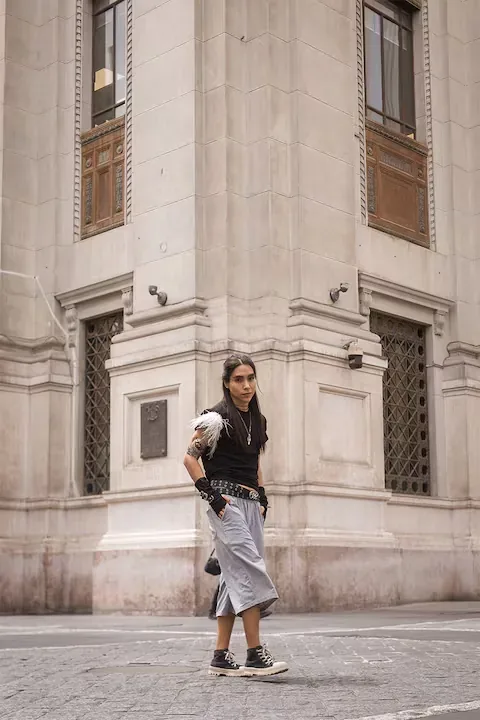
Conversations with HYBE and Lenin Tamayo began in October 2023 and involved an extensive process until signing with the company. Along the way, Adri Murguia observed how people’s attention to Lenin increased. At first, there were those who found what he was doing musically in Peru cool, while others doubted and even made racist comments. But his trip to Asia and his appearance in Rolling Stone sparked interest throughout Lima. Then, headlines appeared on the news and a more favorable view of the singer.
“Obviously, we always wanted it (the attention on Lenin), but…,” Adri says. Actually, it seems something changed along the way, but nothing did. “The question the documentary leaves is not whether I have changed, but whether you (the audience) have,” Lenin adds. “My mother and I remain the same people, as do my values and principles, and it is interesting how people’s perception of me changes,” he adds.
“We are always seeking external validation, for someone outside to tell us we are valuable to finally feel that way. Meanwhile, we waste life having been so cruel to our own existence, without valuing how important it is to be ourselves,” Lenin comments.
The K-pop wave has already arrived in Lima with groups like Stray Kids, Aespa, and soon BTS. A few weeks ago, the city appeared as the setting of an ENHYPEN music video when the Korean band was in the Peruvian capital this year. What a Peruvian might prefer to hide — a wall with graffiti, a fruit market — can become, for a Korean production, a new, even attractive image. That, precisely, caught Lenin’s attention.
“The same thing happens. The Latin American resident changes their perception when seeing these acts. Now they approve it to be the setting of a music video. (…) It’s the change of mindset, and that’s good because it will make us change the perception we have of things,” he says.
The documentary “Q-pop” continues its journey through festivals, after its world premiere at Inside Out 2SLGBTQ+ Film Festival and its passage through San Francisco and the Lima Film Festival, while the team manages new exhibition windows. There is also a desire to take it to communities with little access to cinema through organizations that work with microcinemas. Meanwhile, Lenin is preparing an album of his genre, whose process will begin in October this year. One of the new pieces is called “Hananpacha,” linked to the image of the condor’s flight and the feeling of leaving the place of origin for other territories. He never stops creating.
RECOMMENDED VIDEO
- How will the ticket transfer for the BTS concert in Lima be from September 7?
- BTS’s Jungkook is celebrating his birthday and ARMY celebrates big
- Yo Soy 2026: Jungkook impersonator returns with six young people to perform BTS
- BTS’s V confesses serious hearing problem during world tour: “I only hear 30%”
- BTS auctions off garments from the 2026 World Cup final and raises a large sum for charity