




![Alberto Beingolea: “If they insist on not giving [the powers], they are complicating life for Peru”](https://insightermedia.com/wp-content/uploads/2026/09/bb3fa9e11304ea13fe2cd333955007bc-150x150.webp "Alberto Beingolea: “If they insist on not giving [the powers], they are complicating life for Peru”")


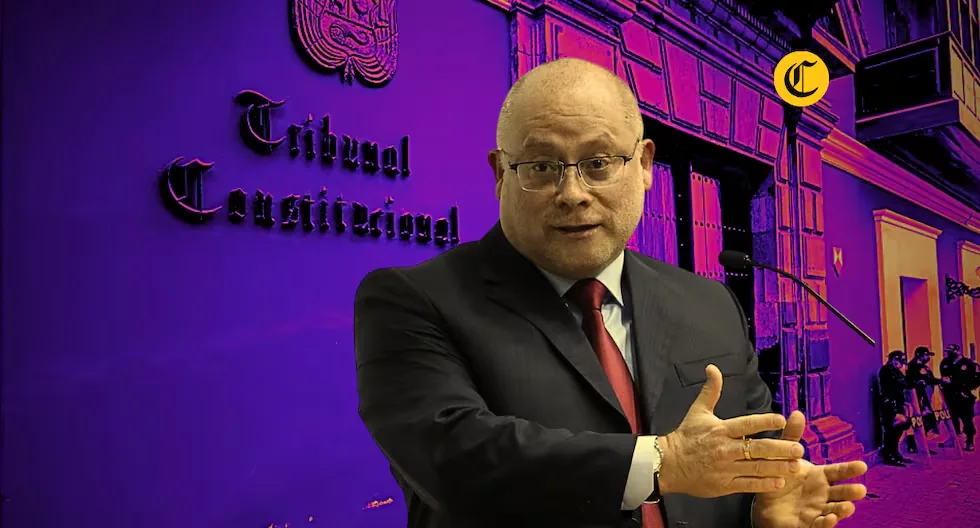
By majority, the magistrate, Pedro Hernández, was elected president of the Constitutional Court (TC) for the 2026-2028 term.
Read more Premios Juventud 2026 LIVE TODAY: schedule and channels to watch the gala
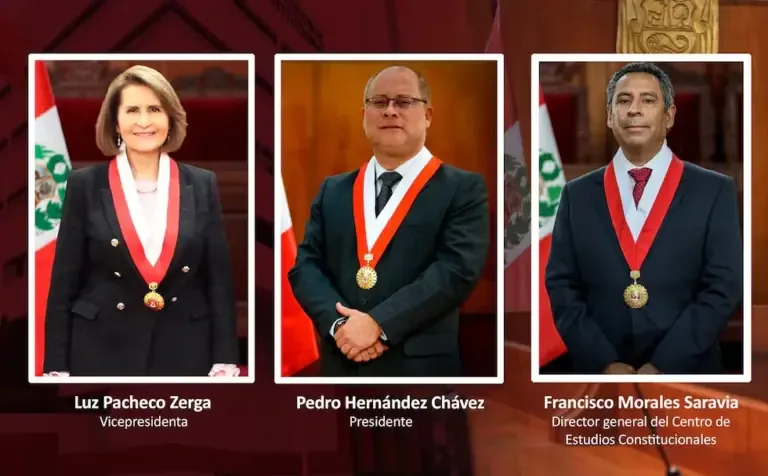
According to what El Comercio was able to confirm, the full TC also elected magistrate Luz Pacheco as vice president and magistrate Francisco Morales as director of the Center for Constitutional Studies (CEC).
The full court is now composed of Hernández Chávez (president), Luz Pacheco (vice president), Francisco Morales, Gustavo Gutiérrez, César Ochoa, Helder Domínguez, and Manuel Monteagudo.
According to sources, the trio led by Hernández obtained the votes of Morales, Pacheco, and Monteagudo. Meanwhile, Domínguez – who was running for re-election – Gutiérrez, and Ochoa voted against.
As a reminder, Hernández Chávez was elected in 2023 as a member of the TC, with the support of Fuerza Popular, Perú Libre, Renovación, Alianza por el Progreso, among other groups that at that time made up the Congress of the Republic.
As El Comercio anticipated, Hernández’s election would be a “foreseen surprise,” considering that the other six magistrates who make up the full TC end their term in May 2027.
It was a surprise within the Full Court that magistrate Gutiérrez Ticse cast a vote against Hernández’s trio.
But above all, the surprise came from magistrate Luz Pacheco, who had told this newspaper that she would not run for the presidency. However, she did run for the vice presidency, and at the last minute decided to join Hernández and Morales.
This, the same sources indicated, would show that the magistrates seek to smooth over differences among themselves. Especially after Pacheco Zerga’s resignation from the presidency last July, due to disagreement with her colleagues in the Full Court over ratifying an official who had lost their trust.
Another aspect would have to do with Hernández Chávez’s continued presidency, even after the Bicameral Congress elects the successors of the six magistrates whose appointment ends in May 2027.
Who is Pedro Hernández?
Pedro Alfredo Hernández Chávez (53) is a lawyer, teacher, and doctor from the University of San Martín de Porres (USMP) and according to his resume has more than 20 years of professional experience in the public and private sectors.
During his tenure as a member of the TC, he has been the rapporteur of various controversial rulings with impact on judicial processes involving questionable figures such as the former fugitive Vladimir Cerrón.
As a reminder, between March and June he was involved in a controversy when it was reported that he sought to accelerate the Full Court’s debate on the habeas corpus resolution project for the former regional governor of Junín, Vladimir Cerrón, who at that time had been a fugitive from justice for more than two years.
The document leaned towards favoring the former official and annulling the arrest and preventive detention order against him for an alleged money laundering case. The ruling, with Hernández Chávez as rapporteur, was finally confirmed last July and Cerrón Rojas came out of hiding.
Hernández Chávez was also the rapporteur and author of the TC ruling that ended up reducing the Public Ministry’s power to investigate the sitting President of the Republic, by upholding the jurisdictional challenge filed by the dismissed former president Dina Boluarte, to suspend investigations under the protection of Article 117 of the Constitution.
What cases will the TC still have to resolve?
During this new term, the TC will have to resolve cases related both to public figures and public entities. Among these, the lawsuit of former congressman José Luna Gálvez, aiming to annul his money laundering process.
The lawsuit filed by the National Board of Justice (JNJ) against the Judiciary (PJ) over precautionary measures and rulings that question its decisions.
The jurisdictional conflict lawsuit filed by the Metropolitan Municipality of Lima (MML) against the National Jury of Elections (JNE) generated due to incidents recorded during the first round of the 2026 General Elections.
The unconstitutionality lawsuit filed by the Ombudsman against Urgency Decree 010-2025, “Urgency Decree establishing extraordinary economic and financial measures for the patrimonial reorganization of PETROPERÚ S.A. and to guarantee the continuity of the production chain.”
Also, if what was announced by Keiko Fujimori’s government materializes, it would also have to resolve the lawsuit that the Executive will file aiming to repeal four laws approved by the previous Congress of the Republic that would represent a huge expense in public finances.
Who were the previous presidents?
In September 2022, this Full Court elected magistrate Francisco Morales as president of the TC. His election was finalized with the majority vote of six magistrates. Only magistrate Monteagudo voted against.
In September 2024, magistrate Luz Pacheco was elected president of the TC by majority. She obtained the votes of magistrates César Ochoa, Helder Domínguez, and Manuel Monteagudo. Her opponent, magistrate Gustavo Gutiérrez, obtained the minority votes of Francisco Morales and Pedro Hernández.
In June 2026, magistrate Helder Domínguez was elected president of the TC, following Pacheco Zerga’s resignation, after differences arose in the Full Court due to the loss of trust in an administrative official.