




![Alberto Beingolea: “If they insist on not giving [the powers], they are complicating life for Peru”](https://insightermedia.com/wp-content/uploads/2026/09/bb3fa9e11304ea13fe2cd333955007bc-150x150.webp "Alberto Beingolea: “If they insist on not giving [the powers], they are complicating life for Peru”")


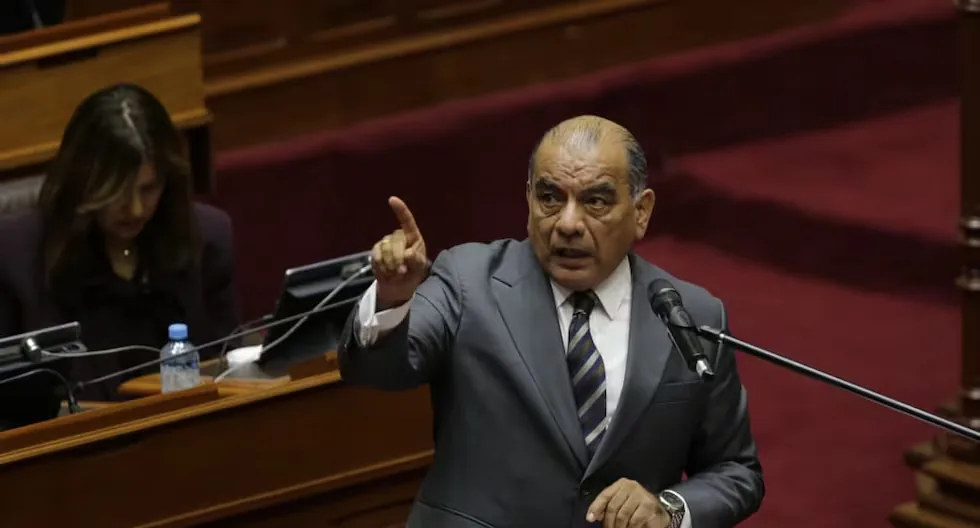
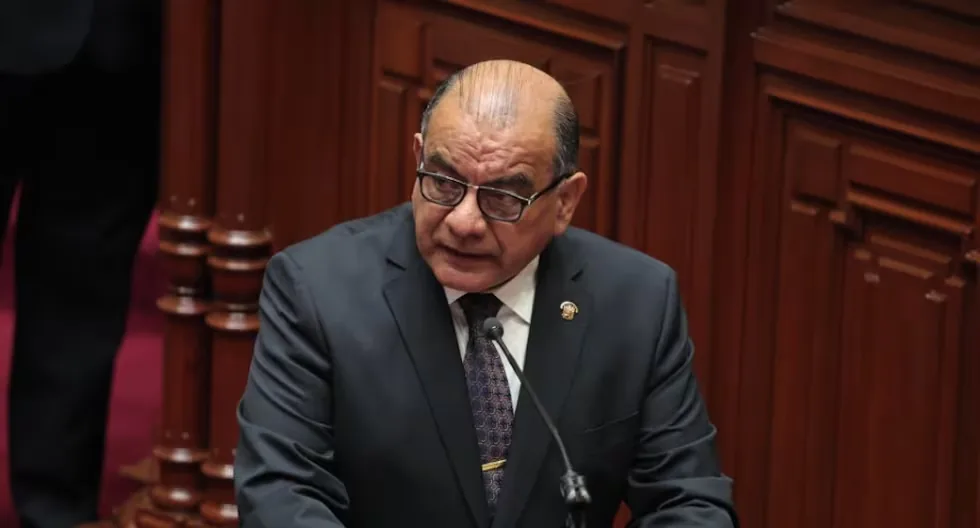
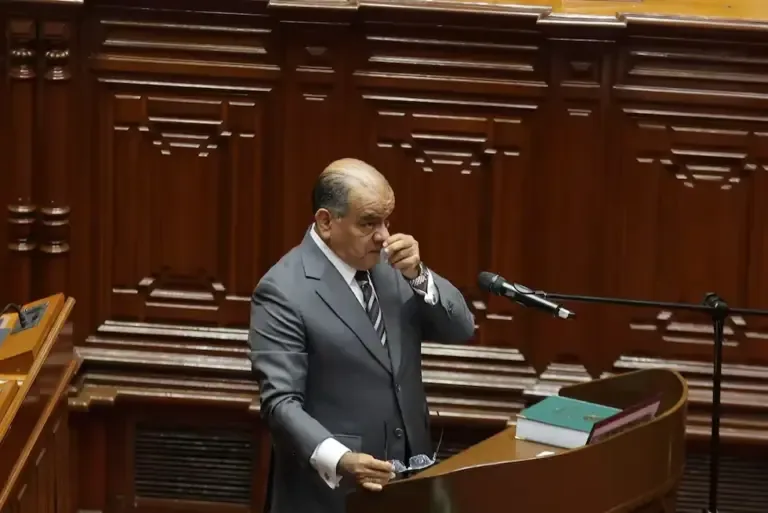
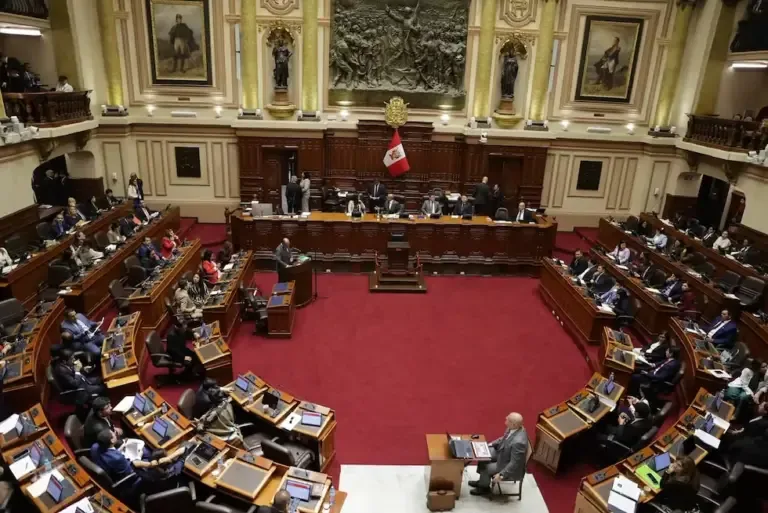
A sector of the Chamber of Deputies, made up of the benches of Fuerza Popular, Renovación Popular, part of Ahora Nación, and Buen Gobierno, showed their support for the Minister of the Interior, César Astudillo, although with some critical points during the interpellation of the Cabinet member.
Read more Russians vote in the legislative elections with a black hole in the budget
Most members of the Lower House pointed out that the head of the Mininter has only been in office for 51 days, so they considered that he should be allowed to work to tackle crime and strengthen citizen security.
Others highlighted the government’s decision to remove Óscar Arriola as general commander of the Police and appoint Fredy López in his place.
On the other hand, Juntos por el Perú and the Civic Works Party questioned Astudillo’s presentation during Thursday’s plenary session, which had a secret part and a public one.
Who intervened?
During the session, Harvey Colchado (Ahora Nación) indicated that, after listening to Astudillo in the secret session, he identified two positive points that satisfy his group: the changes in the General Command of the Police and the inclusion of a criminal in the Ministry of the Interior’s rewards program.
“The first is that he appointed a new general commander of the Police, about whom I have good references. And the second, that the criminal Jolín [Bazán], leader of the Jauría de Trujillo, was included in the rewards program,” he said.
After that, José Baella, from Renovación Popular, supported Colchado’s intervention about the minister and assured that “he comes out to defend the Police and speaks clearly.”
In his intervention, he asked for respect for institutions and stated that the interpellation, as a political instrument, allowed knowing what the minister is doing at the head of the sector.
“No one has a magic wand. He needs time to observe the responses from the State against the organizations,” he said.
For his part, Frank Krklec, from Renovación Popular, expressed the same view and considered that Astudillo is not responsible for the increase in crime recorded between 2022 and 2025, when he did not hold the ministerial position.
“He was appointed in July of this year. What fault does he have for what happened before?” he added.
In turn, Luis Quispe Candía highlighted the change of the general commander and stated from his seat that they will hope that Fredy López, who replaced Oscar Arriola in that position, “makes a change that marks a milestone in the police institution.”
“That he honors the new name of the National Police after more than 35 years. It is urgent that the institution be strengthened,” he said.
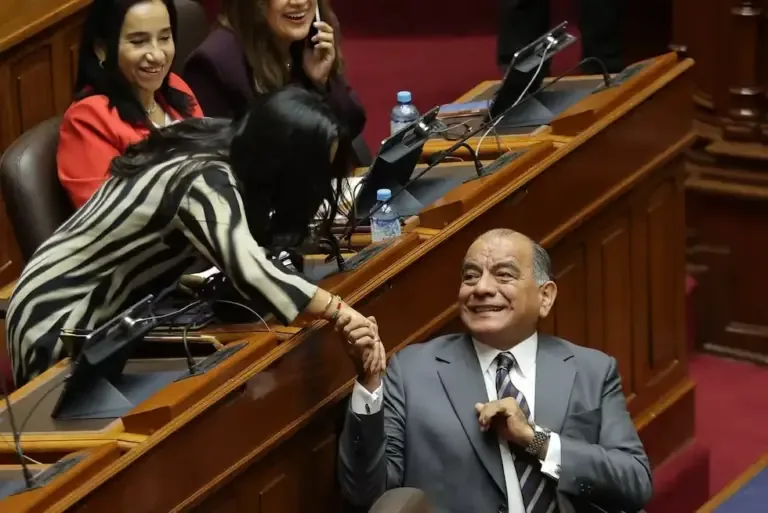
Luis Alegría, from Fuerza Popular, considered that citizens are interested in the minister Astudillo and legislators being in their regions overseeing.
“Do you think citizens care about what we are debating here? Citizens want results,” he asserted.
How did the opposition respond?
Meanwhile, Analí Márquez questioned Astudillo, considering that he only came to the session to report on sector reports and statistical data on crime.
“Yes, we have become more aware of Peru’s critical reality on this issue, but more regrettable is not knowing what plan we have from the Ministry of the Interior,” she added.
For his part, Heber López, from the Civic Works Party, said that citizens “do not need diagnoses, but concrete actions, arrests, and dismantling of criminal organizations,” clearly referring to the statistical charts shown by Astudillo.
Incident in the session
In the middle of the session, Jesús Pérez Alccahuamán, from Juntos por el Perú, caused an incident by questioning Astudillo.
It all started during his intervention, when he recalled that between July 28 and the first week of September more than 250 homicides were recorded.
“This number increases in regions such as Piura, Ica, La Libertad, Callao, and Lima. Mr. Minister, these numbers are not [sic] nonsense,” he said.
The mere mention forced Óscar Reto, president of the Chamber of Deputies, to intervene, who, in the exercise of his functions, asked Pérez to withdraw the word, which he did after several seconds.
“But… I withdraw my word,” Pérez responded. Then he spoke in Quechua without translating what he said.
When Astudillo took the floor, he answered Pérez: “It cannot be allowed that a deputy insults in that way, comes to speak to me in Quechua, the language my mother taught me, and insults in that way. That is not possible. I can respond to you right now, but I will not stoop to that low level,” he emphasized.
- Congress: Minister César Astudillo and Deputy Jesús Pérez cause incident over crime figures
- Eight of 12 commissions of the Chamber of Deputies against granting powers: what comes next?
- Yenifer Paredes and the Confemin: Details of the meeting between the congresswoman and representatives of informal miners
- Ethics Commission approves investigation against Deputy Christian Aranda: what are the arguments of the report?